
“Only the Dalai Lama Can Decide His Successor”: Kiren Rijiju
India Backs Dalai Lama’s Right to Choose Successor, Rebukes China’s Approval Claim

GG News Bureau
New Delhi, 4th July: A day after the 14th Dalai Lama unveiled his long-anticipated succession plan, India on Thursday firmly backed his authority to determine his own reincarnation, delivering a subtle yet pointed message to China, which insists it must approve any future Dalai Lama.
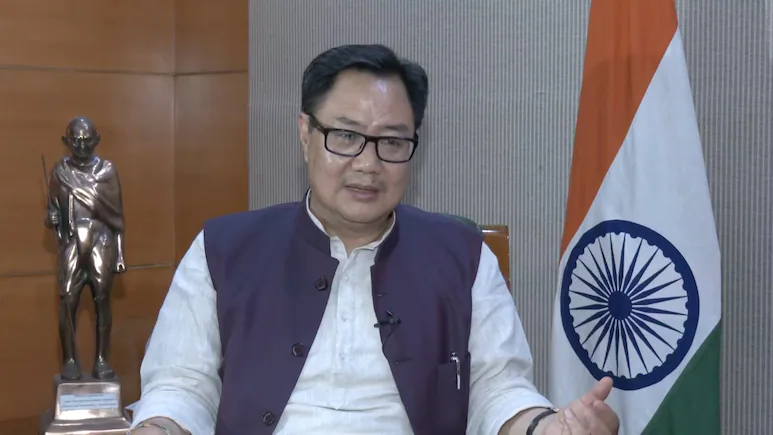
Speaking to reporters in New Delhi, Minority Affairs Minister Kiren Rijiju asserted that the spiritual leader’s successor can “only be chosen by the present Dalai Lama” in accordance with established Buddhist traditions.
“The Dalai Lama is the most important and defining institution for Buddhists. His reincarnation must be decided as per his own wish and conventions. Nobody else has the right to decide,” said Rijiju, a practising Buddhist.
The remarks come as Beijing reiterated that any future Dalai Lama must be selected through its “golden urn” system and approved by the central government. Chinese Foreign Ministry spokesperson Mao Ning insisted that the process must follow “historical conventions and Chinese law” — a claim long rejected by the Tibetan religious establishment and exiles.
The 14th Dalai Lama, Tenzin Gyatso, on Wednesday clarified that the Gaden Phodrang Trust, which he established, will be the sole authority to identify his successor. He reaffirmed the continuation of the institution based on popular demand and Tibetan spiritual traditions, dismissing Chinese state control over reincarnation as political interference.
The announcement has been hailed as a landmark moment by Tibetans and global supporters, especially amid concerns that China could install a rival figure to assert control over Tibetan Buddhism.
The spiritual leader has lived in exile in Dharamshala, Himachal Pradesh, since fleeing Tibet following the 1959 uprising against Chinese rule. Rijiju and Union Minister Rajiv Ranjan Singh will attend the Dalai Lama’s 90th birthday celebration on July 6, representing the Indian government.
Tensions around religious succession are not new. In 1995, Beijing controversially detained a six-year-old boy recognised by the Dalai Lama as the Panchen Lama, making him what rights groups call the “world’s youngest political prisoner”, and installed its own candidate instead.
India’s open endorsement of the Dalai Lama’s right to determine his successor reflects New Delhi’s calibrated position—one that respects religious freedom while underscoring Tibetan autonomy over spiritual matters.
Meanwhile, China’s claim that the golden urn system holds spiritual legitimacy was dismissed by the Dalai Lama himself, who has previously said it “lacks any spiritual quality” when used under coercion or political motivations.
