

Poonam Sharma
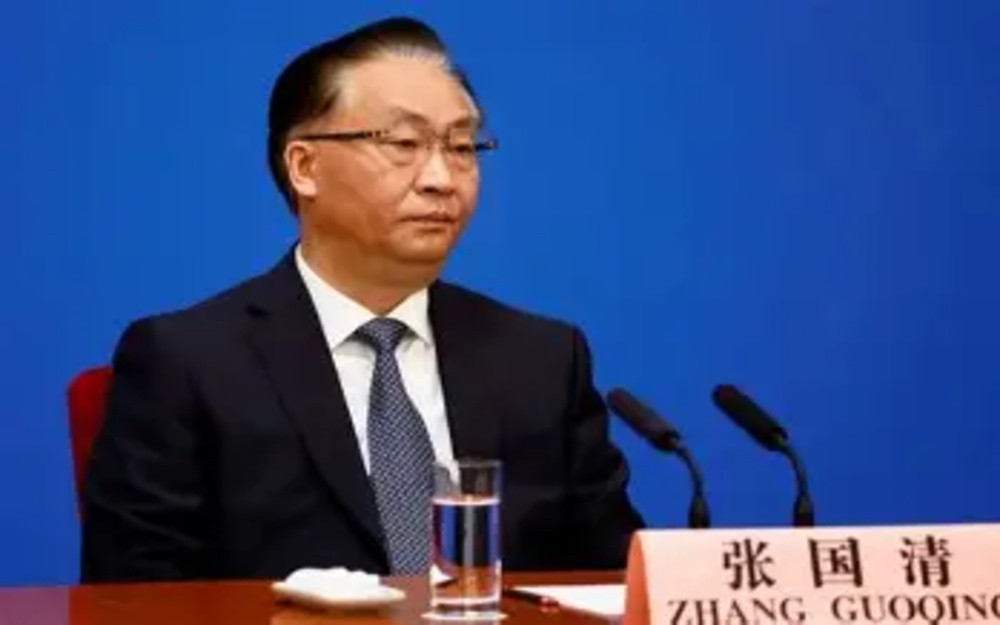
The meteoric rise of Zhang Guoqing—from a young engineer in the trenches of Tehran’s arms markets to the high-walled corridors of the Zhongnanhai—is a story that mirrors China’s own transition from a regional player to a global military-industrial powerhouse. Yet, as Middle Eastern skies light up with the fire of interceptors and failing projectiles, the very expertise that fueled his “helicopter-style” ascent may now be his greatest vulnerability.
The Architect of the Tehran Connection
Zhang’s story didn’t begin in a political office; it began at the Beijing Institute of Technology, specializing in the volatile science of explosives engineering. While most future leaders were navigating provincial bureaucracy, Zhang was on the ground in Iran during the late 1980s and 90s. As a key representative for Norinco (China North Industries Group), he wasn’t just selling hardware; he was weaving a web of industrial and strategic dependencies.
In Tehran, Zhang earned a reputation as a pragmatic, deep-level fixer. He understood that a relationship with Iran wasn’t just about shipping crates of rifles—it was about telecommunications, surveillance, and infrastructure. His 2004 achievement—an $800 million contract for Tehran’s Metro Line 4—was the ultimate “Trojan Horse” of diplomacy, masking a deeper military-industrial cooperation under the guise of urban development.
The “Helicopter Rise” of a Technocrat
When Xi Jinping took the helm of the CCP in 2012, he sought a new breed of official: the “Military-Civil Fusion” expert. Zhang Guoqing fit the mold perfectly. He was a veteran of the defense industry who understood how to turn laboratory breakthroughs into battlefield assets and, more importantly, how to sell them abroad.
His political promotion was unprecedented. Moving swiftly through leadership roles in Chongqing and Liaoning, he was catapulted into the Politburo and eventually named Vice Premier in 2023. This “helicopter-style” rise was a signal to the world that China’s top leadership was no longer composed solely of ideologues, but of “defense-industrialists” who viewed geopolitics through the lens of supply chains and electronic warfare.
The Iran Strategy: A Double-Edged Sword
Today, sources suggest Zhang serves as the invisible hand coordinating the China-Iran arms trade. As tensions between Iran and Western-aligned powers escalate, Tehran has repeatedly looked to Beijing for technological lifelines. Zhang, the man who knows the Iranian political landscape better than perhaps anyone in the CCP, is the natural point of contact.
Under his guidance, the partnership has evolved into “full-spectrum” technology transfer. This includes:
Surveillance Systems: Monitoring internal dissent within Iran.
Electronic Tracking: Technologies aimed at monitoring U.S. naval movements in the Persian Gulf.
Missile Components: The backbone of Iran’s deterrent capabilities.
However, this proximity to the Iranian military machine carries a hidden “reputational tax.”
When “Paper Toys” Fall from the Sky
The central crisis for Zhang Guoqing is the real-world performance of Chinese technology. China’s defense industry thrives on the fact that its systems are rarely tested in large-scale, high-intensity combat. They are marketed as affordable, high-tech alternatives to Western equipment.
But if Chinese-made drones are swatted away like “paper toys” and their missile components fail under the pressure of modern air defenses, the narrative of Chinese military superiority crumbles. For Zhang, the stakes are deeply personal. If the hardware he championed fails in the hands of his oldest partners in Tehran, he cannot simply point to “technical glitches.” In the high-stakes theater of CCP politics, failure requires a face.
The Scapegoat in the Shadows
Xi Jinping values Zhang’s expertise, but CCP history is littered with favored sons who became convenient sacrifices when policy met reality. If Iran’s military capabilities are humiliated on the global stage, the “Iran Expert” becomes a liability.
Zhang Guoqing currently sits at the center of a complex web—one he helped build over three decades. But as the missiles fall and the sensors fail, the man who engineered China’s bridge to the Middle East may find that the bridge is burning from both ends. Every intercept in the Gulf is not just a tactical loss for Tehran; it is a direct hit on the political armor of the man who promised Beijing that China’s technology was ready for the world.
