

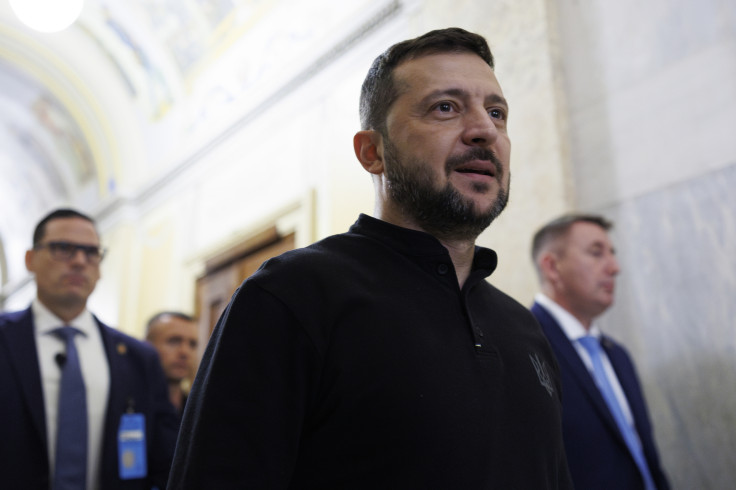

In the waning months of 2024, U.S. President Donald Trump sat across from Ukrainian President Volodymyr Zelenskyy in a tense, high-stakes meeting. With the Russo-Ukrainian War grinding on, Trump, ever the dealmaker, delivered a pointed jab: “You don’t have the cards.” The message was clear—Ukraine, battered by years of conflict and reliant on Western aid, seemed to lack the leverage to force Russia to the negotiating table on favorable terms. But Zelenskyy, a former actor skilled in defying expectations, had a hidden hand. On June 1, 2025, he revealed it with Operation Spider Web, a audacious drone assault that struck deep into Russia’s heartland, shattering Moscow’s sense of invulnerability and rewriting the war’s strategic calculus.
Operation Spider Web: A Masterpiece of Unconventional Warfare
Operation Spider Web, was no spontaneous strike. It was a meticulously planned offensive, 18 months in the making, personally overseen by Zelenskyy and executed by the Security Service of Ukraine (SBU) under the steely command of Lt. Gen. Vasyl Malyuk. On June 1, 2025, Ukraine unleashed 117 first-person view (FPV) drones in a synchronized attack on five Russian air bases: Belaya in Irkutsk Oblast, Dyagilevo in Ryazan Oblast, Ivanovo Severny in Ivanovo Oblast, Olenya in Murmansk Oblast, and Ukrainka in Amur Oblast. Spanning three time zones and reaching as far as 4,300 km from Ukraine’s borders, the operation targeted the backbone of Russia’s long-range aviation, dealing an estimated $7 billion in damage and crippling approximately 34% of Moscow’s strategic cruise missile carriers.
The operation’s brilliance lay in its covert execution. The FPV drones, each costing a mere $400-$430, were smuggled into Russia inside wooden containers mounted on trucks disguised as civilian vehicles. These mobile cabins, some equipped with remotely operated roofs, were positioned near the target airbases, in one case audaciously close to Russia’s FSB headquarters. The drones, launched from these concealed platforms, flew short distances at low altitudes, evading Russian air defenses designed to counter missiles or larger drones. Ukrainian operatives, who facilitated the smuggling and staging, were reportedly evacuated before the strikes, ensuring no losses among the SBU’s elite teams. The operation’s audacity recalled earlier Ukrainian successes, like the 2022 Kerch Bridge attack, but its scale—striking five bases across vast Russian territory—was unprecedented.
A Devastating Blow to Russia’s Air Power
The targets were Russia’s most prized aerial assets: Tu-95MS Bear strategic bombers, nuclear-capable workhorses of Moscow’s airborne triad; Tu-22M3 intermediate-range bombers; Tu-160 strategic bombers; and A-50 Mainstay airborne early warning aircraft, critical for coordinating Russian air operations. Ukrainian sources claim over 40 aircraft were damaged or destroyed, a figure that, if accurate, represents a catastrophic loss. The Tu-95, no longer in production, is irreplaceable, and with only about 10 A-50s in Russia’s inventory, even a single loss is a strategic setback. Russian sources confirmed fires at Olenya and Belaya but claimed attacks were repelled at other bases, with Ukrainka’s strike reportedly foiled by a truck explosion. Yet the damage, particularly to nuclear-capable assets, has sent shockwaves through Moscow’s military establishment.
How Did Russia Miss It?
Russia’s air defenses, formidable against conventional threats, were blindsided by Spider Web’s unconventional tactics. The FPV drones’ small size and low-altitude flight paths made them nearly invisible to radar. Launched from within Russia, they bypassed long-range detection systems, exploiting complacency at airbases considered beyond Ukraine’s reach. The operation’s covert infiltration—trucks moving undetected across thousands of kilometers—exposed glaring gaps in Russian intelligence and base security. Some speculate local drivers were unaware of their cargo, a tactic reminiscent of Ukraine’s earlier operations, further complicating detection.
Ukraine’s Drone Prowess and NATO’s Shadow
The drones, produced domestically by Ukraine’s burgeoning defense industry, underscore Kyiv’s technological leap. In 2024, Ukraine manufactured 2.2 million drones, with plans for 4.5 million in 2025, many through the Brave1 defense tech cluster. Some reports suggest AI-powered “mother drones” enhanced targeting precision, a testament to Ukraine’s innovation. While NATO has provided extensive aid, including drones and intelligence, no evidence confirms direct alliance involvement in Spider Web. Ukraine’s claim of informing the Trump administration contrasts with U.S. denials, with officials denying having received any heads-up. This discrepancy could reflect strategic miscommunication, U.S. efforts to maintain neutrality, or Ukraine’s desire to project independence. The operation’s success suggests Kyiv’s growing self-reliance, though Western support likely bolstered its broader capabilities.
A Pearl Harbor for Russia?
Russian military blogger Roman Alekhin called Spider Web Russia’s “Pearl Harbor,” evoking the 1941 Japanese attack that stunned the U.S. The comparison captures the operation’s shock value and strategic impact, exposing Russia’s vulnerabilities and humiliating its military. Unlike Pearl Harbor, which drew the U.S. into war, this strike escalates an ongoing conflict, but its blow to Russia’s nuclear-capable bombers raises fears of escalation. Moscow labeled it a “terrorist attack,” detaining alleged collaborators, and may retaliate with intensified missile strikes, cyberattacks, or ground offensives. While nuclear posturing is possible, global consequences make it unlikely.
Timing and Talks: A Calculated Gamble
Launched a day before Istanbul peace talks on June 2, 2025, Spider Web was a calculated move to strengthen Ukraine’s hand. By proving it could strike deep into Russia, Zelenskyy signaled that Kyiv can exact a heavy toll, even as Trump pushes for a deal. The operation’s timing, embarrassing Moscow at a critical juncture, may bolster Ukraine’s leverage but risks derailing negotiations if Russia doubles down. The U.S.’s claimed unawareness, possibly a tactic to preserve mediation credibility, adds complexity to the diplomatic dance.
Who Holds the Winning Hand?
Operation Spider Web has reshuffled the deck, proving Zelenskyy’s cards were stronger than Trump—or Putin—anticipated. Yet as the war’s stakes rise, questions loom: Does Putin have an ace up his sleeve, ready to unleash a brutal counter strike? Or does Trump, the self-styled dealmaker, hold the trump card to broker peace? As Istanbul’s talks unfold, the world watches, wondering if Ukraine’s daring gambit will force a breakthrough—or ignite a fiercer storm.
About the author: Senior Journalist and News Analyst Mr. Alok Lahad is Group Consulting Editor (European Affairs) of Global Governance News. Research Scholar and Hispanist. Writes on Indian and European affairs Geopolitics from Barcelona, Spain.
