
Yoga: Bharat’s Ancient Wisdom and Its Global Awakening

Paromita Das
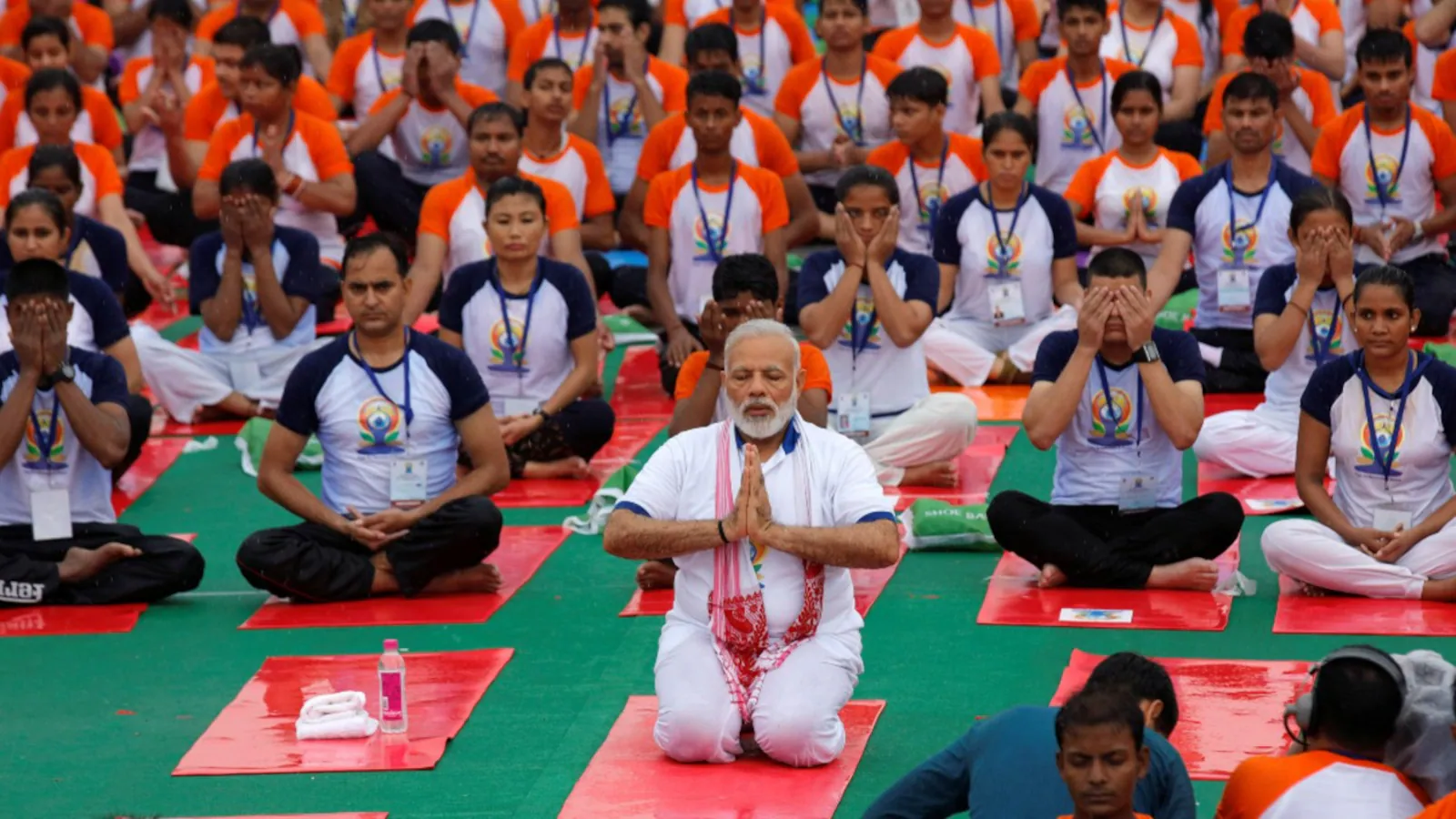
New Delhi, 21st June: On the morning of June 21, as the sun rose over Visakhapatnam’s RK Beach, Prime Minister Narendra Modi joined a sea of over 300,000 people performing yoga in perfect harmony. From the tranquil monasteries of Ladakh to the bustling heart of New York’s Times Square, millions across 191 countries celebrated the 11th International Day of Yoga. The theme this year, “Yoga for One Earth, One Health,” underscored a deeper realization—that well-being is not just personal but also planetary.
In his address, PM Modi reminded the world that yoga, at its core, means “to unite.” He described it as a pause button for the chaos of modern life—a philosophy that encourages balance, self-awareness, and peace in times of unrest. His words rang true not just for Bharatiya, but for yoga practitioners worldwide who have embraced this ancient practice not only for health but for hope.
A Legacy Born in Silence and Solitude
Yoga’s story began thousands of years ago, long before global observances and government resolutions. In the silent forests of the Bharatiya subcontinent, sages and seers explored ways to transcend the body and mind, seeking answers in breath, stillness, and movement. These practices were passed down through scriptures like the Rig Veda and later codified by Sage Patanjali in the Yoga Sutras—a collection of profound aphorisms that laid the foundation for what we now recognize as yoga.
Unlike modern exercise routines, yoga was always meant to be a journey inward. It blended physical postures with ethical living, breath control, concentration, and meditation. It wasn’t about how flexible your body could be, but how still your mind could become.

Over the centuries, yoga evolved. During the classical era, it thrived under empires that nurtured both spiritual and scholarly pursuits. Later, in medieval times, new traditions like Hatha Yoga emphasized the body as a tool for spiritual growth. Yet, despite these developments, yoga remained largely confined within the Bharatiya subcontinent.
The Decline and Rebirth of Yoga
The arrival of colonial rule altered Bharat’s cultural landscape. Traditional knowledge systems, including yoga, were often dismissed or marginalized by Western education policies. But the early 20th century saw a cultural revival. Thinkers like Swami Vivekananda began sharing Bharat’s spiritual philosophy abroad. In 1893, Vivekananda’s speech in Chicago opened Western eyes to Bharat’s rich traditions, and yoga soon followed.
By mid-century, yoga masters such as B.K.S. Iyengar, Pattabhi Jois, and Paramahansa Yogananda began to teach globally. They adapted ancient teachings to modern lifestyles, and gradually, yoga became not just a mystical practice but a health movement. The 1960s and 70s saw Western Interest in Eastern spirituality surge, and yoga found its place in gyms, universities, and homes.
What began as a quiet, inward practice had now become a global phenomenon.
Yoga’s Global Day and Growing Influence
Fast forward to 2014: Prime Minister Modi proposed to the United Nations that June 21 be declared International Yoga Day. Within record time, the resolution was adopted with support from 177 countries—an unprecedented endorsement of a cultural tradition. The chosen date, June 21, marks the summer solstice, symbolizing light and awakening.
Since then, every year, yoga events have grown bigger and more inclusive. This year, over two crore people in Bharat alone participated in yoga sessions. The main event in Visakhapatnam was supported by thousands of volunteers, medical teams, and security personnel—showing the scale of the effort and the power of unity that yoga symbolizes.
Even more striking is yoga’s acceptance beyond borders. From Africa to Europe, South America to Australia, yoga is practiced in schools, parks, corporate offices, and correctional facilities. It transcends religion, race, and age, offering something universal: a moment of stillness in a restless world.
Yoga in Today’s World: More Than Just a Workout
Today, yoga is more than a wellness trend—it’s a way of life. Scientific research backs its benefits: reduced anxiety, improved flexibility, better heart health, and enhanced concentration. But beyond the physical, yoga offers tools for coping with uncertainty, finding purpose, and cultivating mindfulness.
Bharat has harnessed yoga not only as cultural heritage but also as a soft power tool. Through the Ministry of AYUSH and cultural institutions like the ICCR, yoga has become central to Bharat’s global identity. Initiatives like “Yoga for Humanity 2.0” are designed to integrate yoga into schools, healthcare systems, and policymaking—not as an obligation, but as an opportunity for collective healing.
A Personal Reflection
As we mark the 11th International Yoga Day, one can’t help but reflect on what makes yoga so resilient, so adaptable, and so timeless. Perhaps it’s the fact that yoga doesn’t demand perfection; it invites presence. In a world overwhelmed by distraction and division, yoga calls us back to ourselves, gently but persistently.
Whether you’re in a bustling city or a remote village, whether you’re young or old, whether you’re spiritual or secular—yoga offers a space where breath becomes the
A Tradition for the Future
Yoga began as a whisper in ancient forests, and today, it echoes through the skyscrapers of our cities. From Bharat’s philosophical roots to the global stage, yoga has proven its power to connect, to heal, and to inspire. As PM Modi said, yoga is not just about exercise—it is a journey toward harmony.
In a time of global unrest, the ancient wisdom of yoga offers a modern answer: unity through mindfulness, strength through stillness, and peace through practice.
