
“Will an MLA Be Exempt While a Constable Is Booked?”: SC on Sengar Bail
Top court stays bail, questions POCSO definition excluding elected MLAs

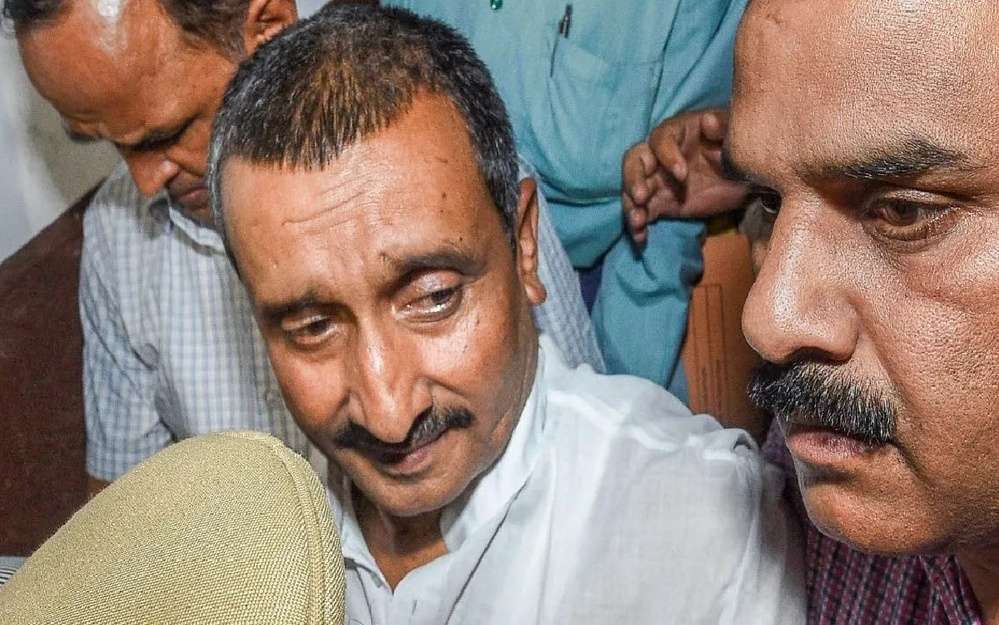
- Supreme Court stays Delhi High Court order granting bail to Kuldeep Sengar
- Court questions exclusion of MLAs from ‘public servant’ definition under POCSO
- CBI argues Sengar misused dominant position over minor survivor
- Bench issues notice, says key legal questions need adjudication
GG News Bureau
New Delhi, 29th Dec: The Supreme Court on Monday stayed the Delhi High Court order granting bail to former Unnao MLA Kuldeep Singh Sengar and raised serious concerns over a legal interpretation that could exclude elected legislators from the definition of “public servant” under the Protection of Children from Sexual Offences (POCSO) Act.
A bench headed by Chief Justice Surya Kant, with Justices J.K. Maheshwari and A.G. Masih, was hearing the CBI’s plea challenging the suspension of Sengar’s sentence and his release on bail pending appeal. The court observed that substantial questions of law were involved, particularly the meaning and scope of “public servant” under the POCSO framework, and issued notice to Sengar.
The court noted that ordinarily bail orders are not stayed without hearing the accused, but in the present case a stay was warranted since Sengar had not yet been released and remained in custody in another case.
During the hearing, Solicitor General Tushar Mehta submitted that while POCSO does not define “public servant”, the term must be interpreted contextually, keeping in mind the Act’s overriding effect. He argued that under POCSO, a public servant would include any person in a dominant position over a child, and misuse of that position would attract aggravated offence provisions.
The CBI maintained that Sengar, being a powerful MLA at the time of the incident, exercised dominance over the minor survivor and therefore falls within the ambit of aggravated offences. It was also argued that later amendments enhancing punishment did not create new offences and thus did not violate constitutional protections.
Sengar’s counsel countered that an MLA is not treated as a public servant under the Indian Penal Code and that definitions from one statute cannot be imported into another unless expressly provided by law.
Expressing concern, the Chief Justice observed that such an interpretation could lead to an anomalous situation where a constable or patwari would be considered a public servant under POCSO, but an elected MLA or MP would be exempted.
The bench said the legal issue requires authoritative determination and has scheduled further hearing in the matter.
