
Why Madani’s ‘Jihad’ Comment Has Set Bharat on Edge

Paromita Das
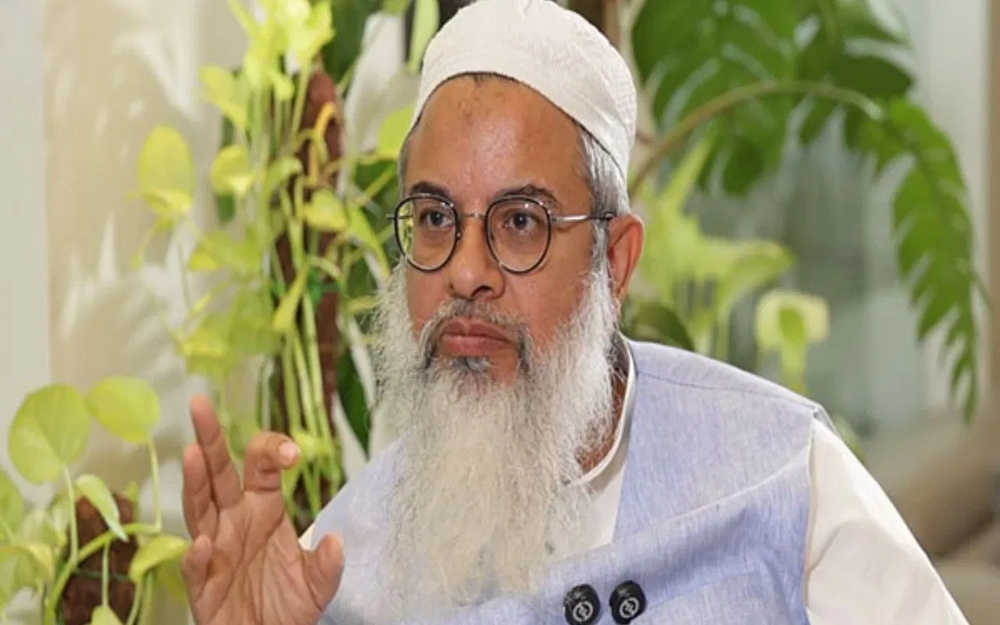
New Delhi, 2nd December: Bharat is no stranger to emotionally charged debates, but every so often a single sentence shakes the political and social landscape with unusual force. Maulana Mahmood Madani’s assertion—“If there is oppression, there will be jihad”—delivered at a national gathering of the Jamiat Ulema-e-Hind in Bhopal, has done just that. It was not merely a statement made at a closed-door religious meeting; it was a rhetorical spark that instantly triggered a nationwide political blaze. In the age of real-time outrage, Madani’s remarks collided with Bharat’s sensitive discourse on nationalism, constitutional faith, and communal identity, pulling the judiciary, political parties and civil society into a renewed confrontation.
While Madani insists his words were framed within a moral and spiritual understanding of “jihad,” the political class—especially the Bharatiya Janata Party—interpreted them as incendiary and unacceptable. The tension that followed reveals not just the gravity of one man’s speech, but the deeper anxieties simmering beneath Bharat’s socio-political fabric.
https://t.co/VyLNq6ao64
*🔴 Live*
*चौथा सेशन: 29 मई सुबह 8:45 से 1:00 बजे तक**📍#जमीअत* *उलमा-ए-हिंद की मजलिस-ए-मुंतजिमा का अधिवेशन #लाइव टेलीकास्ट उस्मान नगर (ईदगाह मैदान) देवबंद से।*
— Jamiat Ulama-i-Hind (@JamiatUlama_in) May 29, 2022
A Clash Over the Constitution and the Courts
In his address, Madani accused the judiciary of succumbing to government pressure and delivering verdicts that violate the rights of minorities. The Babri Masjid judgment and the criminalisation of instant triple talaq were cited as examples of judicial drift. His provocative remark—that the Supreme Court “does not deserve to be called supreme” if it cannot safeguard the Constitution—was a direct challenge to the highest institution of justice. It was this line as much as the mention of “jihad” that unsettled the political establishment.
Bhopal, Madhya Pradesh: Islamic scholar Maulana Mahmood Madani says, "Law and order in a country, and the creation of a crime-free society are impossible without justice, absolutely impossible. Sadly, it must be said that over the past few years, especially after verdicts in… pic.twitter.com/DEHhkaFnpo
— IANS (@ians_india) November 29, 2025
Madani also questioned the courts for hearing cases on religious sites despite the Places of Worship Act, suggesting a pattern of constitutional erosion. By portraying a country where “10% support Muslims, 30% oppose them, and 60% remain silent,” he painted an atmosphere of fear and vulnerability. The criticism appeared less like legal analysis and more like an urgent warning, which some interpreted as deliberately amplifying feelings of siege within the community.
Redefining ‘Jihad’—Or Reopening Old Wounds?
Madani’s extensive explanation of jihad formed the emotional core of his speech. He argued that governments and media have twisted the term through phrases like “love jihad” or “land jihad,” reducing a sacred concept to a political slur. According to him, the spiritual, ethical, and humanitarian dimensions of jihad are overshadowed by a manufactured narrative that equates it with terrorism.
Yet his follow-up line—“Wherever there is oppression, there will be jihad”—overshadowed the nuance he sought to establish. Even though he clarified that Bharat, as a secular democracy, offers no space for jihad in a militant sense, the phrasing carried enormous symbolic weight. Critics argued that in a charged environment, such a statement risks being interpreted as justification for confrontation rather than a plea for moral resistance.
Vande Mataram, Halal, and the Battle for Symbols
Madani’s criticism did not end with the judiciary or jihad. His assertion that a community that unquestioningly recites Vande Mataram becomes “a dead community” created fresh controversy. At a time when debates about national symbols already sit at the top of Bharat’s political agenda, this remark provided an easy opening for opponents to accuse him of disrespecting national identity.
His comments on halal also pushed the debate into cultural terrain. By describing halal as a “complete way of life,” Madani accused political forces of distorting a religious practice for ideological gain. The speech, therefore, did not merely respond to one controversy; it linked multiple ongoing fault lines—jihad, nationalism, dietary freedom, and constitutional loyalty—into a single narrative of perceived persecution.
The BJP’s Swift and Fiery Counterattack
Predictably, the BJP responded with force. Leaders such as Narottam Mishra and Rameshwar Sharma accused Madani of inciting Muslims, challenging the judiciary, and sowing division. Sharma went further, equating Madani’s rhetoric with the emergence of “new Jinnahs” and warning that Bharat “will not tolerate such a mindset.”
The strong reaction was not limited to political censure; it carried an unmistakable tone of threat. Calls for the Supreme Court to take suo motu action and warnings that “the government will not feed sweets to terrorists” were aimed at framing Madani’s statements as bordering on sedition. The BJP’s counter-narrative sought to portray itself as the defender of constitutional order and national unity, while casting Madani as a figure who perpetually provokes tensions for political relevance.
A Leader Who Courts Controversy—Again and Again
Madani is not new to confrontation. From his opposition to Uttarakhand’s Uniform Civil Code to repeated claims of rising Islamophobia, from advocating for new blasphemy laws to defending the Waqf Act, he has consistently positioned himself at the centre of ideological battles. His insistence that Muslims would follow Sharia regardless of UCC, his remarks about Pakistan, and his organisation’s legal defence of nearly 700 terror-accused individuals over the years have all intensified public suspicion about his political motives.
Interestingly, even as he challenges the state, he has been internationally recognised—the Royal Islamic Strategic Studies Centre named him Person of the Year 2023. His influence reaches far beyond Bharat’s borders, which adds both weight and scrutiny to his words.
A Debate Bharat Needs, But Not in This Tone
Bharat needs honest conversations about minority rights, constitutional obligations, and the limits of state power. But such debates cannot survive when every statement is laced with provocation. Madani’s concerns about judicial overreach or discrimination deserve space—but framing them through terms that carry historical and emotional volatility undermines the very issues he claims to defend.
Similarly, political actors must resist the temptation to weaponise every statement for electoral gain. Turning every disagreement into a national security threat only deepens divides and weakens democratic dialogue.
A Conversation Reopened, But at a Cost
Maulana Mahmood Madani’s remarks have re-ignited long-standing debates surrounding faith, constitutional rights, and national identity. Yet the controversy also exposes how fragile Bharat’s public discourse has become. A single phrase can polarise millions, not because the issue is new, but because the nation is standing at a point where trust has eroded and anxieties run high.
Bharat’s democracy grows stronger when its leaders choose clarity over provocation, and debate over confrontation. In this case, both sides seemed to choose the opposite. And the country is left once again navigating a storm that could have been a much-needed conversation.
