
Why GST 2.0 Is the Bold Reset Bharat Needed Right Now
“GST 2.0 reform simplifies Bharat’s tax system with just two slabs, slashes prices on essentials, fuels domestic consumption, and shields Bharat from US tariffs—a defining move against opposition fearmongering.”

Paromita Das
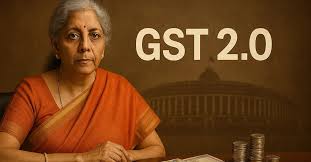
New Delhi, 6th September: Bharat has turned a new chapter in its economic journey with GST 2.0, a reform that promises relief for families, renewed growth for industries, and a stronger shield against global challenges. At a time when America’s heavy tariffs are threatening Bharat’s export-driven sectors, the Goods and Services Tax (GST) Council’s overhaul isn’t just another policy update—it’s a defining moment for the nation’s economic resilience. By streamlining tax slabs, lowering the cost of essentials, and boosting household savings, the government has taken a bold step toward making Bharat a consumption-driven powerhouse.
This landmark decision not only strengthens the middle class but also delivers a decisive counter to opposition narratives that attempt to mislead and frighten the public with misplaced fears. Instead, GST 2.0 stands tall as a reform rooted in confidence, strategy, and the everyday needs of the people.
A Simpler, Smarter GST for Every Bharatiya

Since its launch in 2017, GST has been celebrated as Bharat’s most ambitious tax reform. Yet, its four-tier structure often left businesses confused and consumers burdened. GST 2.0 changes that dramatically. Now, there are just two primary slabs—5% for essentials and 18% for most other goods—alongside a 40% slab reserved only for luxury and sin products.
For the middle-class household, this simplification is transformative. Food staples, medicines, insurance, and daily essentials are cheaper than ever before. At the same time, big-ticket items like cars and appliances have shifted into more affordable brackets. By reserving the highest rates only for luxury consumption, the government has safeguarded the common man while still ensuring healthy revenue from elite spending.
Why Domestic Consumption is Bharat’s Shield Against US Tariffs

Global uncertainties are weighing heavily on Bharat’s external trade. America’s steep tariffs have created ripples in export-driven industries, threatening jobs and growth. But Bharat’s strength has always been its vast domestic market, powered by ordinary families who spend, save, and invest within the country.
Here lies the genius of GST 2.0. By cutting costs and boosting disposable income, the reform ensures that Bharat’s growth engine is driven by its own people—not by unpredictable foreign markets. The timing is impeccable too, with the festive season around the corner, when spending traditionally spikes. Lower GST rates mean more affordable products, from Diwali sweets to two-wheelers, creating a ripple effect across industries.
What Becomes Cheaper: Relief in Every Household

The sweeping scope of GST 2.0 ensures relief touches nearly every aspect of life:
- Food & Staples: Paneer, ghee, dry fruits, biscuits, and even ice cream are now in the 5% bracket.
- Household Goods: Toothpaste, soap, shampoos, and kitchenware are cheaper than before.
- Healthcare: Medicines, diagnostic kits, and life insurance attract minimal or no GST.
- Housing & Construction: Cement falls to 18%, lowering costs of homes and infrastructure.
- Automobiles: Two-wheelers, small hybrid cars, and EVs become more accessible.
- Education: Stationery and notebooks are exempt, cutting costs for families with school-going children.
This isn’t just about numbers—it’s about everyday relief. Families will feel the difference in grocery bills, education costs, medical expenses, and even while planning long-term investments like housing.
Inflation Control: The Hidden Masterstroke

One overlooked but powerful impact of GST 2.0 is its effect on inflation. By reducing tax burdens across essentials, manufacturers can pass on savings to consumers. A fall in overall prices will cool inflation, directly benefiting households already grappling with high costs of living.
Moreover, lower inflation gives the Reserve Bank of India (RBI) the space to cut interest rates, making EMIs for homes, cars, and loans cheaper. This double boost—lower prices plus lower borrowing costs—creates a fertile ground for consumption-led growth.
Middle Class: The Real Beneficiaries of GST 2.0

Alongside GST cuts, income tax relief has ensured that families earning up to ₹12.75 lakh annually pay no tax at all. The combined effect is powerful: higher take-home pay and lower day-to-day expenses.
This isn’t just an economic policy—it’s empowerment. By focusing on the salaried and middle-class backbone of Bharat, the government has laid out a strategy that multiplies benefits across society: more spending, more jobs, more growth.
Opposition Fearmongering vs. Ground Reality

Predictably, the opposition has tried to paint GST 2.0 as reckless or populist. They’ve raised alarms about fiscal deficits, while peddling fear that such reforms will harm long-term stability. But these arguments are hollow when weighed against ground realities.
The higher tax rates on luxury goods ensure that revenue streams remain strong. More importantly, a booming consumption economy naturally widens the tax base, increasing collections without squeezing the middle class. In other words, the government has balanced relief with responsibility.
The opposition’s narrative thrives on scaring the public with half-truths. But GST 2.0, grounded in sound economics and strategic timing, is the tight slap of reality that silences such fearmongering.
GST 2.0 is More Than Reform—It’s a Vision

This reform is not just a recalibration of tax slabs—it’s a strategic doctrine for Bharat’s self-reliance. By protecting the middle class, strengthening domestic consumption, and insulating the economy from global shocks, GST 2.0 reflects a clear, confident vision for Bharat’s future.
Yes, challenges will remain—implementation, compliance, and ensuring that benefits are fully passed on to consumers. But the broader direction is unambiguous: a simplified, affordable, and inclusive tax system that fuels growth from the ground up.
GST 2.0 Marks the Dawn of a Consumption-Driven Bharat
As GST 2.0 rolls out, its impact will be felt not just in numbers but in daily lives—in the groceries families buy, the medicines they need, the homes they build, and the cars they dream of owning. At a time when America’s tariffs test Bharat’s resilience, this reform ensures Bharat’s economy thrives on its strongest pillar—its own people.
This isn’t just a reform—it’s a revolution. And while the opposition may continue to spin tales of doom, the real story is one of relief, empowerment, and self-reliant growth. GST 2.0 is proof that when policy aligns with people’s needs, no external storm can shake Bharat’s economic foundation.
