
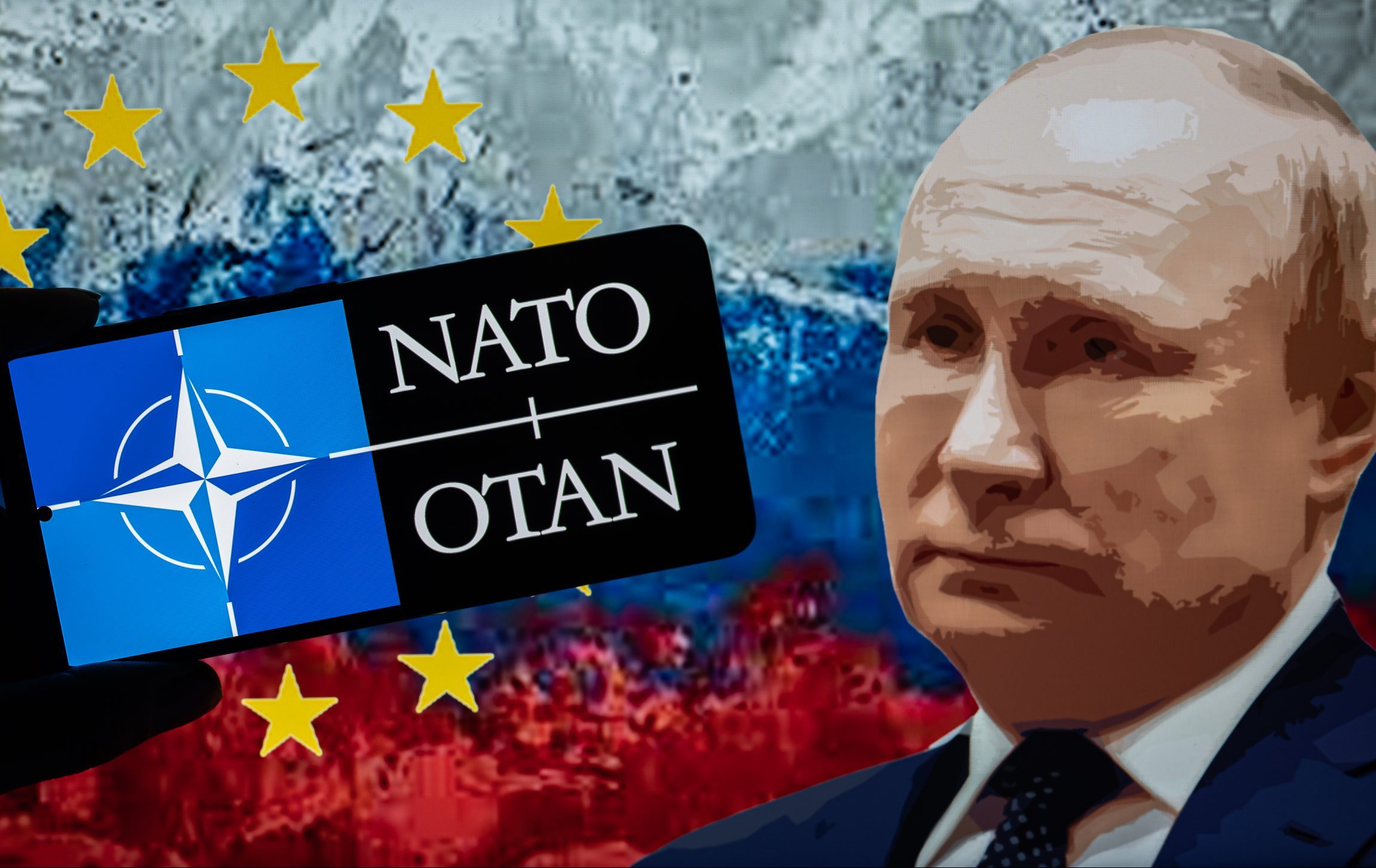
Why Confronting Russia Could Cost NATO More Than It Thinks
“From hypersonic missiles to nuclear firepower, Russia’s strategic advantages force NATO to rethink confrontation and embrace restraint.”

Paromita Das
New Delhi, 27th September: In today’s volatile geopolitical landscape, bold declarations often dominate headlines. NATO leaders frequently issue warnings to Moscow, signaling resolve and deterrence. Yet, beneath the surface of public rhetoric lies a sobering truth: a direct military clash with Russia could escalate far beyond strategic calculations. Russia’s arsenal of advanced weapons, resilient industrial capacity, and global partnerships make it a formidable adversary. Understanding this reality requires moving beyond political posturing to a detailed assessment of Russia’s military and geopolitical strength.
Russia’s Industrial Edge: A Grim Reality

NATO Secretary General Mark Rutte recently acknowledged a startling statistic: Russia can manufacture in just three months what the alliance produces in a year. This is more than a number—it underscores a strategic imbalance in prolonged conflict scenarios. In a war of attrition, Moscow can replace lost weapons, missiles, and ammunition far faster than Western nations. NATO’s once-dominant military-industrial base now struggles to keep pace, revealing vulnerabilities that cannot be ignored.
Hypersonic Missiles: Defenses Rendered Obsolete

Russia’s hypersonic arsenal, including the Oreshnik medium-range ballistic missile, represents a paradigm shift. With the capability to strike NATO headquarters in Brussels in 17 minutes, Ramstein Air Base in Germany in 15 minutes, and Redzikowo Air Base in Poland in just 11 minutes, these weapons leave little room for interception. NATO’s current missile defense systems, designed for slower, conventional threats, are effectively bypassed, leaving critical infrastructure exposed.
Eastern Europe in the Crosshairs

The deployment of Iskander missiles in Kaliningrad and Belarus adds another layer of risk. Capable of striking command centers across Poland, Germany, and Lithuania within minutes, these systems—especially nuclear-capable variants—place much of Eastern Europe under constant threat. The speed and precision of these weapons make them potent instruments of deterrence, limiting NATO’s strategic options.
Naval Vulnerabilities and the Zircon Factor

NATO’s maritime dominance faces new challenges from Russia’s Zircon hypersonic missile. Traveling at Mach 9, Zircon can obliterate naval targets 500 kilometers offshore in just five minutes. Aircraft carriers and destroyers, symbols of NATO power projection, could be neutralized before they even engage. This capability fundamentally alters the naval balance and underscores Moscow’s ability to contest NATO influence at sea.
Avangard Glide Vehicles: A Strategic Game-Changer

The Avangard hypersonic glide vehicle takes Russia’s edge even further. Traveling at Mach 28 and capable of carrying warheads up to 2 megatons, Avangard bypasses traditional missile defenses, striking targets anywhere on the globe in under 30 minutes. The destructive potential—nearly 100 times the force of Hiroshima—redefines strategic calculus, making preemptive or retaliatory options extraordinarily risky.
Nuclear Triad: Enduring Deterrence

Russia’s nuclear arsenal remains unparalleled. With approximately 5,580 warheads, including 1,710 deployed, Moscow maintains a flexible and survivable nuclear triad: land-based ICBMs, submarine-launched missiles, and strategic bombers. Even in the event of a first strike, this triad ensures a credible retaliatory capability. The sheer scale and redundancy of Russia’s nuclear forces cement its position as a global superpower in deterrence.
NATO’s Missile Defenses: Gaps and Limitations

European missile defense systems, largely designed during the Cold War to intercept slower ballistic threats, struggle against hypersonic weapons. Maneuverable, high-speed missiles such as Zircon and Avangard expose critical vulnerabilities. President Putin has repeatedly emphasized this gap, highlighting a strategic imbalance that NATO cannot ignore in its defensive planning.
Sanctions and Strategic Resilience

While Western sanctions have targeted Russia economically, they have inadvertently accelerated Moscow’s integration with alternative global partners. Energy ties with China and Bharat, expanding trade with the Global South, and innovative financial arrangements have reduced NATO’s leverage. Far from isolating Russia, sanctions have fostered a multipolar environment in which Moscow is increasingly resilient, adaptive, and less dependent on Western goodwill.
Nuclear Escalation: A Real and Present Danger

Perhaps the most sobering consideration is the risk of nuclear escalation. Russia’s doctrine permits nuclear use if the state perceives an existential threat—even from conventional actions. NATO exercises or deployments near Russian borders could be misinterpreted, triggering a rapid escalation. The possibility of conflict spiraling into nuclear confrontation underscores the stakes of miscalculated posturing.
Diplomacy Over Rhetoric
NATO’s political warnings may sound decisive, but the underlying military reality is sobering. Russia’s unmatched missile arsenal, nuclear capabilities, and industrial strength make direct confrontation a dangerous gamble. Sanctions and pressure have not weakened Moscow; they have driven it toward strategic resilience and global alliances. In such a high-stakes environment, diplomacy, strategic patience, and restraint are not signs of weakness—they are necessities. Any misstep in rhetoric or deployment could provoke a conflict that no side could afford to win. NATO must weigh the consequences carefully, ensuring that deterrence does not tip into disaster.
