
When Silence Beat Bluster: Modi vs Trump in Diplomacy
“Bharat’s Prime Minister showed that in global politics, restraint can be the strongest response.”

Paromita Das
New Delhi, 12th September: In today’s high-stakes world of diplomacy, words often carry more weight than weapons. Leaders can shape international markets, unsettle alliances, and even spark conflicts with just a few sentences. Nowhere was this more evident than in the turbulent exchanges between former US President Donald Trump and Bharatiya Prime Minister Narendra Modi. Trump, known for his unpredictable rhetoric, attempted to pressure Bharat with punitive tariffs, warnings, and even provocative hints at mediating between Bharat and Pakistan. Yet, instead of reacting in haste, Modi chose silence and strategic restraint, a move that underscored Bharat’s growing diplomatic maturity.
What unfolded was a masterclass in global statesmanship: the art of knowing when to speak, when to remain silent, and when to respond with warmth. Modi’s approach not only defused unnecessary provocations but also elevated Bharat’s stature as a confident global power.
Trump’s Tariffs and Bharat’s Calm Defiance

Trump’s decision to slap 50% tariffs on Bharatiya goods and penalize Bharat’s purchase of Russian crude oil was a clear attempt at economic arm-twisting. Such aggressive moves could easily have provoked a sharp retaliation from New Delhi. But Modi’s government understood the risks of escalation.
Instead of fueling confrontation, Bharat called the tariffs “unfair and unjustified,” while keeping communication channels open. This balanced response sent a powerful message: Bharat would not buckle under pressure, but nor would it slam the doors on dialogue. By avoiding a war of words, Modi denied Trump the political spectacle he seemed to seek.
This patience was not passivity—it was strategy. Modi calculated that Trump’s domestic compulsions and the US’s own need for Bharat as a strategic partner would eventually bring Washington back to the negotiation table. And he was right.
The Power of Silence: Dodging the Mediation Trap

Perhaps Trump’s most controversial moment came when he hinted at mediating between Bharat and Pakistan at the G7 Summit in Canada. For decades, Bharat has consistently maintained that issues with Pakistan, especially Kashmir, are strictly bilateral. Had Modi acknowledged Trump’s comments, it would have undermined this principle and cast Bharat as reliant on outside powers.
Instead, Modi’s silence spoke volumes. By refusing to engage, he denied Trump the chance to present himself as a global peacemaker in South Asia. This was not weakness; it was strength rooted in confidence. It reaffirmed Bharat’s sovereignty and its refusal to allow external interference in regional disputes.
When to Speak: Modi’s Reciprocal Diplomacy

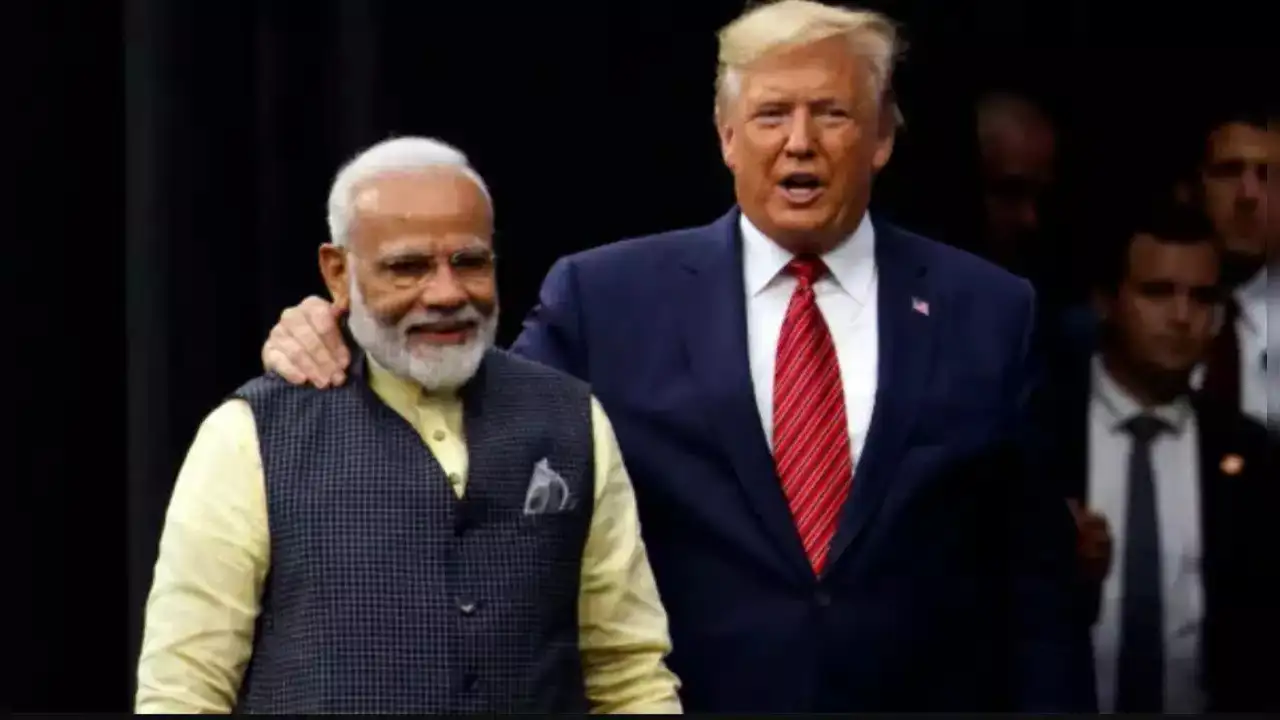
Modi’s silence in the face of provocation was matched by warmth when Trump extended friendship. When the US President described Modi as a “good friend” and announced that trade talks were back on track, Modi responded with optimism, calling Bharat and the US “close friends and natural partners.”
This dual strategy—ignoring hostility while embracing goodwill—was diplomacy at its finest. It showcased that Bharat’s foreign policy rests on reciprocity. New Delhi will not tolerate bullying, but it will always welcome cooperation.
Balancing Beyond Washington: SCO and BRICS

Even as Modi engaged with Washington, he ensured Bharat maintained strong ties with other global powers. At the Shanghai Cooperation Organisation (SCO) summit, images of Modi interacting with Russian President Vladimir Putin and Chinese President Xi Jinping reminded the US that Bharat has multiple strategic options.
At the same time, Modi carefully avoided overplaying his hand. By sending External Affairs Minister S. Jaishankar instead of attending the BRICS virtual summit himself, Modi balanced Bharat’s commitments without appearing to side too strongly with Russia and China against the US. This subtle maneuvering kept Bharat’s options open while signaling its growing autonomy in global affairs.
Why Modi’s Approach Matters

In my view, Modi’s handling of Trump’s provocations marked a turning point in Bharatiya diplomacy. For too long, Bharat was perceived as reactive—quick to defend, often cautious to the point of hesitation. Modi shifted the script. By choosing when to speak and when to stay silent, he projected confidence without aggression.
This approach matters because it reflects the evolution of Bharat’s role on the world stage. Today, Bharat is not just another regional player—it is a power that Washington, Moscow, and Beijing must reckon with. Modi’s strategy showed that Bharat can engage with the US as an equal partner, not as a subordinate.
Silence as a Strategic Weapon
The diplomatic duel between Trump and Modi offers an important lesson: in geopolitics, silence can sometimes be more powerful than words. Modi’s refusal to engage with Trump’s provocations, coupled with his timely embrace of dialogue, demonstrated a rare blend of patience and assertiveness.
As trade talks between Bharat and the US move forward, one thing is clear—Bharat is no longer bending under external pressure. It is charting its own course, engaging the world on equal terms. Modi’s masterstroke of silence and strategy has not just outplayed Trump’s rhetoric; it has redefined Bharat’s global image.
In a noisy world where leaders often mistake bluster for strength, Modi’s calm, calculated diplomacy may well be the model for the future.
