

Poonam Sharma
A short viral video from Karnataka’s Doddaballapura has once again pushed India’s unresolved border anxieties into the public spotlight. In the clip, a bearded man, allegedly an undocumented Bangladeshi national, claims he entered India by crossing barbed-wire fencing after paying ₹12,200. The casual certainty with which the claim is made has disturbed many viewers more than the allegation itself.
Whether the video withstands legal verification is for investigative agencies to decide. But the conversation it has triggered reflects a deeper national unease—one that has existed long before social media amplified it. The issue of illegal infiltration, particularly from Bangladesh, remains a politically sensitive and administratively complex challenge that successive governments have struggled to resolve fully.
When Border Security Feels Permeable
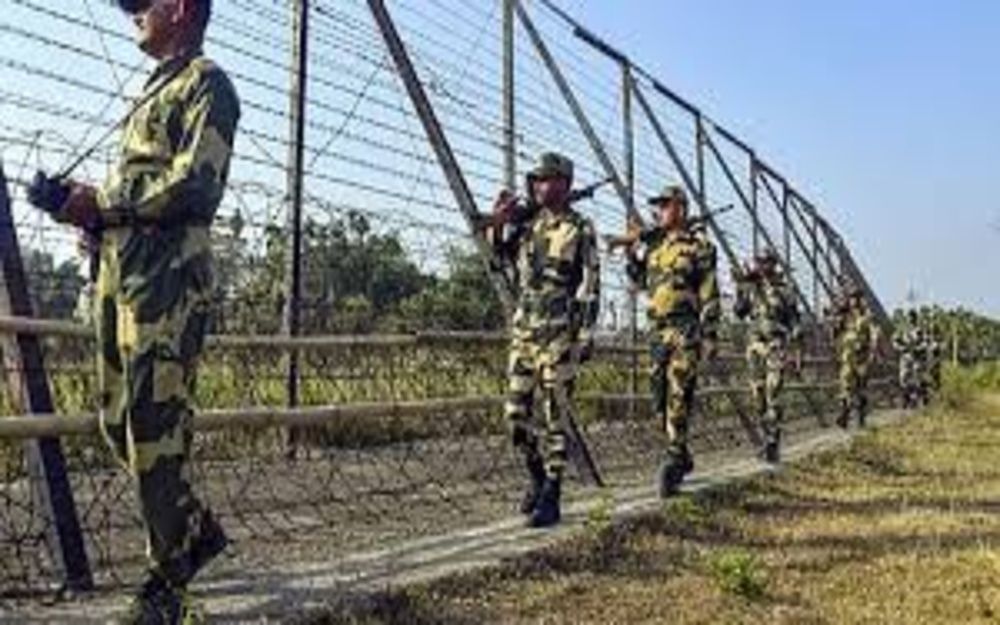
India has invested heavily in fencing, surveillance, and patrol mechanisms along its eastern borders. Officially, “push back” operations are regularly cited as evidence of enforcement. Yet recurring reports of illegal entry suggest that the system is far from airtight. The contradiction between policy claims and ground realities is where public distrust begins.
For border states like Assam and West Bengal, this is not just a security matter but an existential one. Assam’s history—shaped by the Assam Movement and the promises of the Assam Accord—has left a legacy of unresolved fears around demographic change, land ownership, and cultural preservation. Each new allegation of infiltration reopens these historical wounds.
However, border vulnerability is not solely about fences being breached. It often points to organised networks involving human traffickers, document forgers, and intermediaries who exploit poverty, corruption, and administrative gaps. Without addressing these internal enablers, no amount of fencing can fully secure a border.
Politics, Perception, and the Power of Narrative
What makes the current discourse especially volatile is the way infiltration narratives are being politically framed. Viral videos, selective statements, and inflammatory predictions—such as claims of future religious takeovers or civilisational collapse—convert administrative failures into identity-driven fear.
Such narratives thrive in digital spaces where nuance rarely survives. Complex issues get reduced to slogans, and legitimate security concerns risk being overshadowed by communal overtones. When infiltration is framed exclusively through a religious lens, accountability shifts away from institutions and policies, placing it instead on entire communities.
This framing also feeds into political one-upmanship. In Assam, claims of “anti-state gangs,” coordinated propaganda, and attempts to destabilise elected leadership have added another layer of mistrust. The danger here is not just misinformation, but the erosion of democratic debate itself. When disagreement is portrayed as disloyalty, governance becomes a battleground rather than a responsibility.
Security Without Sacrificing Constitutional Values
It is important to separate illegal infiltration as a governance and security issue from citizenship defined by faith. India’s Constitution does not categorise loyalty by religion, and public discourse must resist that temptation as well. Border enforcement must be firm, but it must also remain lawful, evidence-based, and free from collective blame.
Dismissing infiltration concerns as mere propaganda is as irresponsible as exaggerating them into existential panic. If illegal migration continues due to policy loopholes, weak enforcement, or political patronage, then the failure is systemic. Addressing it requires institutional reform, inter-state coordination, and transparent data—not viral outrage.
The viral video from Doddaballapura should therefore serve as a starting point for serious inquiry rather than instant conclusions. How effective are current border measures? Where do enforcement mechanisms break down? Who benefits from continued illegality? And how can the state respond without weakening democratic norms?
India has navigated far greater challenges by choosing reason over reaction. The true test today is whether the nation can confront its border realities honestly—without allowing fear, distortion, or divisive rhetoric to define the future.
