
“Vande Mataram Is Our Eternal Mantra of Strength”: PM Modi
PM Modi Opens LS Discussion on 150 Years of Vande Mataram

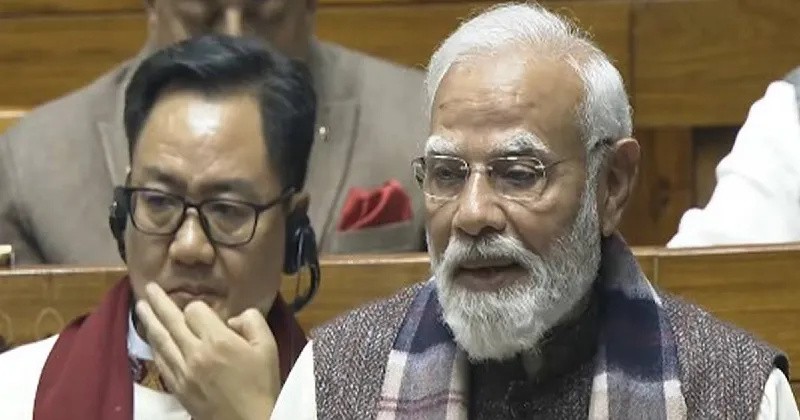
- PM Modi hails Vande Mataram as the mantra that energised India’s freedom movement
- Says 150-year milestone is an opportunity to revive its spirit for a developed India by 2047
- Highlights song’s role in uniting Indians during colonial repression and Bengal partition
- Urges Parliament to honour the national song’s legacy and inspire future generations
GG News Bureau
New Delhi, 8th Dec: Prime Minister Narendra Modi on Monday addressed a special discussion in the Lok Sabha marking 150 years of Vande Mataram, calling the national song a “mantra” that infused spiritual and patriotic energy into India’s freedom struggle. He thanked all Members of Parliament for participating in a collective reflection on a milestone he described as a “privilege for the nation.”
PM Modi said it was a matter of pride that India was witnessing the 150-year journey of Vande Mataram, a song that carried the force of sacrifice, unity and resolve. He noted that this period of commemoration comes at a time when the nation has also celebrated 75 years of the Constitution and the birth anniversaries of Sardar Vallabhbhai Patel and Bhagwan Birsa Munda.
The Prime Minister highlighted that Vande Mataram had travelled through many turning points — from its 50th year under colonial rule to its centenary during the Emergency. He said the 150-year milestone now offers an opportunity “to reclaim its glory and re-establish its legacy of courage and unity.”
Recalling the song’s origin, Modi said Bankim Chandra Chatterjee composed Vande Mataram in 1875 at a time when the British were aggressively pushing their anthem God Save the Queen into Indian households. Bankim’s response, he said, was a powerful cultural defiance that awakened national consciousness.
PM Modi emphasised that Vande Mataram revived emotions and values embedded in India for thousands of years, echoing the Vedic sentiment that the land is a mother and her children are bound to serve her. He called the song the modern expression of Lord Ram’s declaration, Janani Janmabhoomishcha Swargadapi Gariyasi.
The Prime Minister described the national song as a force that united India during the Swadeshi movement, the partition of Bengal and British repression. Citing episodes from Barisal, Nagpur, and Chittagong, he recalled how women, children and revolutionaries faced imprisonment, flogging and even the gallows while chanting Vande Mataram.
He mentioned Khudiram Bose, Ashfaqulla Khan, Ram Prasad Bismil, Masterda Surya Sen and others who went to their deaths with the mantra on their lips, calling it proof that the song embodied “one India — a great India.”
Modi also reminded the House of the support Vande Mataram received from Mahatma Gandhi, who in 1905 described it as “almost a national anthem” and praised its emotional power.
The Prime Minister went on to discuss how the song later fell victim to political disputes, accusing the Congress leadership in 1937 of fragmenting Vande Mataram under pressure from the Muslim League. He said that appeasement politics ultimately “bent the leadership” and later paved the way for Partition.
Modi stressed that the nation must now reclaim and celebrate the cultural and historical importance of Vande Mataram, ensuring that younger generations understand its sacrifices and legacy.
He said the spirit of the national song continued to guide India after independence — during wars, crises, the food shortage era, the Emergency and even the COVID-19 pandemic. Its message of courage and duty, he said, is integral to the vision of an Atmanirbhar Bharat.
Calling on the House to turn the 150th anniversary into a nation-building inspiration, Modi said Vande Mataram must fuel India’s journey towards becoming a developed nation by 2047.
He concluded by urging the nation to move forward with renewed resolve: “The dream of our freedom fighters was an independent India; today’s dream is a prosperous India. Just as Vande Mataram nurtured the dream of freedom, it will nurture the dream of prosperity.”
