
Tehran Moscow Drills vs US Strikes Brinkmanship the Sea of Oman

Poonam Sharma
As the sun sets over the Gulf of Oman, the horizon is no longer just a transit point for the world’s energy; it has become a theater of high-stakes geopolitical poker. In a week defined by a jarring contrast between the quiet diplomacy of Geneva and the thunder of naval cannons, the world watches with bated breath. On one side, the United States has issued a chilling ultimatum: reach a nuclear deal or face military strikes. On the other, Iran and Russia have locked arms in a maritime display of defiance that signals a shift in the regional power balance.
The Geneva Paradox: Talks Without Trust
The second round of indirect nuclear talks in Geneva ended this Wednesday not with a handshake, but with a warning. While Iranian Foreign Minister Abbas Araghchi spoke of “guiding principles,” the reality on the ground feels far more fractured. White House Press Secretary Karoline Leavitt’s assessment was blunt: the two sides remain “very apart.”
The core of the deadlock is a fundamental clash of constitutional and national mandates. Washington, under the Trump administration, demands a total cessation of uranium enrichment on Iranian soil and wants to expand the scope to include Tehran’s ballistic missile stockpile—a move Iran views as an existential threat to its sovereign right to self-defense. For Tehran, any deal must include comprehensive sanctions relief before they dismantle what they view as their “peaceful” nuclear infrastructure.
The Shadow of 2024: A History of Force
To understand the current tension, one must look back at the scars of the recent past. The ghost of last year’s 12-day war still haunts the diplomatic corridors. That conflict, triggered by Israeli strikes and followed by U.S. bombing runs on Fordow, Natanz, and Isfahan, proved that the threshold for military intervention has lowered significantly.
President Trump’s recent rhetoric on Truth Social—mentioning the potential use of the Chagos Islands airbase to “eradicate” threats—isn’t just digital bluster. It is backed by the physical presence of the USS Abraham Lincoln and a second carrier group steaming toward the region. This “Maximum Pressure” 2.0 strategy aims to corner Tehran, but history suggests that a cornered power often opts for escalation over submission.
A New Axis: The Iran-Russia Gambit
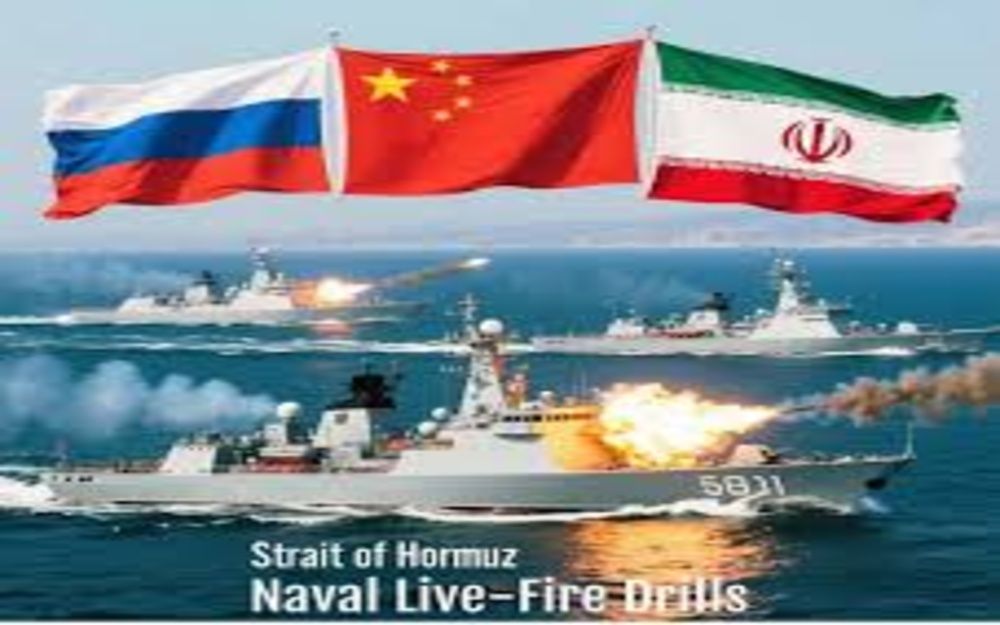
Perhaps the most significant development is the formalization of the Iran-Russia military axis. Rear Admiral Hassan Maqsoudlou’s announcement of joint naval drills is a calculated “message of peace” wrapped in a cloak of deterrence. By inviting Moscow into the Sea of Oman, Tehran is effectively telling Washington that any “unilateral action” will no longer occur in a vacuum.
Russian Foreign Minister Sergey Lavrov has already framed any potential U.S. strike as “playing with fire.” This partnership complicates the U.S. military calculus. A strike on Iranian assets now carries the implicit risk of collateral damage to Russian personnel or interests, potentially escalating a regional skirmish into a global confrontation.
The Economic Chokepoint: The Strait of Hormuz
At the heart of this military posturing lies the Strait of Hormuz—the jugular vein of the global oil trade. Iran’s Revolutionary Guard (IRGC) has already conducted “war games” specifically designed to practice closing this vital route. For the global community, this isn’t just a military concern; it’s a constitutional crisis for global trade. If the Strait is blocked, the resulting energy shock could cripple economies from New Delhi to Berlin, making the diplomatic efforts of Oman, Qatar, and Saudi Arabia not just altruistic, but necessary for survival.
The Road to March: Diplomacy on the Clock
The countdown has begun. With U.S. Secretary of State Marco Rubio scheduled to meet Prime Minister Netanyahu on February 28, and the full U.S. carrier strength expected by mid-March, the window for a negotiated settlement is closing.
The international community finds itself in a familiar, yet more dangerous, position. Unlike previous decades where the U.S. was the undisputed arbiter, 2026 sees a fragmented world where regional powers and a resurgent Russia are willing to challenge the status quo.
As Barbara Slavin of the Stimson Center noted, there is currently no clear basis for an agreement. Without a significant pivot from either Washington or Tehran, the “guiding principles” of Geneva may soon be replaced by the rules of engagement in the Sea of Oman. For now, the world waits, nervously checking the news, hoping that the “message of peace” touted by admirals isn’t just a prelude to the first shot of a much larger war.
