

By Anjali Sharma
WASHINGTON – European Union lawmaker Bernd Lange, chair of the European Parliament’s Committee on International Trade on Monday has sharply criticized a draft trade agreement between the European Union and the United States, warned that it could undermine the bloc’s economic stability and job security.
Bernd Lange, chair of the European Parliament’s Committee on International Trade, described the proposed framework, which includes a 15 per cent tariff on all EU exports to the United States, as “unsatisfactory” and “significantly imbalanced.”
The tariff rate, he noted, would represent a fourfold increase over current average levels, while the EU would commit to zero tariffs on US goods.
“This is a deal with a slant. Clearly, concessions have been made that are difficult to bear,” Lange said in a statement issued.
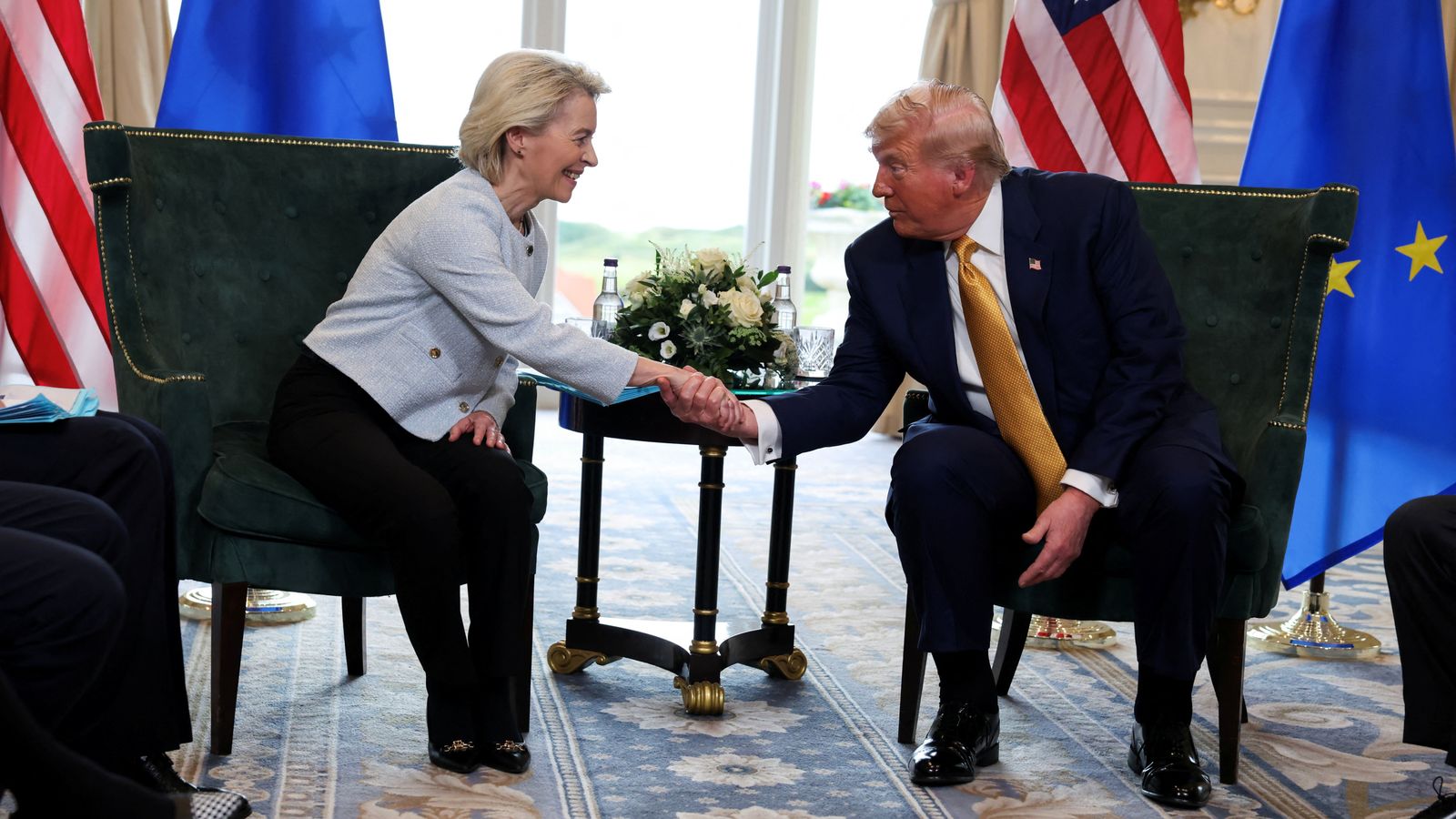
US President Donald Trump and European Commission President Ursula von der Leyen announced earlier that they had reached a trade agreement under which the United States would impose a baseline tariff of 15 per cent on EU goods, media reported.
Both leaders described the deal as a step toward restoring “trade balance” and promoting more equitable two-way commerce, the agreement allows Washington to levy broad tariffs while securing zero-tariff access for a range of strategic American exports.
EU has pledged to purchase 750 billion US dollars’ worth of American energy and commit an additional 600 billion US dollars in investments in the United States.
Mr. Lange noted that while Trump publicly declared a blanket 15 per cent tariff during remarks after the talks, he had explicitly excluded certain sectors, including steel and pharmaceuticals.
He added that increased European purchases of US energy, particularly liquefied natural gas, were anticipated, as the EU continues efforts to reduce its reliance on Russian fossil fuels.
Lange criticized the 600 billion dollars in planned additional investments, including increased funding for US military technology, called such measures contrary to European economic interests.
He likened the pressure tactics used in the deal to those Washington employed in recent negotiations with Japan.
“Overall, this deal will contribute to weakens the EU’s economic development and harming its gross domestic product,” he concluded.
