

Poonam Sharma
From Sanctions to Shock and Awe: How Washington Chose Military Force Over Diplomacy
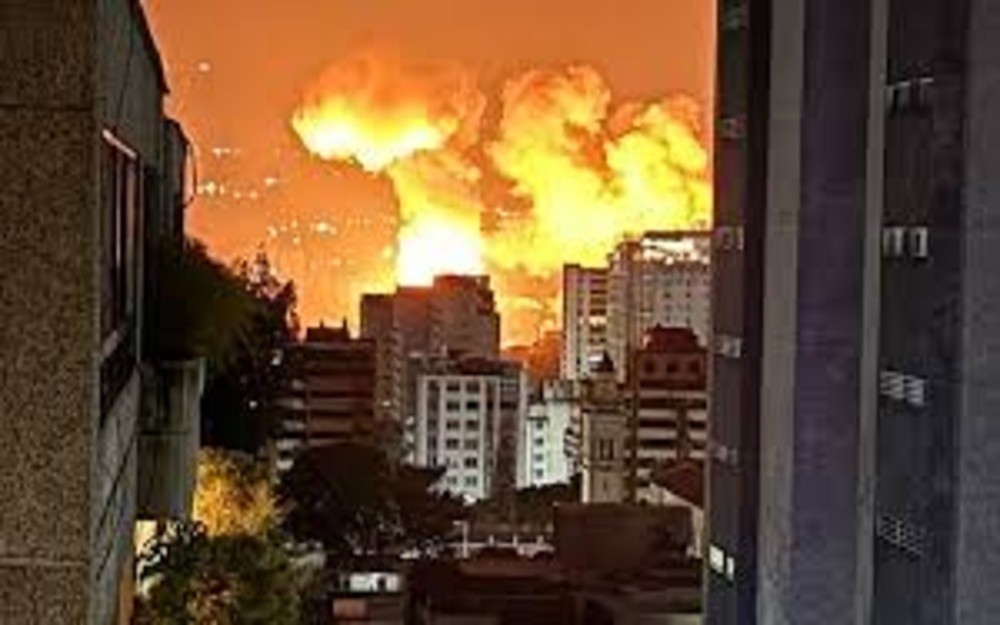
The US airstrikes on Caracas and the capture of Venezuelan president Nicolás Maduro represent one of the most dramatic escalations of American power in Latin America in decades. More than a military operation, it is a political statement — about US dominance, regime change, and the limits of international norms in an era increasingly shaped by force rather than diplomacy.
While Washington has long treated Venezuela as a hostile state, the decision to bomb its capital and arrest a sitting head of state crosses a line rarely breached in modern international relations. The last comparable episode was the 1989 US invasion of Panama and the arrest of Manuel Noriega — an action still debated today for its legality and long-term consequences. That history looms large as the region and the world try to understand how events reached this point.
At its core, the attack is the culmination of a years-long pressure campaign that intensified sharply during Donald Trump’s second term. The Trump administration framed Venezuela not just as an authoritarian state, but as a criminal enterprise — accusing Maduro of narco-terrorism, illegal migration facilitation, and destabilising the hemisphere. The $50m bounty on Maduro’s head was an unmistakable signal that Washington no longer saw him as a diplomatic adversary, but as a fugitive to be hunted.
Yet rhetoric alone does not explain the scale of the operation. The steady military build-up around Venezuela since September — naval fleets, airstrikes on alleged drug-trafficking vessels, and the seizure of oil tankers — suggested that Washington was preparing the battlefield well before the final strike. By the time bombs fell on Caracas, the infrastructure for escalation was already in place.
Oil, Power and the Monroe Doctrine Reborn
What makes this episode especially unsettling is the explicit ideological framing used by Trump. By invoking the Monroe Doctrine — rebranded as the “Don-Roe doctrine” — the administration openly asserted US political, military, and economic primacy over the western hemisphere. This was not framed as a humanitarian intervention or a multilateral effort, but as a unilateral assertion of dominance. Trump’s declaration that the US would “run the country” until a transition occurs underscored this approach.
Oil, inevitably, sits just beneath the surface of the official justifications. Venezuela possesses the world’s largest proven oil reserves, yet years of sanctions and mismanagement have crippled production. Trump’s remarks about US oil companies entering Venezuela were unusually blunt, stripping away the language of democracy promotion and revealing a more transactional logic: access to resources, secured by force if necessary.
Regime Change Without a Plan: The Risk of Chaos After Maduro
For Maduro, the capture marks a dramatic end to a rule defined by repression, economic collapse, and international isolation. His government oversaw the hollowing out of democratic institutions, widespread human rights abuses, and a humanitarian crisis that forced millions to flee the country. Yet his downfall, delivered by foreign bombs rather than domestic accountability, complicates the narrative of justice. To many in Latin America, Maduro’s crimes do not automatically legitimise US military intervention.
The reaction inside Venezuela reflects this tension. While opposition leaders have welcomed Washington’s move and see it as an opportunity to finally end Chavismo, the military — the true backbone of the state — appears largely intact. That raises the central uncertainty of the moment: removing Maduro does not mean removing the system that sustained him. Power vacuums, especially in heavily militarised states, rarely produce quick or clean transitions.
History offers sobering lessons. US war games themselves predicted prolonged instability if Venezuela’s leadership were “decapitated.” Competing factions, armed groups, and external actors could easily turn the country into a theatre of chaos — with consequences extending far beyond Venezuela’s borders.
