
UNSC says attacks against civilians in Ukraine unacceptable, unjustifiable, must stop

By Anjali Sharma
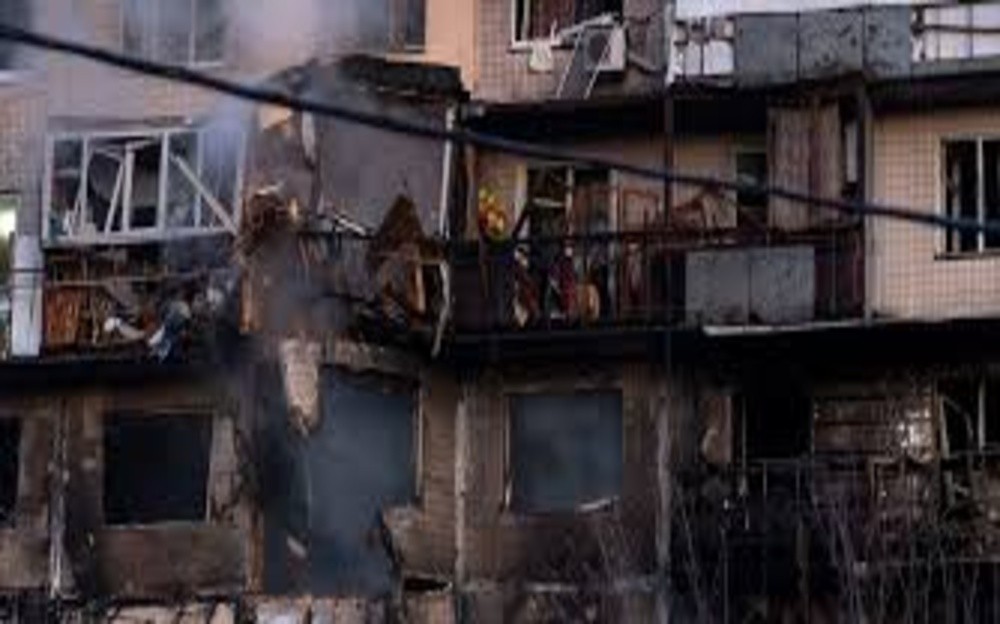
UNITED NATIONS – The UN Security Council on Monday met in an emergency session in New York to discuss the situation in Ukraine over Russia’s ongoing deadly missile and drone strikes targeted Ukrainian civilians and energy infrastructure, as frigid winter conditions grip the country..
Head of the UN political Affairs and Peacebuilding Rosemary DiCarlo and Ramesh Rajasingham, Director, Humanitarian Sector Division, Head and Representative of the Office for the Coordination of Humanitarian Affairs in Geneva briefed the members of the Council.
The Council members and the other member States Ukraine, Poland, Lithuania, Romania and the Head of the Delegation of the European Union to the UN took the podium for deliberation.
UN agencies reported millions have been deprived of electricity, heating and water.
Secretary General Antonio Guterres has called the stepped up attacks an unacceptable violation of international humanitarian law.
Rosemary DiCarlo, Under-Secretary-General for Political and Peacebuilding Affairs said that “The start of the new year has brought no peace or even respite to Ukraine”.
She said large-scale aerial assaults by the Russian Federation against civilians and civilian infrastructure have resulted in “horrific” levels of destruction and suffering.
Ms. Carlo said that Moscow reportedly launched 242 drones and 36 missiles against Ukraine between 8 -9 January.
She added that at least 4 people were reportedly killed and 25 injured in Kyiv alone.
The areas in Lviv were reportedly targeted by the so-called Oreshnik, believed to be capable of carrying nuclear weapons.
She reaffirmed Mr. Guterres calls for an immediate, full and unconditional ceasefire.
“Any peace in Ukraine must fully uphold the sovereignty, independence and territorial integrity of Ukraine within its internationally recognized borders.”
Ramesh Rajasingham, Head of the Geneva Office for the Coordination of Humanitarian Affairs and Director of the Humanitarian Sector Division in Ukraine said that “the plight of civilians has grown more desperate”, said.
He spoke on behalf of Emergency Relief Coordinator Tom Fletcher, he said the WHO has reported 11 attacks on health care in Ukraine since the start of the year.
“Each damaged substation, heating pipeline or pumping station triggers cascading failures that put even more lives at risk,” he added.
“Use your voice, your influence and your engagement” to ensure civilians are protected, that safe, unimpeded humanitarian access is facilitated to civilians and that humanitarian action is funded in line with the scale of needs, he said.
“Civilians who are enduring these attacks need more than statements of concern,” he insisted.
Lativia ambassador to the UN SAID “We call on the members of this Council to condemn [Moscow’s] systematic brutality,”.
She responded to the latest barbaric escalation against Ukrainian civilians during a sub-zero degree winter, added: “The Russian Federation is deliberately testing the limits of international resolve.”
Latvia rejected Moscow’s well-worn, fabricated pretexts for its attacks, she said. “The whole of Europe has worked tirelessly in good faith to restore peace in our continent.”
Liberian delegate said that “The war in Ukraine tests not only peace and security but the foundational principles of this organization.”
He described these principles as “the rules that make peaceful coexistence among nations possible.”
Their erosion whether through disregard or selective application has repeatedly made the world more dangerous place.
Denmark envoy said “A world committed to multilateralism must reject the notion that force is an effective or legitimate language of security.”
He called on all parties to respect their UN Charter obligations.
Ambassador said that as talks to bring peace to Ukraine continue, Russia has again chosen to intensify its brutal war.”
Denmark condemned these shocking Russian attacks, she said, recalling that directing attacks against civilians constitutes a war crime.
“Hitting a city only a short distance from NATO and EU territory is a reminder of Russia’s recklessness and causes for great concern,” she added.
Chinese envoy to the UN said that “The window for negotiations has opened and the door for peace is in sight”.
The parties to the conflict must build on the hard-won wins in the latest round of dialogue. he stressed.
He rejected all opportunistic attempts to divide the world and use the crisis as a pretext to impose illegal unilateral sanctions and disrupt trade.
US representative to the UN said “Thanks to the leadership of President Trump, we are closer to a deal now than at any point since the war began.”
She described the Russian Federation’s attacks on Ukraine, including its nuclear-capable ballistic missile, as “another dangerous and inexplicable escalation of this war”.
Ambassador condemned Moscow’s attacks on civilians and civilian energy targets as “a mockery of the cause of peace”.
Pakistani Ambassador to the UN noted that February marks four years since the start of the conflict in Ukraine, said the international community is “deeply perturbed” by the continuing relentless hostilities.
He expressed alarm at the recent escalation in fighting, worsening the already dire humanitarian situation.
He stressed that protecting civilians and civilian infrastructure is the foundation of international humanitarian law, which must be upheld fully by all sides.
Russian delegate to the UN Ambassador Nebenzia expressed his impression that some elected members had come to the Council to “accuse Russia of all ills” and ignore the causal links behind the deep European security crisis.
“They are suffering from political color blindness,” he said.
He said the Russian army had hit transport, airport and energy infrastructure that sustained Ukraine’s “military industrial complex”.
This was in response to an attack waged by the “Kyiv regime” on the Russian President’s residence, he added.
He denounced assertions about Russian attacks targeting Ukrainian families, insisting “The Russian armed forces do not strike civilians.”
Ukraine’s delegate said “Every time the international community believes that Russia has reached the limits of lies and barbarity, Moscow once again outdoes itself, finding a way to sink even lower in proving that there is no bottom to its criminal intent”.
He said that the world is witnessing echoes of “evil empires” that sought to break civilian resistance by weaponizing cold, hunger and darkness.
Ukraine envoy recalled that 80 years ago, the war that raged on Ukrainian soil claimed up to 10 million lives.
He said that Moscow’s blatant use of an Oreshnik missile represents “a clear threat” to European security and poses serious risks to international peace.
Ukraine envoy said Russian claims of a fake attack on the Russian President’s residence that never occurred are “just absurd” and “an absolute lie” reminiscent of the 1939 Gleiwitz false flag incident.
Poland’s representative said “The systematic nature of Russian attacks demonstrates a deliberate strategy to inflict suffering on the civilian population,”.
“These attacks are being accompanied by a characteristic Russian fog of disinformation.”
The Russian Federation is not interested in peace, but in the destruction of Ukraine and its complete capitulation, he said.
Lithuania’s speaker, on behalf of the Baltic States, said Moscow “deliberately targeted energy facilities, civilian infrastructure and even diplomatic missions” in Ukraine.
He warned that Moscow’s aggression is being supported by Belarus, the Democratic People’s Republic of Korea and Iran and financed through “shadow fleet tankers” and illegal oil trade, alongside hybrid actions across Europe.
The representative of the European Union in his capacity as observer, recalled that Ukraine had agreed to a ceasefire nearly a year ago.
The Council should push Moscow into meaningful negotiations, he said.
He also condemned the military support provided to the Russian Federation by Iran, Belarus and the North Korea.
