
UNSC divided as Venezuela crisis deepens after Maduro captured, in US custody

By Anjali Sharma
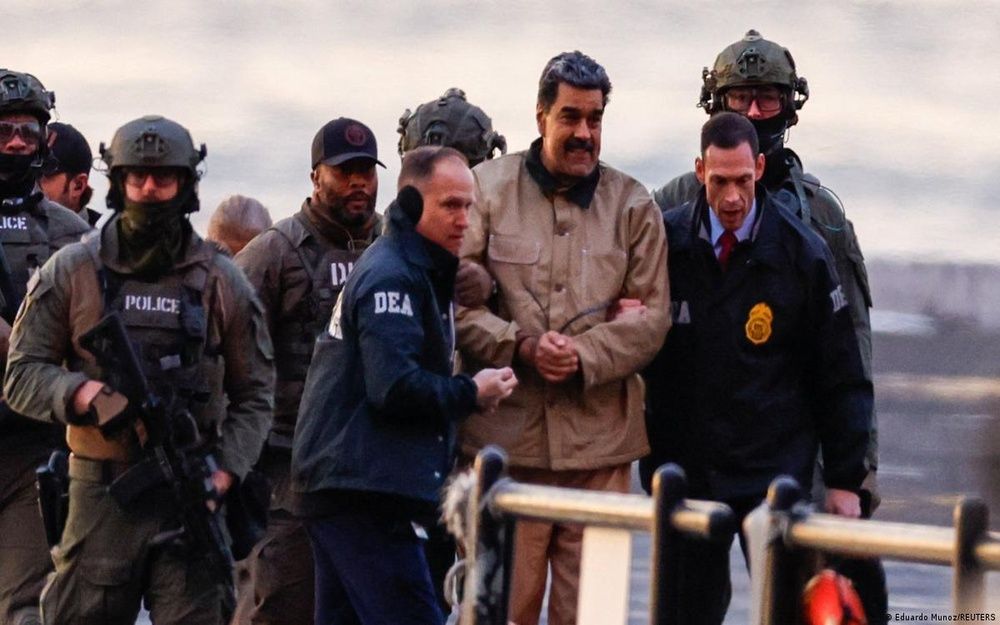
UNITED NATIONS – UN Security Council on Monday met in an emergency session to address the US rendition of Venezuela’s President Nicolás Maduro from Caracas, a move that has sent shockwaves through the region and beyond.
UN Secretary General António Guterresin an open debate on the situation told the Council members that there must be respect for national sovereignty, “political independence and territorial integrity,” as he warned on Saturday that the US had set a “dangerous precedent” for the world order.
Jeffrey Sachs, President of the UN Sustainable Development Solutions Network and Director of the Center for Sustainable Development at Columbia University, stressed that the issue at stake today is not Venezuela’s character.
“The issue is whether any Member State, by force, coercion or economic strangulation has the right to determine Venezuela’s political future or to exercise control over its affairs,” he said.
He said that the Council must decide whether to uphold or abandon Article 2, Section 4 of the UN Charter which prohibits the threat or use of force against the territorial integrity or political independence of any State.
Mercedes De Freitas, Founder and Executive Director of Transparencia Venezuela, told the Security Council that criminal organizations have a “symbiotic relationship” with the regime of Nicolás Maduro, using State structures for drug trafficking, extortion and human trafficking.
She said corruption has drained public finances, leaving citizens with failing services, food insecurity and daily extortion by armed groups.
“So many families rely on only one meal per day,” she warned.
She added that worsening impunity fuels repression, torture and deaths from lack of medical care cases documented by the UN.
Mercedes De Freitas called for accountability, she urged the creation of “a transparent State” and freedom for all political prisoners.
Ambassador of Colombia to the UN Leonor Zalabata Torres strongly condemned the events of 3 January, stressed that the Charter of the UN permits the use of force only in exceptional circumstances, such as self-defence, and not to seize political control of another State.
She warned that uncertainty caused by the “attacks” could trigger a large influx of migrants, requiring significant resources to support host communities.
She said that as a preventive measure, Colombia has taken steps to maintain stability along the border and address potential humanitarian needs, including those of migrants.
Russian envoy to the UN Vassily A. Nebenzia condemned the United States for what he called armed aggression against Venezuela in violation of international law, urged Washington, D.C., to immediately release the “legitimately elected President” and his spouse.
He called on Council members to abandon double standards and not justify “such an egregious act of aggression” out of fear of the “American global gendarme”.
Nebenzia warned that the United States seeks control over Venezuela’s natural resources, he said its actions are generating “fresh momentum for neocolonialism and imperialism”.
Chinese representative said his country was “deeply shocked by, and strongly condemns”, what he described as the United States’ “unilateral, illegal and bullying acts” against Venezuela.
He accused the United States of “wantonly trampling upon Venezuela’s sovereignty, security and legitimate rights and interests”, placing power above multilateralism and military action above diplomacy.
He warned of a grave threat to peace in Latin America and beyond.
Ambassador of China urged the United States to heed the “overwhelming voice” of the international community and return to dialogue.
US ambassador to the UN Michael G. Waltz told the Security Council that Washington, D.C., carried out “a surgical law enforcement operation” to apprehend two indicted fugitives, named “narco-terrorist Nicolás Maduro and Celia Flores”.
He stressed that “there is no war against Venezuela or its people”, he compared the action to the 1989 arrest of Manuel Noriega.
Waltz described Mr. Maduro as a fugitive and leader of a “vicious foreign terrorist organization”, alleged links to drug trafficking networks that use “illegal narcotics as a weapon”.
He cited broader human rights concerns, he pointed to alleged extrajudicial killings, torture and arbitrary detentions, noting that more than 8 million Venezuelans have fled the country.
Panama envoy Eloy Alfaro de Alba said that events in Venezuela are regrettable for their potential impact on regional peace but called for a constructive, forward-looking approach.
He reaffirmed that his country’s commitment to multilateralism, sovereignty and the UN Charter.
Eloy Alfaro de Alba said Venezuela’s crisis stems from sustained democratic erosion and rejected recognition of what it called an illegitimate, authoritarian regime.
He demanded the immediate release of political prisoners, highlighted the humanitarian and migratory fallout affecting the region, including Panama, and urged a peaceful, democratic transition reflecting the will expressed in Venezuela’s 2024 elections.
Sanita Pavļuta-Deslandes of Latvia said that Mr. Maduro’s regime “was rooted in mass repression, corruption and organized crime, including drug trafficking, and posed a grave threat to the security of the region and the world”.
Lativian ambassador said that the regime repeatedly violated the UN Charter and undermined international law, including through its open support for the Russian Federation’s aggression against Ukraine.
She said that her country stands prepared to continue working with its partners to support a peaceful, democratic and just transition in Venezuela.
British envoy James Kariuki said that Maduro’s actions created extreme levels of poverty, violent repression and failing basic services and precipitated a displacement crisis affecting the whole region.
“Maduro’s claim to power was fraudulent,” he said.
He noted that his country’s desire to see a safe and peaceful transition to a legitimate Government that reflects the will of the Venezuelan people.
James Kariuki also reaffirmed his country’s commitment to international law and the principles enshrined in the Charter.
“These foundations are essential for maintaining global peace, security and the rule of law,” he said.
Venezuela ambassador to the UN Samuel Moncada said that not only his country’s sovereignty is at stake, but also “the credibility of international law” and the authority of the United Nations.
He said Venezuela was subjected to an “illegitimate armed attack” by the United States on 3 January, lacking any legal justification and constituting a flagrant violation of the UN Charter, Geneva Conventions and the principle of sovereign equality.
Samuel Moncada warned that tolerating the “kidnapping of a Head of State” and attacks on civilians would signal that “the law is optiona.l”
He argued that the aggression is driven by Venezuela’s natural resources and geopolitical position.
Francisco Fabián Tropepi of Argentina welcomed President Donald J. Trump’s “decisive action”, stated it could help end repression that has driven millions of Venezuelans into poverty and forced some 8 million to flee.
He warned that drug trafficking from Venezuela has harmed the entire region, he said Buenos Aires has “unequivocally denounced the lack of freedom” there.
Francisco Fabián Tropepi recalled Argentina’s asylum for opposition figures, he urged international support for a peaceful path to “restore institutional normalcy” and called for the release of an Argentine citizen detained since 2024.
Chile’s delegate condemned the United States’ unilateral military action in Venezuela, stressed that although Santiago does not recognize the Maduro regime, “the serious violations of human rights do not have a military solution”.
She said Venezuela’s crisis must be addressed through the “legitimate aspirations” of its people, expressed in free elections and citizen participation.
Chilean envoy recalled that Chile’s own recovery of democracy with international support and organized citizens.
She urged the Secretary-General and the Council to help de-escalate the situation.
Sérgio França Danese of Brazil said his country firmly rejects the armed intervention in Venezuela, called it a blatant violation of the Charter of the UN and international law.
He stressed that “South America is a zone of peace.”
Sérgio França Danese warned that bombings on Venezuelan territory and the capture of its President “cross an unacceptable line”.
He said that international norms allow no exceptions based on interests or ideology.
Sérgio França Danese warned against spheres of influence, he linked weakened global governance to record conflicts, soaring humanitarian needs and military spending nearing $2.7 trillion.
Mexico ambassador to the UN said the United States’ action must not be permitted, called it a violation of the UN Charter and a threat to multilateralism.
He stressed that the Council has an “obligation to act decisively and without double standards”, he said it is for “sovereign peoples to decide their destinies” with full respect for human rights.
Ambassador warned that Mexico is against regime change by external actors and extraterritorial measures.
He said such actions have “historically” only exacerbated conflicts and weakened societies.
Cuban delegate warned the Council that Washington, D.C.’s, “hegemonic and criminal plans” towards Venezuela have produced serious and unpredictable consequences for regional stability.
Envoy accused the United States of unilateral coercive measures, “economic asphyxiation” and even maritime terrorism.
He said these acts show disregard for the Charter of the UN and international law.
Cuban delegate described the kidnapping of President Nicolás Maduro and Cilia Flores as driven by a quest for “control over Venezuela’s land and natural resources”, called it “imperialist and fascist aggression”, and demanded their immediate release.
