

By Anjali Sharma
UNITED NATIONS – UN conference on Ocean on Thursday called for a global push to end plastic pollution as over 40 ministers gathered to tackle one of the planet’s fastest-growing environmental threats: plastic pollution.
They voiced a shared determination to finalize this year a global treaty that could, for the first time, regulate plastics across their entire life cycle.
“There is renewed commitment to conclude the treaty in August,” Jyoti Mathur-Filipp, who attended the meeting and is leading the treaty negotiations, she stated.
“This is too urgent an issue to be left for the future.”
Inger Andersen, the head of the UN Environment Programme hosted the informal gathering marked a quiet but significant diplomatic moment a sign that after two years of deliberations, political momentum may finally be catching up with scientific alarm.
The round of talks scheduled from August 5 to 14 in Geneva left the negotiators are under pressure to deliver the first legally binding treaty aimed at tackling plastic pollution across production, consumption, and waste.
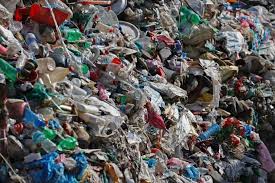
According to UN estimates the plastic waste has infiltrated nearly every ecosystem on Earth, and increasingly in the form of microplastics the human body. Without urgent action, the amount of plastic entering the ocean each year could reach 37 million metric tons by 2040.
“We are choking with plastic,” Ms. Mathur-Filipp said. “If we do not do something to tackle plastic pollution, we will not have a single ecosystem left, whether it’s terrestrial or marine.”
The economic toll is no less staggering. Between 2016 and 2040, the projected cost of plastic-related damage could reach $281 trillion. “It is costing the economy a lot,” she said.
“In tourism in beach clean-up, in lack of fish for fishing folk, coastal damage, wetlands damage.”
The treaty process was launched in 2022, at the request of the UN Environment Assembly, the world’s highest decision-making body on environmental issues.
The Intergovernmental Negotiating Committee has convened five times in less than two years an unusually rapid timeline by UN standards.
Ms. Mathur-Filipp, who serves as the INC’s Executive Secretary said “We have had five sessions very rapidly from December of 2022 to December of 2024,” said.
She hopes the upcoming session this August in Geneva will mark the treaty’s conclusion.
A key breakthrough came 6 months at the last round of talks in Busan, South Korea, where delegates produced a 22-page “Chair’s text,” outlined the draft treaty’s basic structure.
“It has 32 or 33 articles in it, with names of articles, so countries can now start seeing what this treaty will look like,” she explained.
“They have started speaking with article numbers for negotiation… and this is why my hope is that there would be a conclusion.”
The draft treaty is under negotiation, it includes measures that would target the entire life cycle of plastic – from upstream production to downstream waste. It reflects both mandatory and voluntary provisions, in line with the original UN mandate.
The current draft also includes the institutional architecture of a typical multilateral treaty: the ratification process, governance rules, and proposed implementation bodies.
“It has an objective. It has a preamble,” said Ms. Mathur-Filipp. “It looks like a treaty.”
If all goes according to plan, the final text will be submitted to a diplomatic conference – later this year or in early 2026 – where governments can formally adopt it and begin the ratification process.
The plastic pollution is a global issue, some countries especially small island developing states bear a disproportionate burden.
“It is a fact that small island developing states are not the ones that are using plastic as much as what’s flowing onto their shores and therefore, they become responsible for beach clean-up, which is not their doing,” Mathur-Filipp said. “They are unfairly impacted.”
An estimated 18 to 20 per cent of global plastic waste ends up in the ocean.
Ms. Mathur-Filipp worked at the UN Convention on Biological Diversity, where she helped shape the landmark Kunming-Montreal Global Biodiversity Framework, the 2022 agreement to protect 30 per cent of the planet’s land and ocean by 2030. The challenge of managing a fast-moving, high-stakes negotiation is familiar terrain.
“I wasn’t tired enough there, so now I’m doing this,” she said.
The outcome in August could determine whether the world takes a decisive step toward curbing the plastic crisis or allows it to deepen, unchecked, she concluded.
