

By Anjali Sharma
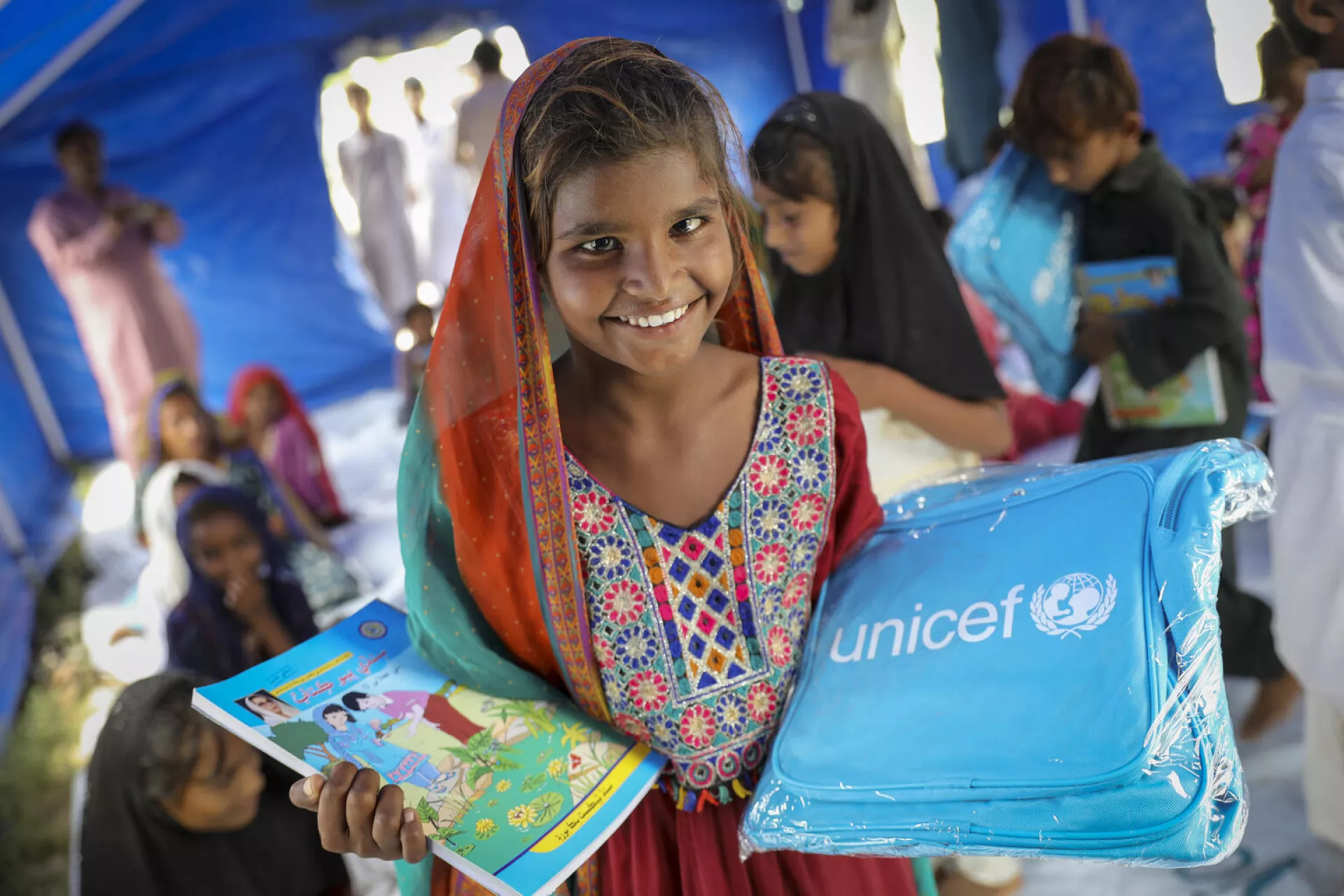
UNITED NATIONS – UNICEF on Thursday issued a press release in New York stated that UN is working to bring education to millions of crisis-affected children from makeshift furniture in Gaza to metro classrooms in Ukraine and solar-powered tablets in Sudan.
The agency noted that 234 million school-age children affected by conflict globally, 85 million children are completely out of school.
Helena Murseli, who leads the UNICEF Global Education in Emergencies team, said that “The figures are “unprecedented.”
“These are not isolated incidents. They are part of a global pattern of escalating conflict that affects children’s right to learn,” she said.
In the short and long-term, the consequences of missing out on education during violent crisis are severe.
“Education is not just lifesaving, it’s also life-sustaining and life-changing,” Ms. Murseli emphasized
“When schools close, families also lose their anchor. Children miss the structure, the safety, the normalcy that education provides,” she said.
“The day-to-day reality becomes about immediate survival, rather than building a future for them.”
Ms. Murseli stressed that the long-term impacts are just as or even more significant.
“Education breaks cycles of conflict and poverty. When entire generations miss school, countries lose the human capital needed for recovery and development. We risk creating what we call a ‘lost generation’—children who grow up knowing only crisis, without the skills or hope to rebuild their society.”
UN agency noted that in terms of numbers, Sudan is the world’s largest education emergency.
An estimated 19 million children are out of school, and 90 per cent of schools are closed nationwide due to ongoing violent conflict.
Ms. Murseli highlighted that over 2.4 million children have returned to school through more than 850 UNICEF-run Makanna centres meaning “our space” in Arabic.
UNICEF has supported over 250,000 children with holistic education services, providing students with water, sanitation, nutrition and protection so they’re able to successfully continue their studies.
It utilizes solar-powered tablets for education, “perfect for a country with more than 10 hours of daily sunshine,” said Ms. Murseli.
She reiterated that a $400 million Transitional Educational Plan led by the UNESCO aims to restore access to education and vocational training.
UNICEF’s education support project in Sudan plans to support relatively stable states with printed materials and remote learning tools.
Gaza war and the destruction of 95 per cent of educational infrastructure has left over 660,000 children out of school nearly all of Gaza’s school-aged population.
Many former UN-run schools are now being used as shelters for displaced people.
UN Human Rights Council report found that Israeli forces systematically destroyed education infrastructure in Gaza and described these actions as possible war crimes.
Ms. Murseli and the UNRWA reported that over 68,000 children in Gaza have been reached through temporary learning spaces offering education and psychosocial support.
UNICEF is also recycling pallets into school furniture and converting supplied boxes into tables and chairs.
In addition, digital tools to study literacy and numeracy lessons have been provided to nearly 300,000 Palestinian refugee children.
In Ukraine, 5.3 million children face barriers to education, and around 115,000 are completely out of school due to the ongoing war.
With many schools on the front lines either closed or operating remotely, over 420,000 children attend school fully online, while 1 million use a hybrid model.
The ongoing energy shortages have reduced access to online learning to as little as two and a half hours each day, and in-person school is often disrupted by indiscriminate attacks, UNICEF stated.
In Russian-controlled areas of Ukraine, the UN Human Rights Office said that authorities are enforcing a militarized, patriotic curriculum and banning the Ukrainian language actions that violate international law, which requires occupying powers to respect children’s national identity and education.
UNICEF has established 150 student learning centres in frontline areas and offers twice-weekly catch-up classes in math and Ukrainian language.
Ms. Murseli also highlighted UNICEF’s running of schools in underground metro systems and bomb shelters.
In 2025, the organization aims to help over 500,000 children across the country access formal education and recreational activities.
UN has launched an initiative to create protected shelters for students and staff during air raids to increase safety
The agency said that as crises deepen and humanitarian funding continues to decline, education programmes have faced dramatic cuts.
Ms. Murseli underscored that as humanitarian funding could drop up to 45 per cent by the end of this year, “despite being families’ top priority in emergencies, education receives only 3 per cent of humanitarian aid.”
“I think we are at the critical turning point where we need urgent prioritization of education and not further cuts,” she said.
Ms. Murseli emphasized that holistic education programmes that provide students with the humanitarian resources to thrive are the key to withstanding crises and development after a “humanitarian reset” saving funds by making the humanitarian system more effective.
She concluded “We’re talking about 234 million children’s future and ultimately, global stability and development. The cost of inaction far exceeds the investment needed to get every crisis-affected child learning.”
