

Anjali Sharma
GG News Bureau
UNITED NATIONS, 26th Jan. UNICEF representative in Sudan Mandeep O’Brien has warned on Thursday that the war in Sudan is putting the future of 24 million youngest citizens at risk.
Mandeep O’Brien said “Sudan is experiencing a humanitarian catastrophe of epic proportions. It’s a living nightmare for children”.
UNICEF noted that 10 months have passed since clashes erupted between the Sudanese Army and a rival group known as the Rapid Support Forces, which left 14 million children in desperate need of lifesaving assistance.
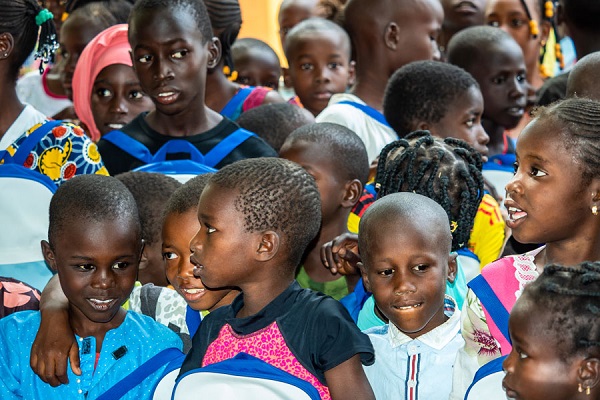
Ms. O’Brien said the fighting has sparked the world’s largest child displacement crisis.
Over 3.5 million boys and girls have fled their homes for safer locations, with some uprooted several times.
More than 7.4 million young Sudanese do not have access to safe drinking water, putting them at risk of waterborne diseases, and nearly two million are in urgent need of lifesaving vaccines, the agency noted.
UNICEF reported that Sudan has one of the highest rates of child malnutrition in the world.
More than 3 million under-fives suffer from acute malnutrition, and 700,000 could die from its severest form unless they receive medical treatment.
Some 19 million school-age children are not in the classroom, putting Sudan at risk of becoming one of the worst learning crises in the world, it added.
Ms. O’Brien said “Imagine the future of this country if children are not being able to learn,”. “We estimate that if this continues, Sudan would be facing a $26 billion lifetime earning loss.”
She said education is a powerful tool for building peace “because when children are in classrooms, they feel safe, protected, and they can peacefully co-exist,”.
“These are values that we shouldn’t take for granted. These are values that have to be lived and practiced by children.”
UNICEF has been pushing for Sudanese federal and state authorities to re-open schools, but Ms. O’Brien pointed to another barrier to education.
“For that to happen, teachers need to be paid,” she said. “Sadly, since the onset of this war, teachers and other frontline workers have not been paid their salaries, so this has to happen.”
UNICEF and partners have been exploring practical solutions and ways to support the safe re-opening of schools where conditions allow, while working to reach more young learners, it emphasized.
She said “For huge numbers of kids who cannot go to school, who were not registered or enrolled in schools prior to the conflict, we’re trying to bring as many kids as possible into the learning loop, into alternative ways of learning,”.
UNICEF and partners have launched child-friendly spaces at gathering points for internally displaced people to address their needs.
Makanna – Arabic for “Our Place” these are locations where children can feel safe and protected while also continuing their education through e-learning and tried and tested low-cost digital solutions, the agency stated.
Over 850 Makannas have been rolled out across Sudan, reached more than 250,000 children who also receive psychosocial support to address trauma resulting from the war.
UNICEF, WHO and partners continue to work with the Sudanese authorities to provide urgently needed services after disease outbreaks, in addition to carrying out child immunization campaigns.
Ms. O’Brien said they have vaccinated more than a million children against measles “which is of great concern and is currently spreading as we speak.”
The agency reiterated that a campaign to combat measles and rubella, launched with the support of the Global Alliance for Vaccines and Immunization. The aim is to vaccinate more than 5 million children in seven states by the end of the week and 15 million over the coming months.
Ms. O’Brien underlined UNICEF’s commitment to stay and deliver on the ground with their partner, although Sudan risks becoming a forgotten crisis as conflict rages in Gaza and deepens in Ukraine.
They reached over 6.4 million children and families with urgent needs health supplies and screened more than 5 million under-fives for malnutrition, treated over 300,000 severe cases.
She appealed for more funds to meet the growing needs of children, women and families in Sudan.
“Most importantly is we need all international and regional efforts to be joined up so that Sudan can find a political solution to this devastation,” she said.
She concluded “This war has to stop now. Sudan desperately needs peace.”
