

By Anjali Sharma
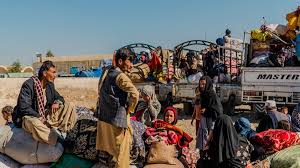
UNITED NATIONS – UNHCR said on Friday that a chaotic wave of returnees from Iran and Pakistan is straining Afghanistan’s fragile capacity under Taliban rule and threatening broader regional stability.
The agency is calling for calm and cooperation to provide a dignified path forward for millions of displaced Afghans.
According to UNHCR, over 1.6 million Afghans have returned from both neighboring countries in 2024 alone, a figure that has already surpassed earlier forecasts for the entire year.
The scale and speed of these returns are placing enormous pressure on border provinces ill-equipped to absorb them, exacerbating poverty, insecurity and humanitarian need in a country still reeling from economic collapse and widespread human rights abuses.
It has complicated the situation the fact that many returnees especially women and children are coming back to a country they barely know.
UNHCR Representative in Afghanistan Arafat Jamal said “They are from Afghanistan [but] not of Afghanistan often born abroad with better education and different cultural norms. Their outlook is different from and often at odds with present day Afghanistan.”
He noted that women and girls face a jarring shift: from relative autonomy in host countries to a context where their rights are severely restricted by edicts from Taliban authorities.
He reported conditions that he had seen for himself recently in Islam Qala, a key border crossing with Iran.
UN officials described scenes of desperation at reception centres with daily arrivals have surged to around 50,000 people, many disoriented and exhausted after arduous journeys.
“Many of these returnees have been abruptly uprooted and have undergone arduous, exhausting and degrading journeys – they arrive tired, disoriented, brutalised and often in despair, and they sprawl throughout a crowded centre in often 40°C (104°F) heat,” Mr. Jamal said.
Some returns are voluntary he added that many are occurring under duress or without proper protections in place. Those returning include both officially registered refugees and people in “refugee-like” situations who may face serious risks upon arrival.
UN and humanitarian partners have mounted a broad-based response along the borders, providing food, water, health services, protection and onward transportation.
The funding shortfalls are critically hampering operations.
UNHCR’s response is just 28 per cent funded as of July, forcing aid agencies to ration supplies and make painful choices.
“We are living on borrowed funds,” Mr. Jamal said. “Daily, we are asking ourselves – should we give one blanket instead of four? One meal instead of three? These are heartbreaking, soul-destroying decisions.”
The situation is equally dire for other agencies: UN-led 2025 Humanitarian Needs and Response Plan for Afghanistan which seeks $2.4 billion to assist nearly 17 million people across the country is only 22 per cent funded.
UN assessments have warned of deteriorating conditions and deepening poverty within Afghanistan.
FAO issued alerts over worsening drought across much of the country, while the UNDP reports that 70 per cent of Afghans live at subsistence levels, as the collapse of public services and ongoing rights violations leaves millions in despair.
The returnees cross the border, often without notice or resources, local populations are being stretched to the limit.
Mr. Jamal noted that this “precarity layered upon poverty” risks fuelling frustration, competition over limited resources and new forms of social tension.
“Afghanistan may be welcoming, but it is wholly unprepared to receive this volume of returnees,” he said.
He added “The communities who are taking people in are doing so with great generosity, but they are themselves in crisis.”
The growing emergency came after the UN General Assembly overwhelmingly adopted a resolution expressed “deep concern” over deteriorating conditions facing Afghans.
The resolution passed with 116 votes in favor and only two against, urged the Taliban to reverse repressive policies and called for renewed international cooperation to support Afghan civilians.
The resolution highlighted the need for “coherent approaches” that bridge humanitarian, development and political efforts. It also called on donor countries to maintain or increase support
