
UNHCR reports 150,000 Rohingya flee to Bangladesh in renewed Myanmar violence

By Anjali Sharma
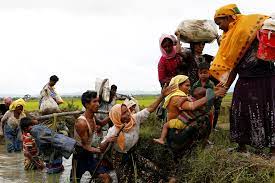
UNITED NATIONS – UN refugee agency on Friday said that escalating conflict and targeted violence in Myanmar’s Rakhine state have forced some 150,000 Rohingya refugees to flee to Bangladesh over the past 18 months the largest exodus in years.
UNHCR noted that as armed clashes intensify and conditions worsen inside Myanmar, thousands continue to cross the border seeking safety in the overcrowded camps of Cox’s Bazar, where one million Rohingya refugees already live in densely populated camps.
Babar Baloch, spokesperson for the UNHCR said that “This is the largest movement of Rohingya refugees into Bangladesh since 2017.”
He clarified that unlike the mass influx in 2017, some 750,000 Rohingya fled deadly violence in Rakhine state, this uptick in refugees has unfolded more gradually.
UNHCR is working closely with local authorities to respond to urgent humanitarian needs, he said.
He stressed “As the conflict in Myanmar continues unabated, we are advocating with the Bangladeshi authorities to provide managed access to safety and asylum for civilians fleeing the conflict”.
Bangladesh has provided refuge to the Rohingya, a mostly Muslim minority community in Myanmar, which is mainly Buddhist.
Bangladesh hosts one million people in the refugee camps and the recent arrivals many are women and children are placing strain on resources. Many are relying heavily on local solidarity and sharing limited resources with those already living in the camps.
UNHCR reported that 121,000 newly arrived refugees had been biometrically registered, many more are believed to be residing informally in the camps. Access to adequate shelter remains a major concern as facilities struggle to absorb the new population.
“These new arrivals join another nearly one million Rohingya refugees crammed into just 24 square kilometres,” said Mr. Baloch. “More humanitarian support is urgently required.”
Aid partners have been able to provide basic services including food, medical care, education, and essential relief items.
The response is now under serious threat due to a lack of funding.
UNHCR warned that the 2024 humanitarian appeal for $255 million is only 35 per cent funded. Without immediate financial support, the entire operation could face systemic collapse.
It reiterated that unless additional funds are secured, health services will be severely disrupted by September and essential cooking fuel liquefied petroleum gas will run out by December.
Food assistance will stop and education for some 230,000 Rohingya children, including 63,000 new arrivals, is in danger of being discontinued, UNHCR added.
Bangladesh Government has allowed new arrivals to access emergency services in the camps despite a strictly controlled and officially closed border.
UNHCR expressed deep appreciation for this humanitarian gesture under highly challenging conditions.
“We don’t have the resources to take care of the new arrivals and also those who were there before them,” said Mr. Baloch. “Everything will be impacted.”
UNHCR and its partners have urged the international community to act swiftly. Without immediate and sustained support, the already fragile humanitarian response in Cox’s Bazar could begin to unravel with devastating consequences for more than one million people who rely on it for survival.
