
UNHCR reiterates call for urgent de-escalation in Iran-Israel conflict, Gaza crisis worsen

By Anjali Sharma
UNITED NATIONS – UN agencies and UNHCR on Saturday reiterated an appeal for urgent restraint in Iran-Israel conflict after a wider regional crisis exacerbated by Israel’s war in Gaza and the worsening humanitarian situation faces by Palestinian civilians.
UN agencies in a joint call to de-escalate have warned that conflict risks triggering new displacement in a region already strained by decades of war and instability.
UNHCR noted military strikes have led people in both Iran and Israel to flee their homes in search of safety from tit-for-tat missile strikes.
“Movements have been reported from Tehran and other parts of Iran, with some choosing to cross into neighboring countries,” the agency stated. Meanwhile, “shelling has caused people in Israel to seek shelter elsewhere in the country and in some cases abroad.”
UN High Commissioner for Refugees Filippo Grandi said “This region has already endured over its share of war, loss, and displacement we cannot allow another refugee crisis to take root,”.
“The time to de-escalate is right now. Once people are forced to flee, there’s no quick way back and all too often, the consequences last for generations.”
UNHCR urged countries in the region to respect the right to seek asylum and ensure humanitarian access to those affected, called on all parties to protect civilians and civilian infrastructure.
According to the UN nuclear watchdog agency IAEA the conflict escalated sharply after Israeli airstrikes on multiple Iranian nuclear-related sites in the past week, including a centrifuge manufacturing workshop in Esfahan.
Director General of the IAEA Rafael Mariano Grossi confirmed that “This is the third such facility that has been targeted over the past week.”
He noted that the facility had been under IAEA surveillance as part of the Joint Comprehensive Plan of Action the nuclear deal signed with Iran in 2015, which the United States pulled out of in 2017.
“We know this facility well. There was no nuclear material at this site and therefore the attack on it will have no radiological consequences,” he said.
Mr. Grossi warned that continued strikes on nuclear infrastructure are severely undermining nuclear safety and security.
“Though they have not so far led to a radiological release affecting the public, there is a danger this could occur.”
The IAEA has been tracking damage to sites in Esfahan, Arak, Karaj, Natanz and Tehran since the Israeli military campaign against Iran began on 13 June. T
The agency has been providing regular updates to the UN Security Council, which has yet to reach consensus on a response.
UN chief António Guterres warned that if fighting escalated it could “ignite a fire no one can control.”
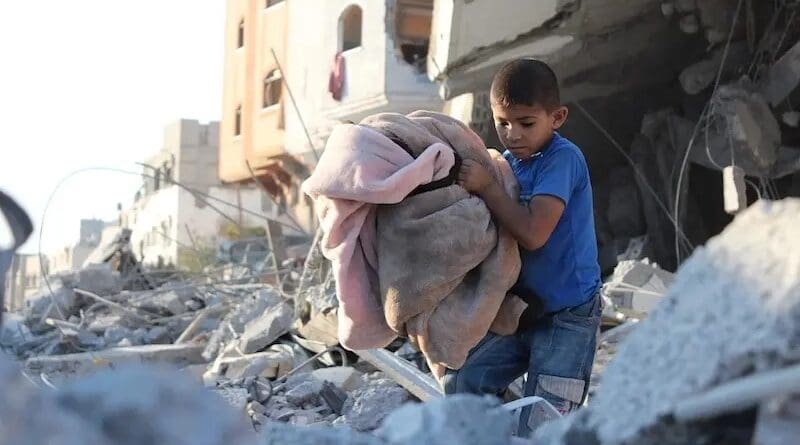
The mounting regional crisis is unfolding against the backdrop of the war in Gaza, where humanitarian conditions continue to deteriorate, he said.
Head of the UN agency for Palestine refugees, Philippe Lazzarini, pointed a grim picture of life in Gaza during an address to the Organisation of Islamic Cooperation in Istanbul.
“In Gaza, two million people are being starved,” he said bluntly. “The newly created, so-called ‘aid mechanism’ is an abomination that humiliates and degrades desperate people. It is a death-trap, costing more lives than it saves.”
Lazzarini described a territory devastated by nearly two years of conflict, with more than 55,000 reported dead by local authorities in the Strip – the majority of them women and children.
He said that survivors “are shadows of their former selves; their lives forever changed by unspeakable trauma and profound loss.”
Mr. Lazarini said that in the occupied West Bank, displacement and destruction of public infrastructure are altering the demography of Palestinian camps.
He added in what he described as an effort to erase the prospect of a Palestinian State under the UN backed two-State solution and strip Palestinians of refugee status.
“UNRWA has become an objective of this war,” Mr. Lazzarini warned, cited the deaths of at least 318 of the agency’s staff in Gaza.
UNRWA continues to provide lifesaving services, including over 15,000 health consultations per day, waste management and shelter support, he said.
He added that UNRWA’s financial situation is now “dire,” . “Without additional funding, I will soon have to take unprecedented decisions affecting our operations across the region.”
He appealed to Member States to act urgently “The sudden loss or reduction of UNRWA’s services will only deepen suffering and despair across the occupied Palestinian territory. It might spark unrest in the neighbouring countries. This is something that the region cannot afford, especially now.”
