

By Anjali Sharma
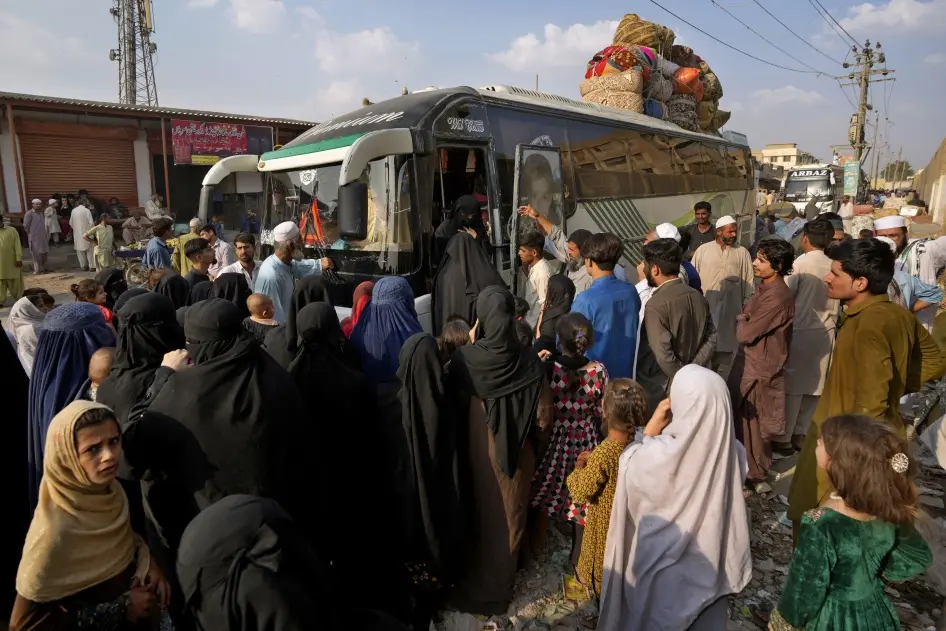
UNITED NATIONS -UN refugee agency Spokesperson Babor Baloch on Tuesday called Pakistan to halt the forcible return of Afghan refugees holding proof of registration cards, Spokesperson Babor Baloch said on Tuesday in Geneva.
He expressed concern over the plight of women and girls sent back to Afghanistan, which has been under Taliban rule for four years.
Pakistan confirmed that Afghan refugees would be deported under an ongoing ‘Illegal Foreigners Repatriation Plan’.
UNHCR has received reports of arrests and detention of Afghans across the country, including PoR cardholders.
“We acknowledge and appreciate Pakistan’s generosity in hosting refugees for over 40 years amid its own challenges,” said Mr. Baloch.
“However, given that those holding PoR cards have been recognized as refugees for decades, their forced return is contrary to Pakistan’s long-standing humanitarian approach to this group and would constitute a violation of the principle of non-refoulement.”
The situation is unfolding after a mass return of Afghans from neighboring countries, including Iran.
Over 2.1 million have returned or been forced to return to Afghanistan, including 352,000 from Pakistan, UN agency said.
“UNHCR remains particularly concerned about women and girls forced to return to a country where their human rights are at risk, as well as other groups who might be endangered,” said Mr. Baloch.
He urged the authorities to ensure that any returns are voluntary, safe and dignified.
UNHCR has continued to seek an extension of the validity of PoR cards, which expired at the end of June, and welcomed the additional one-month “grace period” granted by Pakistan.
“UNHCR strongly urges the Government of Pakistan to apply measures to exempt Afghans with continued international protection needs from involuntary return,” he said.
“We also appeal to Pakistan’s established goodwill to allow legal stay for Afghans with medical needs, those currently pursuing higher education, or in mixed marriages.”
He said the large-scale return of Afghans from neighboring countries has put immense pressure on basic services, housing and livelihoods, as well as host communities.
OCHA said that the general policy is worsening a dire humanitarian crisis in Afghanistan. Almost half the population 23 million people will require humanitarian assistance this year to survive.
Mr. Baloch warned that “mass and hasty returns significantly heighten protection needs, and risk instability in Afghanistan and the region, including onward movement.”
