

Paromita Das
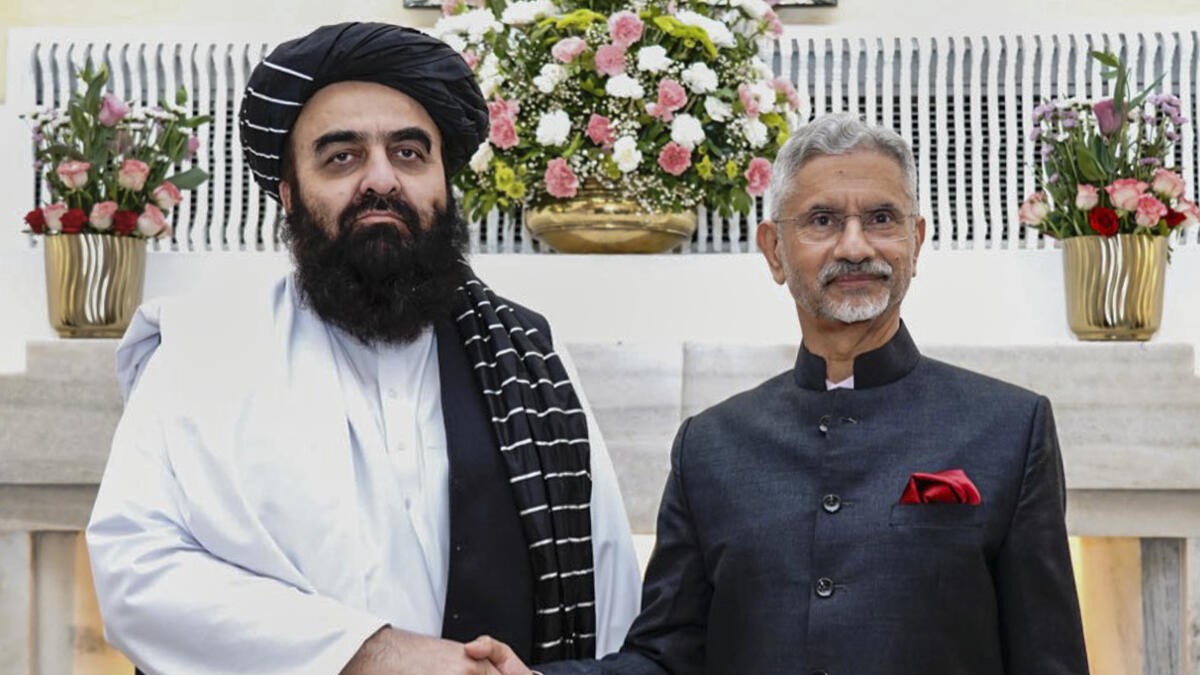
New Delhi, 13th October: The mood in New Delhi these days is charged with a mix of curiosity and caution, as a visit once thought impossible quietly reshapes South Asian geopolitics. The arrival of Taliban Foreign Minister Amir Khan Muttaqi in Bharat is more than a diplomatic headline—it’s a seismic moment that signals how swiftly regional realities have changed. The steely silence surrounding the meeting only deepens its importance: in a world rocked by shifting alliances and blurred boundaries, even adversaries are compelled to negotiate, forced by necessity rather than choice.
Redrawing Boundaries: Bharat’s Calculated Gamble

Bharat’s decision to engage the Taliban marks a sharp turning point. For twenty years, Delhi steered clear of the group’s shadowy rise, firmly aligning itself with the Western-backed Afghan Republic and nurturing ties underwritten by America’s presence. That old order collapsed spectacularly when the U.S. withdrew, throwing Afghanistan into the throes of uncertainty and rewriting the script for every actor in the region.
But this engagement is not a capitulation; it’s strategic calculus, crafted with foresight. The Taliban, once seen as a proxy extension of Pakistan’s influence, have been visibly drifting from Islamabad. Pakistan’s cross-border aggression and airstrikes have eroded loyalty, creating a fleeting but vital window for Bharatiya diplomacy. For Delhi, ignoring Afghanistan now would be unwise—especially when China, Russia, and Iran are all recalibrating their stakes in the new Kabul. This visit signals Bharat’s willingness to step into the evolving vacuum, never abandoning its fundamental interests.
Bharat’s Pragmatic Priorities

Contrary to grand narratives, Bharat’s outreach is calculated and measured. Trade and infrastructure reconstruction are part of the package, but they don’t define the core agenda. For Delhi, security remains paramount. Concerns about extremist groups exploiting Afghan chaos for anti-Bharat activities are real and persistent. Taliban leaders, aware of Bharat’s red lines, have issued repeated assurances against such risks.
Meanwhile, opportunities lurk in Central Asian connectivity: the Chabahar Port in Iran could serve as a gateway for Bharat, offering access to markets and resources beyond Afghanistan, and insulating its reach from regional instability. By keeping diplomatic channels tentatively open, Delhi not only guards its interests but remains poised to act quickly if the calculus shifts.
Pakistan’s Waning Leverage and Changing Narratives

To understand how pivotal this meeting is, one must view it through the lens of Pakistan’s evolving relationship with the Taliban. For decades, Islamabad held Afghanistan’s rulers close, playing the mentor and gatekeeper. But recent confrontations—border skirmishes, airstrikes, and mutual recriminations—have tarnished what was once a reliable partnership. Pakistan now fears losing its strategic grip, as the Taliban seek legitimacy and engagement with powers beyond their immediate neighborhood.
This evolution unsettles America as well. While the U.S. had once dictated terms in Kabul, it now watches Bharat’s outreach with wary concern, measuring every step against its own interests in containing extremist resurgence and managing great-power competition in the region. For Washington, Bharat’s engagement with the Taliban is a double-edged sword—potentially stabilizing, but also risking the dilution of democratic norms and women’s rights that America has long championed in its post-2001 Afghanistan narrative.
Taliban’s New Aspirations: Seeking Sovereign Diplomacy

For the Taliban, Bharat’s willingness to meet is more than symbolic. Faced with deepening economic hardship and an urgent need for humanitarian assistance, the group seeks fresh partnerships. Engaging with Bharat is no longer about ideological posturing—it’s about survival, legitimacy, and securing investment to rebuild Afghanistan’s battered society.
This outreach is a calculated attempt by the Taliban to shed their image as mere Pakistani dependents. They look to New Delhi for recognition, aid, and perhaps a measure of sovereign credibility on the world stage. But Bharat keeps its cards close, balancing engagement with caution—dialogue, not endorsement; cooperation, not unconditional acceptance.
The World Watches: Strategic, Yet Volatile

Globally, this diplomatic dance is being watched with intense scrutiny. For Bharat, the meeting is a defining moment—affirming its clout in regional power equations and its ability to chart an independent Afghanistan policy, regardless of old allegiances. For Pakistan, the visit is a wake-up call to shifting loyalties. America, meanwhile, perceives both risk and opportunity: the potential for stability through legitimate channels, but also the danger of Afghanistan slipping further from Western influence.
Choosing Engagement Over Isolation

The complexity of this meeting reflects the art of foreign policy in a fractured world. Engagement with the Taliban is not a betrayal of principle, but an adaptation to the realities of a changing Afghanistan. Bharat is right to forge channels, however cautious, that enable dialogue in turbulent times. Security and stability must anchor its choices, all while holding fast to support for human rights and democratic values. The balancing act is difficult, but disengagement is no longer an option.
A New Chapter in South Asian Diplomacy
The Taliban minister’s visit to Bharat is a clear message: nations must navigate the uncomfortable spaces between friendship and adversity, principle and pragmatism. For Bharat, it is a test of diplomatic maturity. For America and Pakistan, it is a reminder that influence is not permanent, and regional alliances are ever in flux. As Afghanistan’s journey continues to echo through the region, Bharat’s ability to adapt—and engage—will determine not only its own security, but the wider stability of South Asia.
