
UNCTAD deplores attacks on commercial ships, warns soaring costs, delays

Anjali Sharma
GG News Bureau
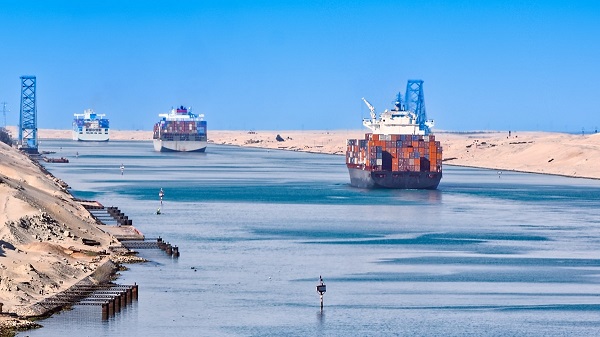
UNITED NATIONS, 23rd Feb. UN trade and development agency on Thursday said in its latest report that the attacks on commercial shipping in the Red Sea with wider geopolitical and climate-related crises, are upending international trade, inflating costs and causing major delays.
UNCTAD in a new study estimated that over the past 2 months, the volume of trade through the Suez Canal has fallen by a whopping 42 per cent.
“With major players in the shipping industry temporarily suspending Suez transits, weekly container ship transits have fallen by 67 per cent, and container carrying capacity, tanker transits, and gas carriers have experienced significant declines,” it said.
Houthi rebels in Yemen began attacking ships using the vital waterway as an act of solidarity with Gaza and protest over Israel’s offensive. In response, a US-led coalition has launched airstrikes against Houthi targets at sea and on land, it stated
The study said that it’s not only geopolitics that’s to blame. At the same time transits through the Panama Canal have plummeted 49 per cent compared to its peak, due to dwindling water levels as a result of a severe, climate-change-induced drought.
The study showed that a vital artery connecting the Atlantic and Pacific Oceans, the Panama Canal is important for the trade between countries on the west coast of South America, and for links between Asia and the western United States.
Vulnerable populations in landlocked and developing countries could bear the brunt of the impact on the two key trade routes, potentially increasing their living costs and reducing access to essential items.
Ships avoiding the Suez and the Panama Canals and seeking alternative routes, translating into longer cargo travel distances, rising costs and insurance premiums, and increasing greenhouse gas emissions.
According to UNCTAD, more than a decade, the shipping industry had adopted reduced speeds to lower fuel costs and their carbon footprint.
It stressed that due to the interplay of conflict and climate shocks, ships have been authorized to speed up – leading to higher fuel consumption and emissions.
Singapore-Rotterdam round trip avoiding the Suez Canal/Red Sea route could result in up to 70 per cent increase in GHG emissions.
UNCTAD underscored the potential far-reaching economic implications of prolonged disruptions in container shipping, threatening global supply chains and potentially delaying deliveries, causing higher costs and inflation.
Energy prices are surging as gas transits are discontinued, directly impacting energy supplies and prices, especially in Europe.
Global food prices are also expected to take a major hit due to higher freight costs.
UNCTAD warned “Disruptions in grain shipments from Europe, Russia, and Ukraine pose risks to global food security, affecting consumers and lowering prices paid to producers”.
The agency noted a shift in transport patterns, such as in the United States, where demand for rail transport services between the coasts has surged in recent weeks.
Major Pacific ports such as Los Angeles and Long Beach in west are now using rail routes vs. more costly and unreliable sea routes.
Major changes are afoot in the trading of commodities too. For example, grain shipments to Egypt are being sourced from Brazil or the US instead of Ukraine, while Russian oil shipments have becoming increasingly focused on India and China instead of Europe, the study concluded.
