

Anjali Sharma
GG News Bureau
UNITED NATIONS, 16th Feb. According to the updated Rapid Damage and Needs Assessment issued on Thursday by the Government, the World Bank Group, the European Commission and the UN covers damage incurred since the full-scale Russian invasion of Ukraine on 24 February 2022 to the end of last December.
It revealed that reconstruction and recovery in Ukraine is projected to cost $486 billion over the next decade, up from $411 billion estimated a year ago, a UN-backed study published has revealed.
The study stated that the highest needs are in housing, or 17 per cent of the overall estimated costs, followed by transport, commerce and industry, agriculture, and energy.
Social protection and livelihood support and explosive hazard management, are pegged at under 10 per cent, respectively.
Across all sectors, the cost of debris clearance and management, as well as demolition where needed, is almost $11 billion, the study said.
Prime Minister Denys Shmyhal said in a joint press release that “Despite the ongoing full-scale war, the Ukrainian Government, with the support of international partners, continues to implement a rapid recovery programme. The execution of the Third Rapid Damage and Needs Assessment allows us to approach this process more systematically,”.
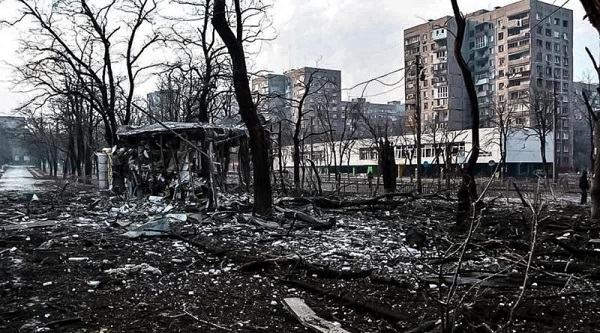
Direct damage in Ukraine has reached $152 billion, and is concentrated in Donetska, Kharkivska, Luhanska, Zaporizka, Khersonska, and Kyivska that suffered the greatest damage as reported in the previous assessment, it said.
The RDNA3 found that 10 per cent of housing stock across the country – some two million homes has been damaged or destroyed, prolonging displacement of Ukrainians from their communities.
The destruction of the Kakhovka Dam and the hydropower plant last June has resulted in significant negative impacts on the environment and agriculture, while worsening the plight of people already struggling to access housing, water, food, and health services.
Ukraine authorities estimated $15 billion will be needed this year for immediate reconstruction and recovery priorities at both the national and community level.
The study stressed that focus is on supporting and mobilizing the private sector alongside restoration of housing, soft infrastructure and services, energy, and transport.
Some $5.5 billion has been secured so far from both Ukraine and international partners.
Prime Minister Shmyhal noted that reconstruction needs have continued to grow over the past year.
“The main resource for Ukraine’s recovery should be the confiscation of Russian assets frozen in the West. We need to start this process already this year,” he said.
The RDNA3 lists critical investment needs for short-term recovery and medium-term reconstruction. Where possible, it considers and excludes needs that have already been met through the state budget and support provided by partners and the international community.
The assessment highlights the continued need for reforms and policies that catalyze private sector involvement and ensure an inclusive and “green” recovery.
It provides stronger data analysis of the impact on both vulnerable people and communities.
UN Resident and Humanitarian Coordinator in Ukraine, Denise Brown underscored the need to invest in Ukraine’s people because the future of the country depends on them.
“The war is not over. The suffering is not over,” she said.
“But communities in Ukraine are demonstrating significant courage and commitment in driving their own inclusive recovery processes and they need the continued support of their international partners.”
The findings in the RDNA3 complement the Government’s Ukraine Plan and the EU Ukraine Facility, both of which are forthcoming. These instruments lay out a reform and investment agenda for the next four years as Ukraine prepares to join the EU.
Prime Minister Shmyhal said the Government “is creating conditions to attract private investments, which will accelerate the reconstruction process and transform our country on its path to the EU.”
The authorities and partners have met some of the urgent needs, such as disbursing $1 billion for housing sector recovery and carrying out over 2,000 kilometres of emergency repairs on motorways, highways, and other national roads.
The war has taken a toll on Ukraine’s culture and tourism sectors. Damage is estimated at $3.5 billion, up from $2.6 billion last year – a 40 per cent increase.
UNESCO said $9 billion will be needed for recovery over the next decade.
It added that 4,779 cultural and tourist assets in Ukraine have been reported as damaged, including buildings of heritage value; works of art, collections and cultural repositories; workshops for creative industries, and tourism facilities.
The agency said the Kharkiv region was the worst affected, accounted for a quarter of the damage, followed by Donetsk and Odessa.
