

By Anjali Sharma
UNITED NATIONS – UN agencies and humanitarian partners warned on Tuesday that Afghanistan is expected to remain one of the world’s largest humanitarian crises in 2026, as they launched a $1.7 billion appeal to assist 18 million people in urgent need, according to a press release issued in New York.
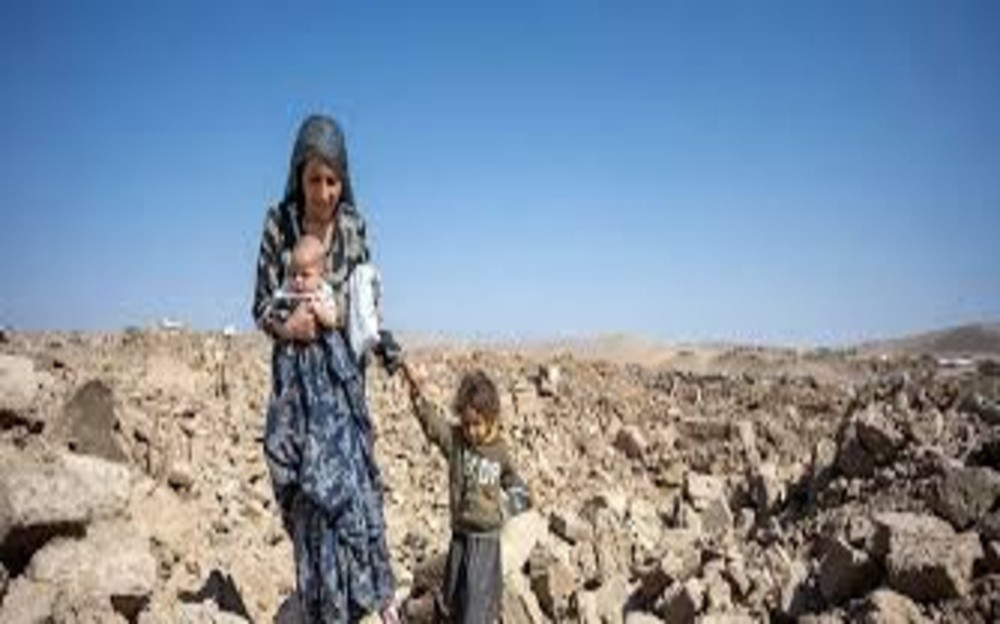
According to the UN and its partner agencies the years of conflict, compounded by worsening food insecurity, recurrent natural disasters, climate change impacts and large-scale returns of displaced people, have left an estimated 45% of the population some 21.9 million people in need of humanitarian assistance next year.
It noted that 17.5 million people more than three-quarters of them women and children have been prioritized for support under the coordinated response.
Food security and sanitation remain among the most urgent needs, it stated.
The Afghanistan Humanitarian Needs and Response Plan projected that during the 2025-2026 lean season, over one-third of Afghanistan’s population will face crisis-level or worse food insecurity, as defined by the Integrated Food Security Phase Classification.
Many households will meet minimum food needs only by depleting essential livelihood assets a sharp deterioration compared with the previous year.
The ongoing drought has led to the failure of nearly 80 per cent of rain fed wheat crops in several regions, leaving many families without food stocks for the winter.
UN agencies said that sanitation conditions are equally dire: an estimated 25 per cent of households relied on unimproved water sources this year, while 37 per cent lacked soap for basic hygiene.
The response will prioritize water, sanitation and hygiene needs in areas most affected by drought, cholera outbreaks, disasters and large-scale returns.
Afghanistan is facing one of the world’s largest and fastest-growing returnee-related displacement crises, with around 5 million people returning to the country this year.
Over 2.6 million Afghans returned from Iran and Pakistan, driven largely by tightened migration policies and deteriorating protection conditions.
Many have returned to districts suffering with poverty, food insecurity, drought and limited access to basic services, further straining local capacities.
In 2026, humanitarian partners aim to reach more people with fewer resources.
The $1.71 billion required represents a 29 per cent reduction compared to the resources needed in 2025. It aims to reach out 4 per more than the target last year.
The response plan noted that these changes have been “driven by sharper prioritization, notable efficiency gains, and a strategic shift away from high-cost, less sustainable interventions.”
