

Anjali Sharma
GG News Bureau
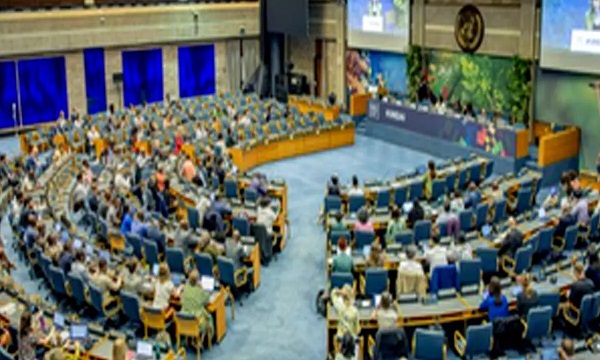
UNITED NATIONS, 27th Feb. United Nations Environment Assembly (UNEA-6 on Monday opened the meeting of the “world’s parliament on the environment” in Nairobi with a clear call for stronger global action to address the “triple planetary crisis” of climate change, nature loss and pollution.
Over 7,000 delegates from 182 countries are scheduled to take part in the sixth session of the United Nations Environment Assembly runs through Friday.
The meeting is taking place as climate change intensifies, a million species face the risk of extinction, and pollution remains among the world’s leading causes of premature death.
Executive Director of the UN Environment Programme Inger Andersen said in her opening press statement that “We’ve all felt and seen the impacts baking heat, intense storms, vanishing nature and species, failing soils, deadly dirty air, oceans stuffed with plastic waste and much more.”
She added that these impacts fall hardest upon the poor and vulnerable, who are least responsible for them, nobody is immune.
UNEA is the world’s highest decision-making body on the environment and its membership includes all 193 UN Member States.
It was created in 2012 as an outcome of the UN Conference on Sustainable Development (Rio+20), held in Brazil.
The Assembly meets every two years to set priorities for global environmental policies and develop international environmental law. Decisions and resolutions taken there also define the work of UNEP, which is based in Nairobi.
The focus this year will be on negotiating resolutions on issues ranging from nature-based solutions and highly hazardous pesticides to land degradation and drought.
The changing environmental aspects of minerals and metals will also be up for intense discussion.
Leila Benali the UNEA-6 President and Morocco’s Minister of Energy Transition and Sustainable Development said “We are living in a time of turmoil. And I know that in this room, there are people who are, or who know, those deeply affected by this turmoil. Our response must demonstrate that multilateral diplomacy can deliver.”.
Ms. Andersen noted that “the voices of the younger generation” are also represented at the meeting, alongside those from civil society, Indigenous People, women, business, and others.
The countries will consider some 19 resolutions, part of a broader push to boost more ambitious multilateral environmental action.
The resolutions cover issues such as solar radiation modification; effective, inclusive, and sustainable multilateral actions towards climate justice; sound management of chemicals and waste, and sand and dust storms.
Ms. Andersen listed some of the benefits they can help achieve, such as accelerating the transition to net-zero emissions, improving air and water quality, and building resilience to drought.
She urged delegates to craft strong resolutions “that can bring real impact that address the needs of many people already struggling under the burden of the triple planetary crisis. And that shore up the environmental foundations upon which a peaceful, equitable and sustainable future will rest.”
