
UN commission of inquiry chair says Israel actions in Palestinian territories a ‘war crimes’

By Anjali Sharma
UNITED NATIONS- The Chair of the Commission of Inquiry on the Occupied Palestinian Territory Navi Pillay on Tuesday briefed the UN Human Rights Council on the ongoing crises in the Occupied Palestinian Territory and Sudan in Geneva.
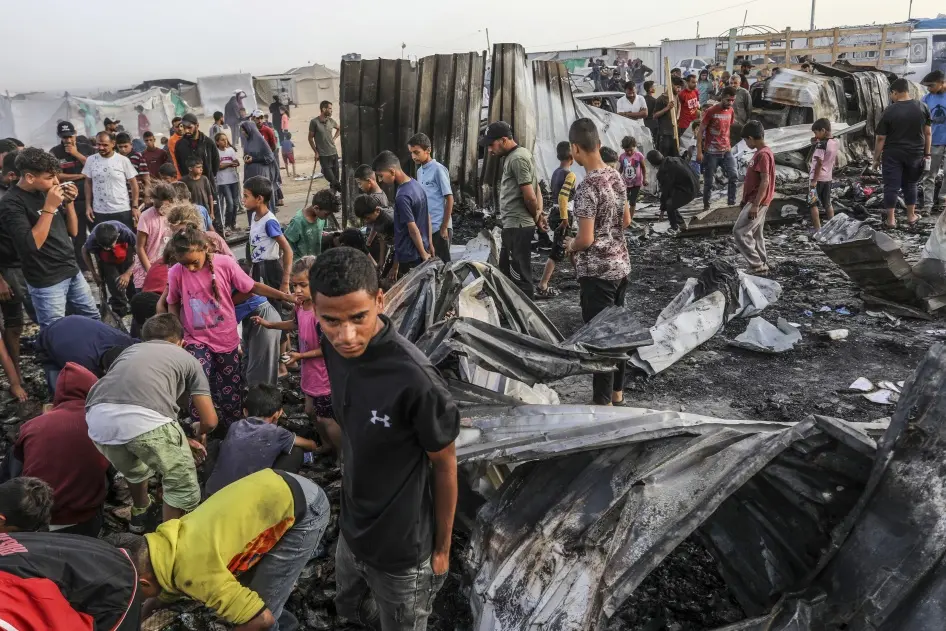
Ms. Navi Pillay opened her statement to the 59th session of the Council “The goal of the Israeli government is abundantly clear: the destruction of life in Gaza.”.
She called the war in Gaza “the most ruthless, prolonged and widespread attack against the Palestinian people since 1948,” Ms. Pillay addressed the findings of the Commission’s report, released to the HRC on 6 May.
It found that 90 per cent of Gaza’s schools and universities have been damaged or destroyed by Israeli attacks – including airstrikes, shelling, burning and controlled demolitions.
“With the loss of education, Palestinians are also losing their source of stability, hope and possibility of a future,” said Ms. Pillay.
She said that by not issuing adequate warnings to civilians sheltering inside, these attacks caused extensive casualties, amounting to war crimes, including knowingly launching attacks that caused excessive and disproportionate civilian harm, and the crime against humanity of extermination.
The Commission found no military necessity to justify the destruction of schools, concluding that the intent was to restrict long-term Palestinian access to education.
Israeli forces claimed they were targeting Hamas operatives allegedly based in schools, the Commission verified only one instance of Hamas using a school for military purposes, compared to the systematic Israeli use of schools as military bases.
Ms. Pillay also warned that education in the West Bank remains under threat. Demolition orders, military raids, restrictions, and operations have significantly reduced school days, while settler violence has endangered students and teachers.
The Israeli government has either incited or failed to prevent such violence, she said.
She noted that in Gaza, Israeli forces have damaged 53 per cent of religious and cultural sites.
Many were being used for refuge or worship, causing further civilian casualties, constituting war crimes and, in some cases, the crime against humanity of extermination.
Ms. Pillay said this completely avoidable damage “has a cascading effect and deeply affects intangible cultural elements, such as religious and cultural practices, memories and history, undermining the identity of Palestinians as a people”.
Israeli forces should have known where these sites were and planned their assaults, the Commission found these acts constituted war crimes including intentionally targeting historic and religious sites and widespread destruction without military necessity.
In the West Bank and East Jerusalem, the Commission documented repeated cases of Israeli authorities or settlers seizing cultural heritage sites, displacing Palestinians, excluding non-Jewish history and restricting Palestinian access.
The report highlighted increasing restrictions and assaults on Palestinians at Haram al-Sharif/Temple Mount, a long-standing flashpoint in East Jerusalem.
Ms. Pillay argued that through these actions, “Israel has been using cultural heritage and settlements as leverage for its unlawful territorial claims in the occupied West Bank, in flagrant defiance of multiple United Nations resolutions and the 2024 advisory opinion of the International Court of Justice.”
These actions violate international law, including the right to cultural life, freedom of religion, and protection of cultural heritage.
Ms. Pillay concluded her speech by underscoring that Israel’s attacks on education, infrastructure and heritage sites aim to “erode Palestinians’ historical ties to the land and weaken their collective identity, thereby hindering their right to self-determination” and the possibility of a peaceful, sustainable two-State solution.
The Commission called for Israel to end the unlawful occupation and enable Palestinian self-determination; stop attacks and seizures of educational, religious and cultural sites; end the systematic erasure of Palestinian history; and comply fully with international law, including the 2024 ICJ ruling.
On Sudan, she said that heavy fighting continues to escalate as a “direct result” of the continued flow of arms into the country meaning that the war is far from over.
In an update on the emergency on Sudan the Independent International Fact-Finding Mission for the Sudan highlighted the increased use of heavy weaponry in populated areas – and a sharp rise in sexual violence.
Joy Ngozi Ezeilo, Expert Member of the Fact-Finding Mission said that “Many Sudanese are dying from hunger and especially those who have been detained and in detention they are dying and millions affected,” .
“In terms of international responsibility, we urge all States to respect and enforce the arms embargo of the United Nations Security Council Resolution 1556,” she added.
Humanitarian relief continues to be weaponized and hospitals and medical facilities remain under siege, warned the investigators, whose mandate was established by the Council in October 2023.
Mohamed Chande Othman, Chair of the Fact-Finding Mission said “There is a direct link between the flow of arms in Sudan, armed hostilities and the resulting violence amounting to violations of international humanitarian law and human rights violations”.
“We know the kind of arms that are being used: heavy artillery, modern warfare, drones and in fact, they have escalated.”
Fellow investigator Mona Rishmawi insisted that testimonies pointed to “both sides” continuing to commit war crimes – a reference to the Sudanese Armed Forces and the Rapid Support Forces which turned on each other in April 2023, following a breakdown in transition to civilian rule.
The civilians have been “assaulted, detained and killed while villages have been attacked, burned and looted” by the RSF
During one RSF attack from 10 to 13 April, more than 100 civilians were reportedly killed, while a SAF bombing in Al Koma killed at least 15 civilians.
The war has killed thousands of civilians so far, displacing over 13 million Sudanese and subjecting many more to sexual violence, looting and the destruction of homes, health facilities, markets and other infrastructure.
Crimes against humanity continue, “particularly in the context of persecution of certain ethnic groups”, Ms. Rishmawi insisted.
The result of restrictions to aid relief has been to drive famine, “especially in Darfur”, said the investigators, who are respected human rights experts and not UN staff.
Human Rights Council latest update, the investigators documented a sharp rise in sexual and gender-based violence, with women and girls subjected to rape, gang rape, abduction, sexual slavery and forced marriage, mostly in RSF-controlled displacement camps.
