
UN calls for ‘real change’ to end nukes threat on commemoration of Hiroshima bombing

By Anjali Sharma
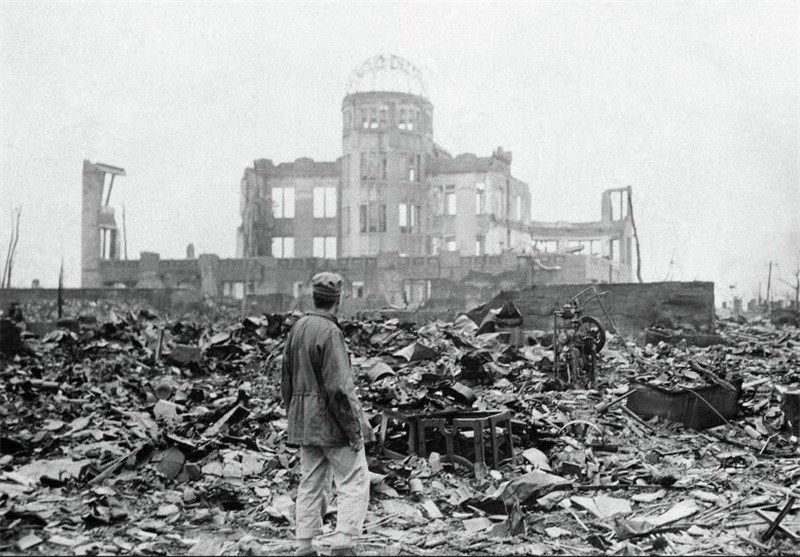
UNITED NATIONS – , UN High Representative for Disarmament Affairs Izumi Nakamitsu on Wednesday said the world changed forever 80 years ago when the US dropped an atomic bomb on the city of Hiroshima during the WWII, during her remarks at the Hiroshima Peace Memorial in New York.
Ms. Izumi Nakamitsu said in remarks at the Hiroshima Peace Memorial that while the city has been rebuilt, nuclear conflict remains a global threat.
It was the only structure left standing near the hypo centre of the bomb, which marked the first use of an atomic weapon in war, she noted.
According to the Japanese Prime Minister’s Office survivors, family members and representatives from international organizations and 120 countries were among 55,000 people who attended the ceremony.
“On this 80th anniversary, we remember those who perished. We stand with the families who carry their memory,” said Ms. Nakatmisu, delivered a message on behalf of UNSG Antonio Guterres.
She said tribute to the hibakusha – the term for those who survived Hiroshima and the atomic bombing of Nagasaki three days later – “whose voices have become a moral force for peace.”
“While their numbers grow smaller each year, their testimony — and their eternal message of peace — will never leave us,” she said.
Ms. Nakamitsu recalled that in a single moment on 6 August 1945, Hiroshima was reduced to ruins, tens of thousands were killed, “and humanity crossed a threshold from which there could be no return.”
She stressed that in the aftermath, many believed the city would never recover and that nothing would grow, but the population proved otherwise.
“You, the people of Hiroshima, didn’t just rebuild a city,” she said. “You rebuilt hope. You nurtured a vision of a world without nuclear weapons. And you shared that vision with the world.”
Ms. Nakamitsu noted that 2025 also marks 80 years since the UN was founded.
In May, saplings grown from the seeds of a persimmon tree that survived the bombing were planted at Headquarters in New York.
“They are more than symbols of survival,” she said. “They are living testaments to the strength of the human spirit — and of our shared duty to protect future generations from the horrors of nuclear annihilation.”
UN anniversary is a reminder of why it was created in the first place to prevent war, to uphold human dignity, and to ensure the tragedies of the past are never repeated, she said.
“Yet, today the risk of nuclear conflict is growing,” she warned.
“Trust is eroding. Geopolitical divisions are widening. And the very weapons that brought such devastation to Hiroshima and Nagasaki are once again being treated as tools of coercion.”
Hiroshima’s Mayor Kazumi Matsui warned against the growing acceptance of nuclear weapons, according to media reports. He cited the conflicts in Ukraine and the Middle East as examples.
Yet, signs of hope have emerged, according to the UN disarmament chief.
Japanese anti-nuclear group Nihon Hidankyo which represents the survivors of the bombings was awarded the 2024 Nobel Peace Prize last October.
UN adopted the Pact for the Future, re-committed to a world free of nuclear weapons.
Ms. Nakamitsu insisted that “commitments must lead to real change by strengthening the global disarmament regime in particular, the Treaty on Non-Proliferation of Nuclear Weapons, complemented by the momentum created by the Treaty on the Prohibition of Nuclear Weapons.”
She urged countries to draw strength from both the resilience of Hiroshima and the wisdom of the hibakusha.
“Let’s work to eradicate the threat of nuclear weapons by eradicating the weapons themselves,” she said.
“And let’s keep our pledge to the hibakusha, and ensure that their testimony and message of peace is carried forward. Remembering the past is about protecting and building peace today and in the future,” she concluded.
