
Trump’s U-Turn on Tariffs: Can Bharat-US Ties Be Repaired?
“After weeks of hostility, Trump seeks to reset ties with Bharat, signaling fresh momentum for trade negotiations and strategic partnership.”

Paromita Das
New Delhi, 11th September: For decades, Bharat and the United States have been touted as “natural partners,” bound together by shared democratic values, strong economic synergies, and converging security interests. Yet, the relationship has rarely been free of turbulence. In recent months, the Bharat-US partnership hit a rough patch when US President Donald Trump launched a tariff war that targeted Bharatiya goods, imposed punitive measures on oil imports, and unleashed his advisers to vilify New Delhi. What followed was a period of mistrust, inflammatory rhetoric, and growing unease in both capitals. But now, in a surprising turn, Trump appears to be recalibrating his stance—signaling that antagonizing Bharat may not serve Washington’s best interests after all.
The Tariff War That Shook the Partnership

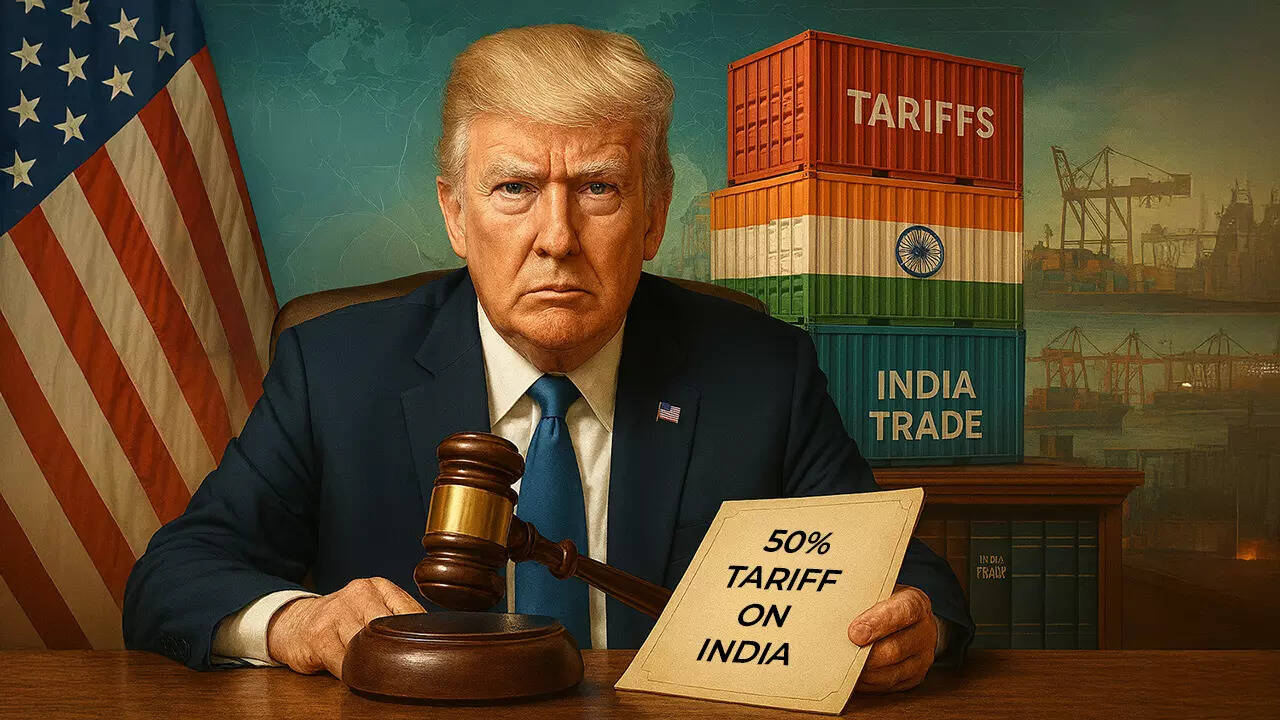
The downward spiral began with Trump’s decision to impose a 50% tariff on a wide range of Bharatiya goods, followed by an additional 25% penalty on oil imports from Russia, many of which were directed toward Bharat. This move rattled trade ties, undermining years of progress in expanding market access and boosting bilateral investments. Trump’s advisers added fuel to the fire by deploying divisive rhetoric, from mocking Bharat’s economic performance to stoking caste-based controversies.
Bharat, however, did not buckle. It maintained its right to energy security by continuing oil purchases from Russia, resisted pressure to open sensitive agricultural markets, and refrained from endorsing Trump’s exaggerated claims of brokering peace between Bharat and Pakistan. The response underscored New Delhi’s commitment to strategic autonomy and its refusal to be coerced into choices that undermine its national interests.
Trump’s Attempt to Rebuild Bridges
After weeks of escalating hostility, Trump appeared to change his tune. In a carefully worded post on Truth Social, he announced that Bharat and the United States would resume negotiations to address trade barriers. Referring to Prime Minister Narendra Modi as his “very good friend,” Trump expressed confidence in achieving a “successful conclusion” for both countries.
PM Modi reciprocated with equal optimism, reaffirming that Bharat and the US are “close friends and natural partners.” His emphasis on “unlocking the limitless potential” of the partnership reflected New Delhi’s preference for dialogue over confrontation. The coordinated exchange—Trump posting a screenshot of Modi’s response and vice versa—was more than symbolic; it was a calculated gesture aimed at resetting the tone of bilateral relations.
India and the US are close friends and natural partners. I am confident that our trade negotiations will pave the way for unlocking the limitless potential of the India-US partnership. Our teams are working to conclude these discussions at the earliest. I am also looking forward… pic.twitter.com/3K9hlJxWcl
— Narendra Modi (@narendramodi) September 10, 2025
Why the Change of Heart?

Several factors explain Trump’s sudden shift. First, his tariff offensive provoked criticism even within the US, where experts warned that alienating Bharat could undo decades of diplomatic efforts and push New Delhi closer to Russia and China. Modi’s visible engagement with Russian President Vladimir Putin and Chinese President Xi Jinping at the recent SCO Summit amplified these concerns.
Second, Trump’s own rhetoric—claiming that “we’ve lost Bharat”—may have been a wake-up call. For a US administration already grappling with challenges in Europe, the Middle East, and the Indo-Pacific, losing Bharat’s trust would amount to strategic self-sabotage. Bharat remains a critical counterweight to China, a booming consumer market, and a key partner in emerging technologies and defense cooperation.
Finally, domestic politics cannot be ignored. With Trump eyeing re-election, mending ties with Bharat plays well with the large Bharatiya-American community and reinforces his claim of being a dealmaker who can reverse past missteps.
Beyond Trade: The Larger Strategic Picture

While tariffs have dominated headlines, the Bharat-US relationship extends far beyond trade. Defense cooperation, counterterrorism efforts, and shared concerns over China’s assertiveness form the backbone of the strategic partnership. Initiatives such as the Quad and technology collaborations in critical sectors like semiconductors and clean energy highlight the depth of cooperation that cannot be jeopardized by short-term trade disputes.
Moreover, Bharat’s role in maintaining a multipolar world order has only grown stronger. By refusing to take sides blindly and prioritizing its national interests, New Delhi has gained credibility as an independent power. This independence, though frustrating for Washington at times, also makes Bharat a valuable partner—because its support carries weight and legitimacy on the global stage.
Trump’s Gamble with Bharat

Trump’s earlier antagonism toward Bharat reflected both impatience and miscalculation. By framing Bharat as a “tariff king” and scapegoating it for global disruptions caused by the Russia-Ukraine conflict, the administration overlooked the broader strategic stakes. The irony is stark: while accusing Bharat of profiteering from discounted Russian oil, the US itself reaped windfalls from the war through arms and energy sales.
The recalibration now suggests that Trump recognizes the limits of unilateral pressure. His attempt to “win back Bharat” is not merely about resolving tariff disputes but about acknowledging that America cannot afford to lose one of its most important global partners.
A Reset, Not a Resolution
The Trump-Modi exchange signals a potential thaw, but it would be premature to call it a resolution. The fundamental differences—Bharat’s protection of domestic industries, its oil diplomacy with Russia, and its resistance to US pressure—are unlikely to disappear overnight. Yet, the willingness to resume dialogue is itself a positive step, suggesting that pragmatism may prevail over rhetoric.
Bharat and the US stand at a crossroads: one path leads to a reset that strengthens a natural partnership, while the other risks further estrangement. Trump’s U-turn offers a chance to rebuild, but whether it translates into durable cooperation depends on Washington’s ability to treat Bharat not as a subordinate ally, but as an equal partner in shaping a more balanced world order.
