
Trump, Xi reciprocal visits ‘strategic shift with key implications for India & global stability’

By Anjali Sharma
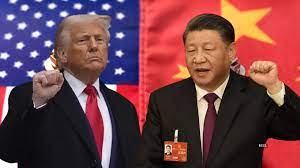
WASHINGTON – PUS President Donald Trump on Monday declared on Truth Social post that he would visit China early next year followed by Xi’s visit to the US signals a shift toward more structured, high-level diplomacy beyond immediate regional meetings like the upcoming APEC Summit in South Korea.
He made the announcement about a reciprocal exchange of state visits with Chinese President Xi Jinping marks a significant development in the complex dynamics between the two largest global economies.
The evolving US-China relationship through these planned visits carries both challenges and opportunities for India.
As a strategic player in the Indo-Pacific region and a key partner of the US, India stands to be affected by any improvement or recalibration in Sino-American ties.
India has witnessed increased strategic tensions along its border with China, alongside broader concerns about Chinese assertiveness in the Indo-Pacific.
A more stable US-China dialogue focused on managing flashpoints such as Taiwan and the South China Sea could indirectly ease regional tensions, benefiting India’s own security environment.
India must remain vigilant and proactive in safeguarding its interests amid any recalibration of US-China relations, the experts said.
India’s growing trade and investment ties with both the US and China position it uniquely in the global supply chain and technology sectors.
If the US-China dialogue leads to more predictable trade frameworks and cooperation on intellectual property and market access, India could find new avenues to negotiate its own trade terms and enhance its role as a regional manufacturing hub.
US-China contest in technology especially in advanced semiconductors, AI, and 5G—has global ramifications. India’s ambitions to become a digital and innovation powerhouse mean it must navigate this competition carefully, leveraging opportunities for cooperation in areas like clean energy and public health, while managing risks associated with technology dependencies.
On a broader scale, the reciprocal visits underscore a strategic shift from short-term transactional engagements to longer-term relationship building between Washington and Beijing. This has several key global consequences:
Moving beyond tariff disputes, the two powers could establish a more stable trade framework addressing structural concerns, potentially reducing global economic volatility. This could stabilize global markets and supply chains, which have been disrupted by trade wars and protectionist policies.
The strategic competition will persist, particularly in critical technologies, these visits might open limited cooperation on global challenges like climate change and pandemic response. This dual-track approach could set a precedent for responsible competition combined with selective collaboration.
The experts stated that the direct, high-level dialogue on contentious issues such as Taiwan and the South China Sea is vital for preventing escalation.
Given the interconnectedness of global security, sustained communication channels between the US and China can contribute positively to regional and international stability.
The formalized nature of reciprocal state visits signals a commitment to diplomacy and international norms, which may encourage other nations to engage in similar dialogue to resolve conflicts and build cooperative frameworks.
US-China planned reciprocal visits present a nuanced scenario—offering potential easing of regional tensions and economic opportunities, while also demanding strategic vigilance for India.
Globally, these visits represent a hopeful step toward a more managed, constructive relationship between two superpowers, balancing competition with cooperation for the broader stability of the international system.
The critical test ahead will be translating this diplomatic engagement into tangible outcomes that benefit not only the US and China but also the wider global community, including India, the experts concluded.
