

By Anjali Sharma
WASHINGTON – US on Friday offered government-backed guarantees to keep global energy trade moving in strait of Hormuz, a sudden withdrawal of insurance cover from London-based firms froze shipping through the Gulf.
The tensions around the Strait of Hormuz threaten global energy routes, US President Donald Trump has ordered a major financial intervention aimed at keeping oil shipments moving through the Gulf, not through military escalation alone, replaced insurance cover that shipping companies say has collapsed.
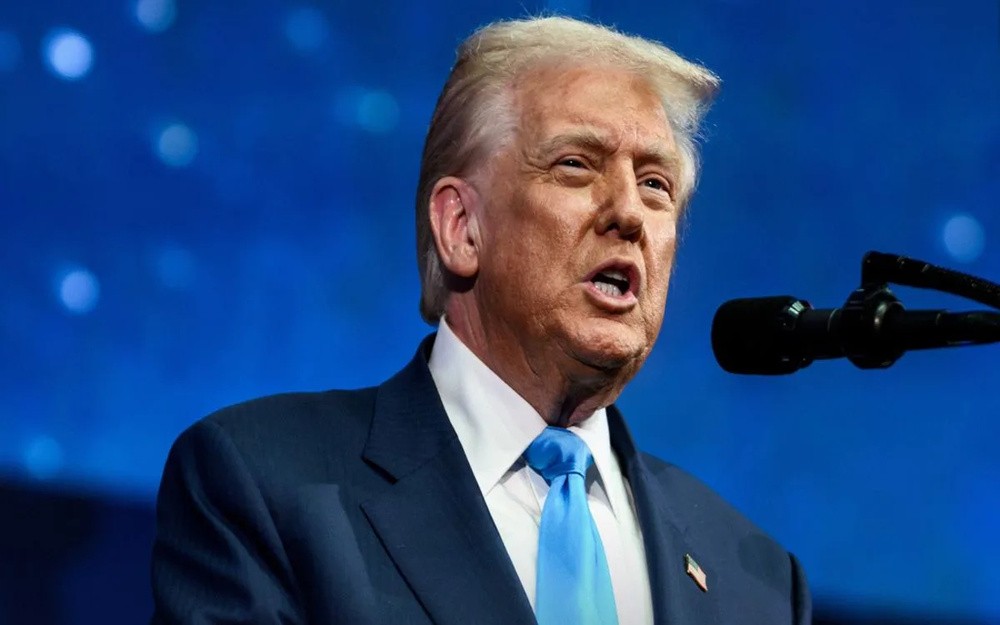
Trump in a message posted on social media, said he had directed the United States Development Finance Corporation to offer political risk insurance and financial guarantees to maritime trade moving through the Gulf region.
“Effective immediately, I have ordered the United States Development Finance Corporation to provide political risk insurance and guarantees for the financial security of all maritime trade, especially energy, traveling through the Gulf,” Trump wrote.
He added that the United States would ensure the “free flow of energy to the world.”
The announcement came as global shipping companies face growing uncertainty over insurance coverage for vessels transiting the Strait of Hormuz, the narrow maritime corridor through which about 20 per cent of the world’s oil supply moves.
Press Secretary Karoline Leavitt said Washington was prepared to take further steps if the situation deteriorates.
“The President said if necessary and when appropriate, the US Navy will begin escorting tankers through the Strait of Hormuz,” she said, adding that the administration was working to protect shipping routes and stabilise energy markets.
The White House also confirmed that the new insurance facility through the DFC would be offered to crude carriers and cargo ships operating in and around the Gulf, a move aimed at preventing disruptions to global oil supplies as the conflict with Iran continues under the US military campaign dubbed Operation Epic Fury.
Leavitt noted that officials were closely tracking energy markets and shipping movements while coordinating with economic agencies.
“Crude oil prices did fall yesterday. They remain stable today after the president announced steps to ensure the stability in global energy markets,” she said.
Some analysts said the move represents a direct attempt by Washington to replace insurance cover withdrawn by private insurers during the crisis.
Texas-based legal and insurance analyst Marc Gravely argued in a social media post that the disruption to shipping in the Gulf had less to do with missiles or naval threats and more to do with insurance markets pulling back from the region.
“The Strait didn’t close because of missiles. It closed because the insurance market collapsed,” Gravely wrote, referring to a withdrawal of cover by marine insurers and reinsurers in London.
According to Gravely, Trump’s order effectively means the US government is stepping in as a sovereign backstop where private insurers have refused to underwrite the risk.
“The DFC is stepping into the void that Lloyd’s and the London reinsurance market created when they pulled out,” he said, describing the move as one of the most aggressive attempts by a government to replace global marine war-risk insurance during an active conflict.
The Strait of Hormuz, located between Iran and Oman, connects the Persian Gulf to major global sea lanes and is widely regarded as the most critical oil transit chokepoint in the world.
The rising tensions around the waterway have already pushed energy markets into volatility, with governments and traders closely watching the impact on oil supply chains.
White House said the administration believed the US economy would withstand temporary shocks from the conflict while steps were taken to secure maritime energy routes.
US officials also argued that recent actions against Iran could ultimately stabilize the shipping corridor by reducing Tehran’s ability to threaten vessels moving through the region.
