
Sergio Gor in Delhi: Trump’s Diplomacy ,What It Means for India

Poonam Sharma
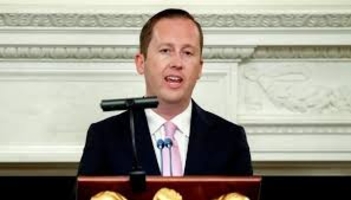
President Donald Trump nominated Sergio Gor, his long-time aide and the head of the White House Presidential Personnel Office, on August 22, 2025, to be the next U.S. Ambassador to India. In addition to this position, Gor will be Special Envoy for South and Central Asian Affairs. Although the envoy role is effective immediately, his ambassadorship is pending Senate approval.
On the surface, the nomination of Gor seems straightforward: a president thanking a loyal staffer with a high-profile diplomatic assignment. But the symbolism, timing, and dual nature of this appointment say far more about U.S.–India relations under Trump than initially meets the eye. It is a narrative in which loyalty overtakes experience, in which diplomacy becomes personal, and in which India stands in danger of being re-hyphenated with its region at a moment that it aspires to great-power status.
A Loyalist Without Diplomatic Credentials
Born in Tashkent in 1986 and subsequently raised in the United States, Gor’s ascension has been guided entirely within the conservative political establishment. From managing Trump’s campaign PACs to writing books with Donald Trump Jr., he has been a staple of the Trumpian universe for years. At his latest position, Gor coordinated the hiring of almost 4,000 federal officials—a feat Trump praised as accomplished “in record time.”
But what Gor lacks is significant: he has no diplomatic background, no history of policy experience on South Asia, and no regional expertise in the Indo-Pacific—the very realm that characterizes U.S.–India cooperation. His appointment indicates that for Trump, competence or area understanding is not the determining factor, but sheer loyalty and personal confidence. Steve Bannon called Gor perfect because he has “walk-in privileges” to the Oval Office. That is, India will not be dealing with an experienced diplomat but with Trump’s direct representative in Delhi.
Access as Advantage—and Risk
For New Delhi, Gor’s proximity to Trump can go either way. On the plus side, it represents a valued avenue of direct communication with the U.S. president at a time when the world is in turmoil. Few diplomats have the ability to forward messages to the Oval Office without having to navigate the bureaucracy. Gor, in principle, can.
But this diplomacy of personalization also carries risk. It exposes U.S.–India relations to Trump’s whims, campaign strategizing, and changing agendas. What India gains through access, it might lose in terms of institutional stability. The risk is that policy turns transactional and impromptu instead of structured and strategic.
The Tariff Backdrop: A Hard Signal
The nomination also arrives against the backdrop of deepening economic friction. Trump recently slapped punitive tariffs of 50% on Indian goods, citing New Delhi’s continued purchase of discounted Russian oil. The move has rattled Indian exporters, with textile hubs already reporting production halts.
Against this context, the appointment of a loyalist instead of an experienced trade negotiator sends a crude message: Washington wants India to bend. Instead of a demonstration of partnership, the arrival of Gor seems to be a warning that Trump has no hesitation in using economic pressure, and he needs to have someone in Delhi who will devoutly implement that line.
Hyphenating India Once Again
In many ways, however, the most contentious aspect of Gor’s mandate is its dual nature: ambassador to India and special envoy for South and Central Asia. This “hyphenation” brings back the Obama-era experiment with Richard Holbrooke, who was given charge of India–Pakistan–Afghanistan affairs. India strongly opposed that formula, arguing it could not be conflated with a subregional player. Holbrooke’s mandate was eventually restricted to Afghanistan and Pakistan.
By merging the envoy and ambassadorial portfolios, Trump runs the risk of bringing back those fears. For India, optics are important: it does not wish to be bracketed with Pakistan, Nepal, or Bangladesh at a moment when it stakes its claim to becoming a global leader. Senior diplomats caution that such an arrangement has the potential to water down India’s distinct contribution to American strategy and narrow its global identity to that of a South Asian player.
India’s Calculated Silence
India’s official reaction so far has been restrained. External Affairs Minister S. Jaishankar merely said, “I have read about it.” The brevity of the statement is suggestive of caution. New Delhi realizes that Gor’s nomination is as much a reflection of Trump’s domestic politics as anything to do with South Asia policy. It will pragmatically engage but remain vigilant, given that Gor’s double hat and relative lack of expertise might make dialogue more complicated.
The issue New Delhi has to balance is whether Gor’s closeness to Trump provides sufficient strategic benefit to counterbalance the risks of policy confusion and regional overlap.
U.S. Bureaucratic Ripples
Within Washington, the nomination is no less controversial. Gor’s role as envoy might eclipse the yet-to-be-confirmed Paul S. Kapur, Trump’s Assistant Secretary of State for South and Central Asia nominee. By conferring Gor duplicative authority, Trump disrespects the conventional bureaucratic hierarchy. The consequence could be disarray within the State Department and confusion for India over who really represents Washington.
This, too, is of the Trump playbook: consolidating power in loyalists and circumventing traditional institutions. It makes diplomacy harder, though, where clarity of authority is a must.
The Musk Feud and Polarizing Persona
Adding to the drama is Gor’s divisive personal profile domestically. In the early part of this year, Elon Musk called him a “snake,” alleging he was hindering his favored NASA pick. That skirmish, tied to vetting scandals and security clearance arguments, is indicative of Gor’s reputation as a cold-blooded gatekeeper. His ambassadorship is viewed by some as a “soft landing” to diffuse criticism, particularly after his background and foreign birth became a subject of scrutiny.
For India, this row can be seen as peripheral. But it underscores the fact: Gor is not a traditional diplomat. He is a political operative imported into a key foreign assignment.
The Senate and the Road Ahead
Gor’s nomination remains pending Senate approval. His confirmation hearings may be acrimonious, questioning his lack of credentials, his position on India–Pakistan matters, his tariffs views, and his own personal controversies. If confirmed, New Delhi must navigate the tricky challenge of balancing access with prudence—seeking to take advantage of Gor’s proximity to Trump while making certain that India’s strategic long-term identity is not compromised.
Opportunity or Misalignment?
Sergio Gor’s nomination is not an appointment, but a declaration of Trump’s foreign policy approach. It reflects loyalty over expertise, personalization over institutions, and short-term politics over long-term strategy. For India, the opportunity is real: few ambassadors could bring such unmediated access to the U.S. President. But the risks are equally stark: blurred mandates, transactional diplomacy, and the symbolic downgrading of India’s global role.
While India and America sort through tariff wars, China’s ascendance, and changing global alignments, Gor’s presence in Delhi can either act as a bridge or set the cracks apart. The next few months will confirm whether New Delhi decides to welcome the access, hedge the risks, or resist the implied downgrading of its strategic identity.
