
Trump efforts to end war in Ukraine failed, Putin demands rises

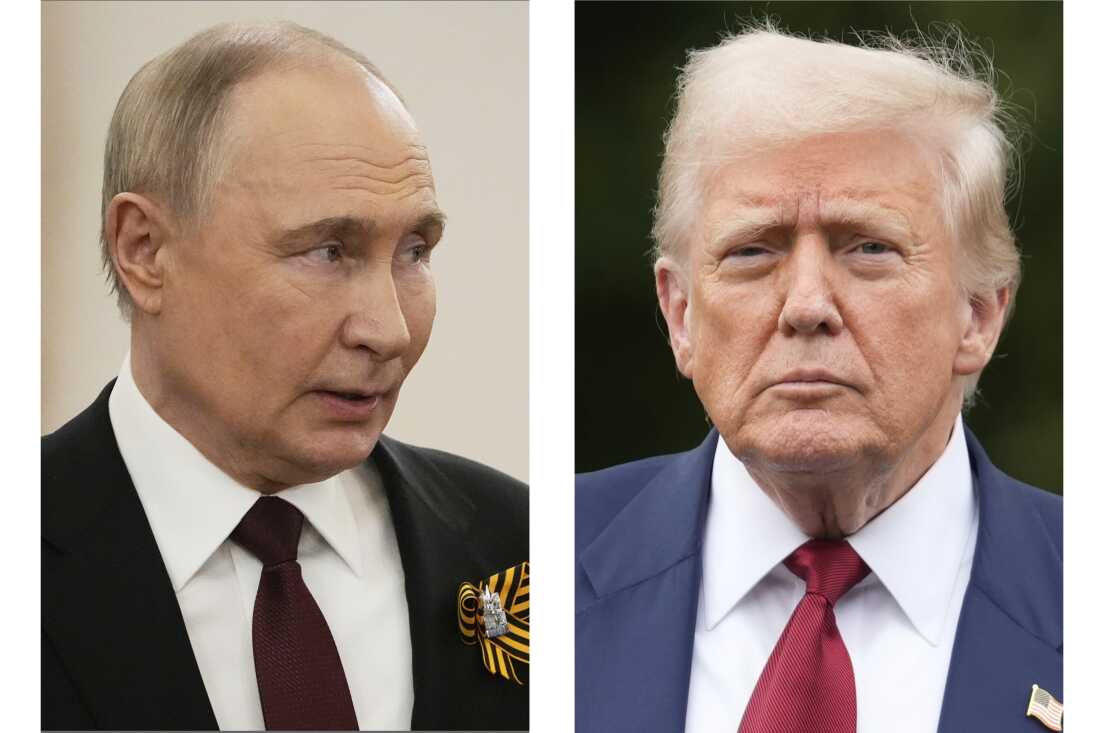
By Anjali Sharma
WASHINGTON – US President Donald Trump on Friday has emerged as a central figure in brokering a ceasefire between Israel and Hamas, marked the first tangible progress toward peace in Gaza after three years of incessant bombing.
His peace efforts has set a global debate on his forays into conflict resolution, with global leaders welcomed Trump’s initiatives.
On Ukraine, the road to peace proves to be difficult and resistant to shortcuts. It is all about leverage, consistency, and coalition-building more than bold declarations when it comes to manoevring Russian President Vladimir Putin.
Putin claimed Ukraine is run by “neo-Nazis” who pose a threat to the Russian speaking populace.
He also argued that people in eastern Ukraine (Donbas) needed protection from alleged “genocide” by Kyiv. His claims have been repeatedly refuted by Ukraine.
Putin has been saying that Ukraine is an “artificial state” created by Russia, suggesting Ukrainians and Russians are “one people”.
He was more concerned of Ukraine joining NATO, which the current President of Ukraine, Volodymyr Zelensky, was indeed inclined for in the 2023 Summit.
NATO statement had said that “Ukraine’s future is in NATO” with no formal invite be extended to the nation.
Russia, NATO expanding further East would mean a “direct threat” knocking on its borders, portrayed Putin.
The control of Ukraine secures for Russia’s President access to the Black Sea, as well to an abundance of natural resources, with a buffer zone against NATO.
Putin can’t be simply stopped without massive concessions or military escalation. Incidentally, some observers also point to Trump’s skepticism of NATO having emboldened the President of Russia, who perhaps saw Western divisions as an opportunity.
Trump’s attempts at peace talks since returning to office, Putin has refused to meet Zelensky and insists on recognition of Russian territorial gains conditions Ukraine will not accept. Zelensky remains committed to reclaiming all occupied territories, including Crimea.
Putin shows no interest in genuine negotiations, especially as Russian forces claim strategic gains.
The negotiations for a ceasefire in Gaza are underway, with hopes for an agreement as talks between Hamas and Israel progress in Egypt.
The talks are part of a broader effort to establish a ceasefire and address the humanitarian crisis in Gaza, arising out of Israel’s retaliation since the Hamas attacks on October 7, 2023.
The conflict has resulted in significant casualties and displacement among the Palestinian population, with tens of thousands reported dead and many more injured.
Trump refused, to play ball with Israel’s Prime Minister Benjamin Netanyahu, depending on the US President’s own interests.
He led the charge at the recent UN General Assembly session against nations recognized the state of Palestine, and earlier joined Israel in bombing Iran, his reaction to Netanyahu strike Doha was in contrast.
His moves apparently created enough pressure on Israel’s Prime Minister, combined with coordination with Arab leaders, and a personal letter to Egyptian President El-Sisi that reportedly pushed negotiations across the finish line. Since returning to office, Trump has also claimed credit for resolving up to seven conflicts, including one between Armenia and Azerbaijan, Rwanda and Democratic Republic of Congo, Thailand–Cambodia, etc.
Some of these efforts have yielded temporary calm, others remain fragile or disputed.
Analysts cautioned that Trump’s transactional style – using tariffs, threats, and personal diplomacy – often lacks institutional follow-through.
Putin, being a seasoned strategist, sees through these rhetorical flourishes and occasional oscillations in Trump’s stance. Despite multiple summits, separately with Zelenskyy and Putin, Trump’s efforts to end the Ukraine war thus remain unsuccessful.
