

By Pankaj Choudhary, IPS
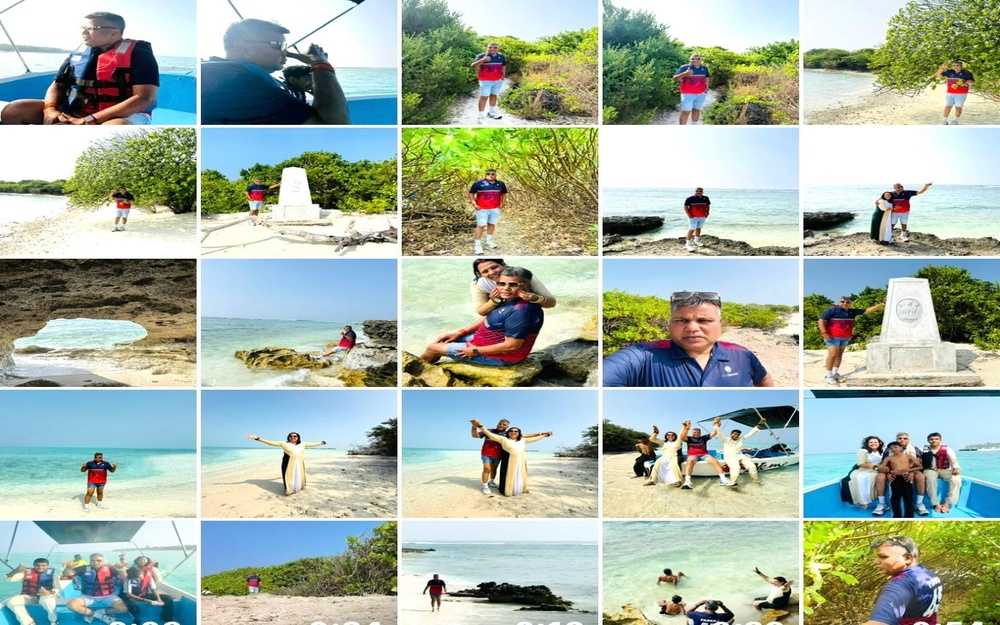
During a ten-day LTC tour approved by the state government, I had the opportunity to experience Lakshadweep closely with my family. The journey included visits to Kavaratti, the capital of Lakshadweep, Minicoy — located near the India–Maldives maritime boundary — Agatti, and the now widely known Bangaram Island, which recently came into national focus following Prime Minister Narendra Modi’s visit.
Lakshadweep offers India and the world an example of how harmony, simplicity and contentment can shape a truly peaceful society. Nearly 95 per cent of the population here belongs to the Muslim community, yet the social fabric reflects remarkable unity, warmth and brotherhood. There is a calming energy in the air — a rare serenity created by nature, discipline and a deeply rooted sense of community life.
Life here is deeply connected to the sea. Cargo ships are the lifeline of the islands, bringing essential supplies mainly from Kochi port, while Goa and Mumbai also serve as nearby maritime links. Flights exist but are limited. Ship movement is not continuous, and islanders patiently wait for arrivals — a routine that itself feels like a celebration. Unlike Andaman & Nicobar, entry into Lakshadweep requires permits, preserving its fragile ecosystem and calm way of life.
Lakshadweep’s people value a peaceful, satisfied lifestyle. Tourists often find joy simply sitting for hours by the pristine beaches, watching the sea and absorbing the gentle warmth of the climate — a pleasant contrast to the harsh winters of North India. The ocean feels refreshing, energising and spiritually soothing.
Despite being a limited landmass, Lakshadweep experiences minimal tourist pressure. Traffic discipline is exemplary. Unlike the congestion seen in hill states such as Jammu & Kashmir, Uttarakhand and Himachal Pradesh, traffic here remains smooth due to disciplined citizens, responsive policing and limited vehicle numbers. Honking is rare, lanes are respected and patience defines driving behaviour.
The Union Territory also stands unmatched in air purity. Its pollution index consistently remains below 50 — reflecting one of the cleanest environments in the country. The vast surrounding ocean adds a unique energy and clarity to the atmosphere that is instantly felt.
Coconut trees dominate the landscape and form the backbone of daily life. Local cuisine revolves around rice and coconut-based dishes such as puttu, potato curry, black chickpea gravies, eggs, fish and chicken. Organic food habits and marine biodiversity make Lakshadweep a paradise for nature lovers.
Women play a major role in managing household and commercial activities. Life here is simple, affordable and harmonious. Children spend more time in outdoor sports than on mobile phones. Football is the most popular sport. Literacy levels are high, and young residents display discipline, cultural values and social awareness.
With negligible crime, strong coordination between security forces and residents, and a high happiness index, Lakshadweep offers one of the most secure and peaceful living environments in India. Only 11 islands are inhabited, while 25 remain untouched, preserving ecological balance.
Coral reefs, turtles and diverse marine life form the heart of Lakshadweep’s natural beauty. Activities such as scuba diving, snorkelling and glass boat rides showcase the crystal-clear waters that stretch endlessly into the horizon.
Lakshadweep stands as a model Union Territory — a place that teaches the true meaning of contentment, balance and sustainable living. Having travelled across India multiple times, returning to Lakshadweep after 15 years has been a deeply enriching experience. Every Indian should visit once in their lifetime — to experience its serenity, happiness index and to learn how true satisfaction in life can be achieved.
Jai Hind.
Author: Pankaj Choudhary, IPS (2009 batch), currently serving as Community Policing Head in Rajasthan.
