

By Anjai Sharma
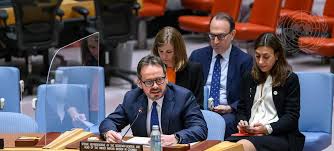
UNITED NATIONS – UN Special Representative for Colombia, Miroslav Jenča on Friday briefed the members of the UNSC and reaffirmed the organization’s strong commitment to support the country’s 9 year-old peace process.
He praised the Government of Colombia for its continued cooperation with the UN Verification Mission and underscored the crucial role of the Security Council in the progress achieved to date.
Mr. Jenca, veteran diplomat and negotiator formally take up his post later this month.
He emphasized that the comprehensive implementation of the Final Peace Agreement remains the cornerstone of efforts to consolidate lasting peace in the country, which formally ended decades of conflict between FARC-EP rebels and Government forces.
Mr. Jenča conducted a preparatory visit to Colombia in September, where he met a wide range of stakeholders, including government officials, signatories to the Peace Agreement, former combatants, and civil society representatives.
He acknowledged significant progress in key areas such as rural reform, reintegration, and transitional justice, while also highlighted the ongoing challenges in the areas of security and financial support.
Mr. Jenča welcomed the process which this month saw the first sentences handed down under transitional justice measures by the Special Jurisdiction for Peace, described it as a historic milestone in the pursuit of truth, justice, and reparation.
“The conflict inflicted immeasurable suffering on victims and their families. The transitional justice process is delivering unprecedented convictions and acceptance of responsibility by those who committed serious crimes, while involving victims in the process and offering redress to them through restorative action to be carried out by the perpetrators,” he said.
He called on the Government to promptly ensure sentences are implemented: this includes actions such as mine clearance, the search for missing persons, and community-based infrastructure projects.
Mr. Jenča expressed concern over the resurgence of violence in certain regions, underscored that insecurity remains the greatest threat to peace.
He stressed the urgent need to ensure the safe conduct of upcoming national elections and the protection of communities and former combatants alike.
Mr. Jenča reaffirmed the UN mission’s readiness to adapt to evolving needs and to continue building confidence between parties to the peace deal on the ground.
He noted that the Mission’s presence in conflict-affected areas is essential and emphasized that Colombia is a “rare case” in which the Council has been able to respond with targeted assistance to a nationally owned peace process.
“These are favorable circumstances for the United Nations to continue to make a positive and focused contribution,” Mr. Jenča concluded.
Ambassador of Colombia to the UN Leonor Zalabata reaffirmed her Government’s full commitment to the comprehensive implementation of the 2016 Peace Agreement.
She spoke as a woman, an Arhuaco Indigenous leader, and a human rights defender, she emphasized the multi-ethnic and multicultural scope of the ambitious deal, outlining the concrete progress achieved so far under President Gustavo Petro’s administration.
Leonor Zalabata noted that the formalization of over three million hectares of rural land, the recognition of Indigenous and Afro-descendant territories, and support for over 11,000 former combatants in the reintegration process.
US Ambassador to the UN Mike Waltz criticized President Gustavo Petro’s policies on security and the peace process, told the council members that the mandate of the UN Verification Mission had been unnecessarily broadened “to reflect excessive political priorities,” such as transitional justice and support for minority ethnic groups.
He added “The United States is closely examining this mission’s mandate and whether it merits continued UN Security Council support”.
