

Poonam Sharma
Weeks of whispers of doubt have wafted out of Beijing on the currents of political quiet. The familiar cadence of Communist Party news went abruptly mute. Speculation ripened. Scheduling important meetings ceased. And today, with a 331-word cryptic communique, China has perhaps sealed one of the most significant power realignments in its recent political history: Xi Jinping is no longer the absolute pinnacle of the Chinese Communist Party.
On June 30, a brief report was released, summarizing the Politburo’s meeting—the kind of event once dominated by the unmistakable authority of Xi Jinping. This time, however, the message was clear to those trained in the subtle language of CCP power play: Xi’s dominance has been institutionally curtailed. A new centralized party decision-making and coordination body has emerged—not merely advisory, but now the de facto governing structure of the Communist Party.
Fewer Words, Bigger Storm
Earlier Politburo communiques averaged 500 to more than 1,000 words. This one, few days away from breaching 300, is a sign of what veteran Chinese political observers know too well: the fewer words, the bigger crisis. The conciseness was not accidental—it was a surgical strike. The Party has delivered a message to members, cadres, and foreign watchers that the power equation has shifted.
In the bulletin’s words, this new top body is responsible for top-level planning, coordination, policy implementation, and supervisory duties. In bureaucratese, this translates to: all that previously filtered through Xi now filters through this body. And Xi, who technically remains General Secretary, has to report to it.
A Ghost from the Past
This is not the first time that the CCP has used shadow institutions to balance the authority of its leaders. During the 1980s, when strongmen such as Deng Xiaoping exercised power from behind the scenes, a “Central Advisory Commission” was established. It was not an official executive organ, but it served as a pressure valve, preventing more extremist Party leaders such as Hu Yaobang and Zhao Ziyang from running riot.
But this new body is different. It’s not advisory. It’s functional. It doesn’t comment—it commands. It is a permanent body with actual authority, constructed secretly in the shadows and now openly recognized. This indicates a reality too great to be disregarded: Xi Jinping no longer has absolute dominion over the fate of the Party.
The Timing Tells All
The date of this announcement—end of June—was not accidental. The Politburo did not make its traditional May session announcement, with rumors of some sort of extended or closed Politburo session occurring in its place. Leaked speeches and internal documents implied that such a session occurred—and now this public notice indirectly verifies it.
Experts think this enlarged meeting in May was the turning point. That’s when the top factions, senior party leaders, and maybe even military voices sat down to make the plans for this change. What we are witnessing today is not a new phenomenon—it is just the coming out of a structure that has been in operation behind the scene.
The mere necessity of legislating the new body into being through official rules is revealing in itself. The CCP realizes that only that which happens in the shadows is ever precarious. In institutionalizing the body and relaying its power to the masses, the party makes it harder for Xi or his loyalists to shatter it.
Xi as the Messenger of His Own Decline
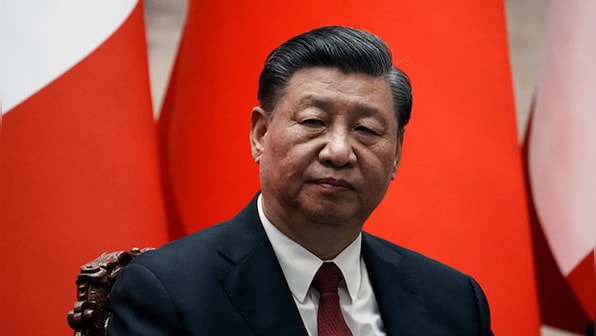
Maybe the most damning was not in the creation of the new body—but in Xi Jinping himself chairing the meeting and reading out the announcement. This isn’t how a strongman acts. This is the choreography of a controlled withdrawal.
Xi’s forced compliance signals that the tide has turned against him. The very people who built the myth of “Xi forever” are now unmaking it, piece by piece, from within. By making him deliver the bulletin, the architects of this transition craft the illusion of continuity. It’s less destabilizing for the public, but it hides a political storm.
The idea that Xi would voluntarily relinquish absolute control—especially after a decade of purging rivals, rewriting the constitution, and building a personalist cult—defies his known political style. This restructuring was imposed from above, likely by senior Party elders, retired power brokers, and perhaps even military brass tired of Xi’s one-man rule.
What Comes Next?
What we’re witnessing is the institutionalization of a post-Xi era—with Xi still in the picture. It’s a paradox the CCP often uses: let the face remain while the power dissolves behind it. In the coming months, this new body will likely expand its visibility. Policy announcements may come through it. Leadership decisions will begin to reference its authority. But danger looms.
The Chinese system lives by centralized precision. And this change—albeit subtle—one creates uncertainty. Bureaucrats might stall. Generals might wonder twice. Provincial leaders might play it safe. Divided at the top, nervous at the bottom.
International onlookers will also notice. Ailing Xi translates into possible adjustment of China’s foreign stance—from Taiwan to the South China Sea, from BRICS to the Belt and Road. Vacuum power draws chaos and opportunity alike.
A New Chapter in China’s Political Saga
The CCP has long worn a veneer of smiles and slogans to cover up its internal cracks. But the veneer is cracking. The promotion of this new entity, and the sidelining of Xi, could be the quietest but deepest political transition since the end of Maoism.
The Party will not acknowledge it, but Xi Jinping, once touted as China’s most influential leader since Deng, is today a standing icon of restraint on excess.
In China’s inscrutable power corridors, this is the starting point of the demise of one-man rule.
