
The INDIA Bloc’s Bihar Breakdown: Seat-Sharing or Power Struggle?
“The INDIA bloc’s seat-sharing negotiations in Bihar have turned messy, with allies clashing over constituencies and risking a fractured campaign against the NDA.”

Paromita Das
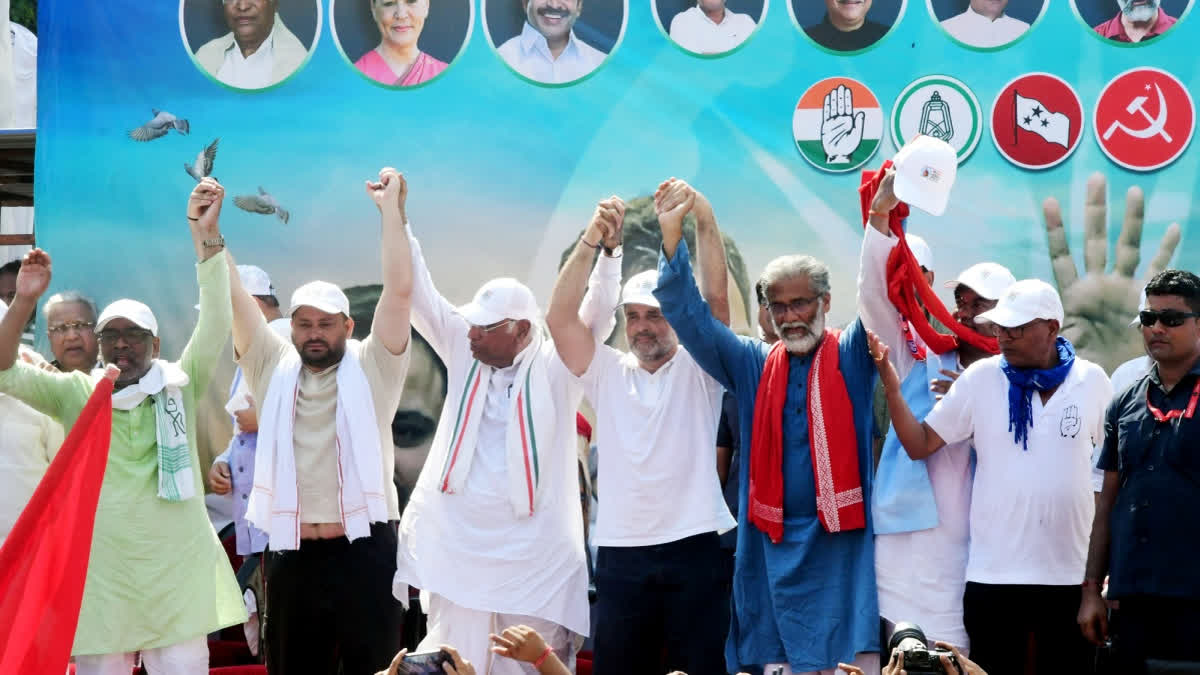
New Delhi, 21st October: When alliances are born out of convenience rather than conviction, cracks are inevitable. The opposition’s much-touted Great Grand Alliance in Bihar—known as the INDIA bloc—is facing precisely that. With the nomination deadline for the first phase of the Bihar Assembly elections already past, the bloc has yet to iron out a mutually acceptable seat-sharing formula. Instead of a united show of strength against the ruling NDA, the alliance has turned its battlefield inward.
Multiple partners have fielded rival candidates in more than ten constituencies, transforming what was meant to be a formidable coalition into a spectacle of confusion. The seat-sharing discord has now spilled into the public domain, exposing not just disagreements but deep distrust among the partners who were supposed to represent an alternative vision for Bihar.
Kutumba: A Microcosm of a Larger Malaise

The Kutumba constituency, represented by Congress state president Rajesh Ram, has emerged as a flashpoint in this unfolding drama. Ram, who has held the seat twice, has been renominated by Congress. But reports that the RJD intends to field Suresh Paswan from the same seat have ignited an open clash. In protest, Ram took to social media with a defiant post—“Dalits will not bow down, now there will be revolution”—signalling that the friction is no longer limited to backroom negotiations.
This single episode captures the INDIA bloc’s malaise: allies fighting allies, leaders going rogue, and messaging descending into chaos. The situation worsens when similar turf wars erupt across constituencies, from Lalganj to Tarapur, Gaura Bauram to Bachhwara. In each, confusion reigns supreme as candidates from the Congress, RJD, VIP, and Left parties overlap and undercut each other. The dream of a united opposition is rapidly dissolving into disarray.
Allies Turn Adversaries

The trouble isn’t limited to seat overlaps. It’s about power, prestige, and perception. Each party within the INDIA bloc believes it deserves more—a larger share of seats, more visibility, greater leverage. The Congress insists on recognition as a national force. The RJD, Bihar’s strongest opposition outfit, refuses to cede ground. Smaller allies like the CPI-ML and VIP, feeling sidelined, accuse the big players of arrogance.
This imbalance has created a toxic ecosystem of distrust. While top leaders such as Tejashwi Yadav and Mallikarjun Kharge project calm, party workers on the ground are bewildered. In some constituencies, they don’t even know which candidate represents the alliance. The resulting confusion risks blurring the INDIA bloc’s message to voters—a dangerous prospect when clarity and unity are prerequisites for credibility.
Deadlines and Deadlocks

Time is now the greatest enemy. The nomination window for the first phase has closed, and the final date for candidate withdrawal—October 21—is approaching fast. Unless conflicting nominations are withdrawn, the INDIA bloc risks direct contests between its own members. Such “friendly fights” could end up splitting the opposition vote, gifting the NDA a clean advantage in close races.
The Congress, meanwhile, has only added to the uncertainty. It recently released a second list of candidates, even as internal dissent brews over alleged irregularities in ticket distribution. The attack on Bihar Congress in-charge Krishna Allavaru at Patna airport and the viral videos of angry workers at the party office illustrate just how fragile internal discipline has become. The controversy over denying tickets to strong contenders like Munna Shahi, while re-nominating those who lost badly in 2020, further exposes a party struggling to hold its own house together.
The Optics of Disunity

Politics is as much about perception as it is about numbers. While the NDA—anchored by the BJP and JD(U)—has projected a well-coordinated partnership, the INDIA bloc looks rudderless. To the average voter, the image of chaos may matter more than the details of seat distribution. Every day of delay, every leaked disagreement, chips away at the alliance’s credibility.
In Bihar’s political theatre, perception becomes persuasion. When one alliance appears unified and the other fragmented, voters tend to gravitate toward stability. The INDIA bloc’s inability to communicate a single, coherent narrative risks undermining whatever advantage it had as an anti-incumbent force.
What This Chaos Reveals

The unfolding seat-sharing fiasco reveals a deeper structural weakness. The INDIA bloc was built on the idea of collective opposition to the BJP, but it never evolved into a cohesive political identity. Its partners share a common enemy, not a common agenda. The RJD’s socialist base, Congress’s centrist ideology, and the Left’s class politics make for an uneasy alliance at best. Add personal egos, local rivalries, and conflicting ambitions—and the result is the mess we see today.
Moreover, the timing couldn’t be worse. Voters are watching closely, and any perception of infighting can prove fatal. The NDA, by contrast, has already finalized its seat distribution—BJP and JD(U) contesting 101 seats each—projecting stability and coordination. If the INDIA bloc fails to resolve its disputes before the campaign intensifies, the outcome may be decided before a single vote is cast.
A Coalition at Crossroads

In my view, the INDIA bloc’s greatest weakness lies in its inability to translate intent into institution. Grand speeches about unity are meaningless if alliances can’t agree on who contests which seat. The Congress’s internal dysfunction, the RJD’s assertiveness, and the smaller allies’ frustration are symptoms of a larger leadership vacuum. For a coalition claiming to represent Bharat’s democratic alternative, this level of chaos is self-defeating.
If the bloc hopes to salvage credibility, it must act swiftly and decisively. Seat disputes must be settled transparently, local leaders disciplined, and messaging unified. The alliance needs to show that it stands for something larger than power-sharing arithmetic—perhaps a renewed promise of governance that values inclusion and stability.
Time Is Running Out
The Great Grand Alliance’s seat-sharing chaos has turned what should have been a moment of collective resurgence into a crisis of coordination. Unless the INDIA bloc swiftly mends its fractures and projects unity before the withdrawal deadline, it risks losing not just seats but the larger narrative of being a viable alternative. The NDA, watching from the sidelines, could not have asked for a better gift.
In politics, disunity is rarely forgiven, and in Bihar’s fiercely competitive landscape, it is often punished. The INDIA bloc must decide—will it continue to quarrel over turf, or finally unite over purpose? The answer may well determine not just the Bihar election, but the future of the national opposition project itself.
