
The Hypocrisy Trap: Priyanka Gandhi’s Gender Advocacy Faces Hard Questions

Paromita Das
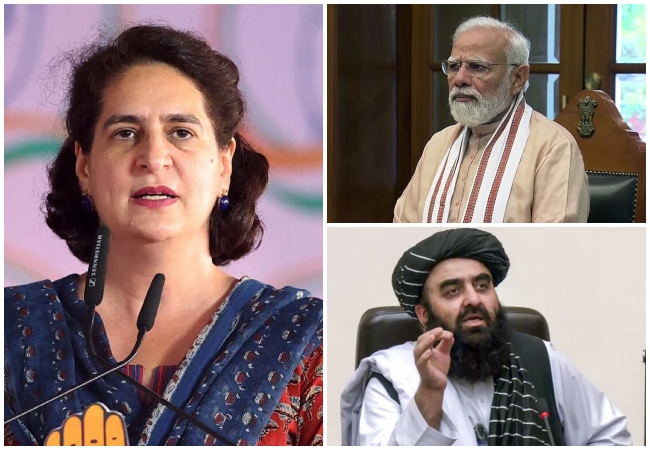
New Delhi, 13th October: In the high-voltage corridors of New Delhi’s power, a press conference has set off aftershocks rippling through both Bharatiya and global media circles. When Taliban Foreign Minister Amir Khan Muttaqi arrived in Bharat, his interaction with journalists was marked by a troubling exclusion—female reporters barred from attending, a chilling reminder of Afghanistan’s infamous gender restrictions. Yet in this unfolding drama, the spotlight has shifted squarely onto Congress General Secretary Priyanka Gandhi Vadra, whose sharp condemnation of the incident ignited fresh debate about leadership and the selective defence of women’s rights.
The Outrage That Echoed Worldwide

Priyanka Gandhi’s denunciation was immediate and fierce. Labeling the exclusion of female journalists as “an insult to some of Bharat’s most competent women,” she called upon Prime Minister Narendra Modi to clarify his position and questioned whether his government’s support for women’s rights was genuine or mere “convenient posturing from one election to another”. With the world watching, her words struck a chord—a powerful leader vocally defending the dignity and professional equality of bharatiya women in the face of Taliban-style restrictions.
The Silent Shadows: Mosque and Local Injustices

But beneath her fiery international advocacy lies a deeper, more uncomfortable reality: silence on the entrenched gender discrimination in Bharat’s own religious and social institutions. Bharatiya mosques that bar women’s entry have for decades marginalized tens of thousands of Muslim women—an injustice that, unlike a single press conference, permeates daily life across the country.
Priyanka Gandhi, despite being one of the most visible voices in the Congress party, has rarely, if ever, challenged these systemic norms. Her absence from debates about mosque entry stands in stark contrast to her vocal attacks on foreign visitors, raising questions about whether political convenience overshadows genuine commitment to women’s rights.
Wayanad’s Poster Politics and the Vanishing Woman

The silence grows more deafening in Wayanad, Kerala—a constituency represented by Rahul Gandhi and influenced by Congress. Here, Muslim women candidates are denied the basic right to even show their faces on election posters. Instead, symbolic flowers or icons substitute their image, a practice stemming from the most conservative interpretations of religious modesty.
Despite the glaring erasure of political identity in her brother’s stronghold, Priyanka has issued no condemnations or calls for reform. This reveals a pattern: the willingness to stand against visible, high-profile injustices, but a reluctance to confront similar—often worse—injustices closer to home.
The CUSAT Controversy: Missed Moments in Kerala

The selective advocacy extends to educational spaces. At Cochin University of Science and Technology (CUSAT), an on-campus event recently saw the Wisdom Islamic Organization enforcing Taliban-style gender segregation—separating men and women with a curtain, distinctly echoing the doctrine in Afghanistan.
Despite Kerala’s status as a Congress-stronghold and the uproar surrounding these regressive practices, Priyanka Gandhi remained silent. In an age where student activism and gender equality are increasingly on the front lines of social progress, her absence here marked another missed opportunity to champion women’s rights where it could have mattered most.
Selective Outrage Undermines The Cause

It’s a familiar pattern in politics: leaders who speak loudly when the cameras are flashing, yet fall silent when the injustices in question stem from within their own party, their own constituencies, or their own cultural base. Priyanka Gandhi’s anger at the Taliban’s press restrictions is justified but stands incomplete against the backdrop of persistent silence on domestic practices that marginalize, erase, or exclude women—be it in mosques, election campaigns, or university events.
Real leadership is measured by consistency, not convenience. The fight for women’s rights in Bharat requires the courage to challenge uncomfortable truths everywhere, even if it means risking political capital or voter goodwill.
Time for Courage Beyond Convenience

Priyanka Gandhi’s voice has power, reach, and the ability to shape the national conversation. Yet, her selective engagement with gender discrimination exposes a painful paradox: advocacy rings hollow if it spares complicity at home. To be a true champion for equality, leaders must confront inherited injustices, question cultural dogmas, and demand accountability within their own ranks as fiercely as they do with outsiders. Until then, every act of performative outrage will be haunted by the echoes of injustice left unaddressed in their own backyard.
Real Change Needs Consistency
The saga of the Taliban press conference has done more than highlight a single outrage—it has thrown open the door to a broader debate on political selectivity and credibility in championing women’s rights. Priyanka Gandhi’s criticism of the Modi government is valid, but her silence on discriminatory practices within Bharatiya institutions, mosques, and her own party’s constituencies undermines her claim to leadership on gender equality.
Bharat’s future demands leaders who are brave enough to speak up everywhere: in the glare of foreign policy and the quiet shadows of home-grown norms. For true progress, consistency, not convenience, must be the cornerstone of advocacy.
