
The Great Oil Divide: Trump Talks, Bharat Trades
“As Trump touts Modi’s alleged assurance on Russian oil, Bharat’s continued imports reveal a strategy rooted in sovereignty—not submission.”

Paromita Das
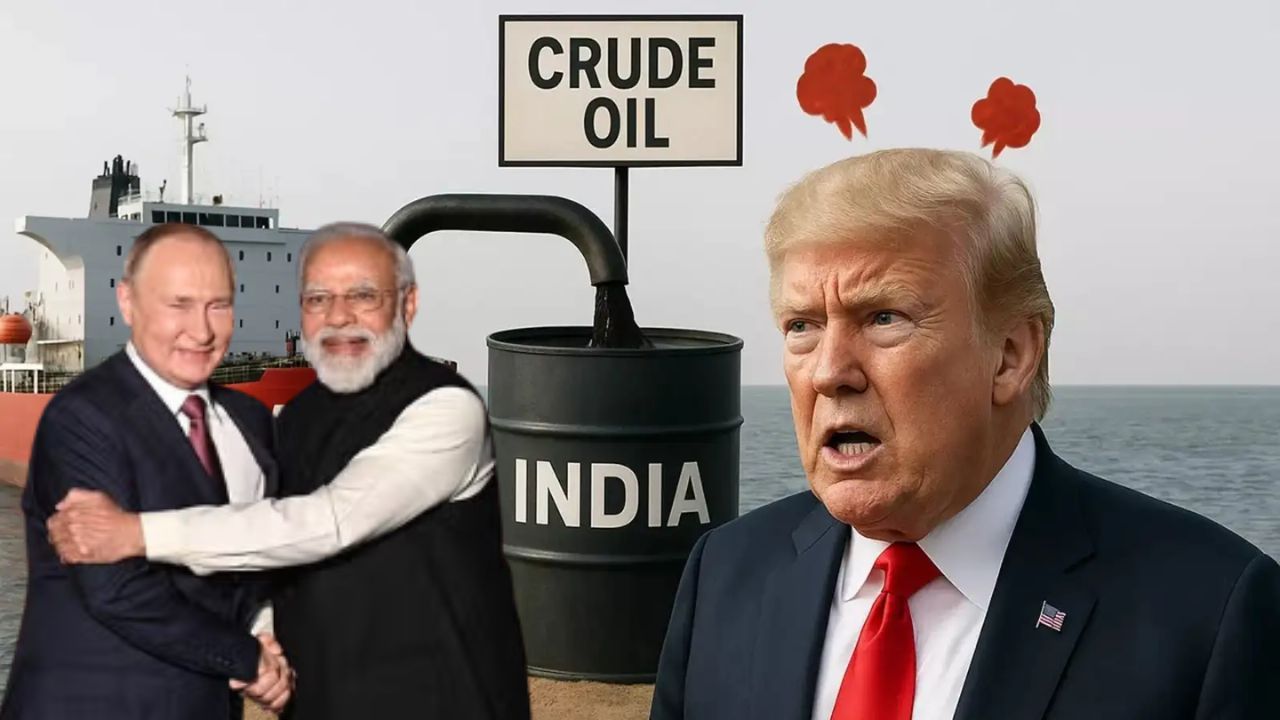
New Delhi, 17th October: In an age where diplomacy travels faster than verification, one statement can trigger global ripples. President Donald Trump’s latest claim — that Prime Minister Narendra Modi assured him Bharat would halt oil imports from Russia — has done just that. Trump’s words, delivered with characteristic confidence, have sent analysts scrambling, journalists speculating, and diplomats whispering across continents. Yet amid the headlines and hashtags, one question remains unanswered: did Modi truly make such a promise, or is Trump once again redefining diplomatic storytelling?
A “Big Step,” or a Big Misunderstanding?

Speaking to ANI, President Trump lauded Modi as a “great man” and Bharat as an “incredible country,” claiming New Delhi would soon end its dependence on Russian oil. The remark came after U.S. ambassador-designate Sergio Gor’s meeting with Modi, where defense, trade, and technology dominated discussions. To Trump, the supposed assurance marked a “big step” toward isolating Moscow economically — but New Delhi’s silence since has been deafening.
Observers were quick to recall past occasions when Trump’s confident declarations about Bharat later proved speculative or exaggerated. What makes this episode more consequential, however, is not the rhetoric but its timing: it comes amid escalating tariff tensions and energy-driven diplomacy between Washington and New Delhi.
Trump’s Tariff Gamble: Trade as Leverage

In August 2025, Washington shocked Bharatiya exporters by imposing a steep 50% tariff on several goods, citing New Delhi’s continued oil imports from Moscow as the trigger. Layered atop an earlier 25% duty, the move transformed trade cooperation into economic confrontation.
When asked if trade negotiations could still progress, Trump’s blunt response — “No, not until we get it resolved” — left little room for ambiguity. The administration’s strategy was evident: apply economic pressure to coerce compliance on energy policy. The message to Bharat was simple but stern — stop buying Russian oil or face further economic strain.
Yet Bharat stood its ground. New Delhi’s official position has remained unchanged: energy security trumps all else. Decisions on oil procurement, it reiterated, rest solely on national interest — not foreign diktats.
Bharat’s Position: Sovereignty Over Submission

Bharat’s energy approach has always been guided by three principles — affordability, reliability, and security of supply. As a rapidly developing economy with swelling energy needs, Bharat cannot afford disruptions to its oil flow.
The Ministry of External Affairs has repeatedly emphasized that Bharat will “buy energy from wherever it gets the best deal.” This stance reflects decades of foreign policy consistency — independent, pragmatic, and non-aligned. While Western nations frame energy choices through ideological lenses, Bharat views oil as an economic necessity, not a geopolitical gesture.
This pragmatism has served Bharat well, allowing it to maintain productive ties with both Washington and Moscow, even as global alliances grow sharply polarized.
The Data Tells a Different Story

Publicly available data makes one thing crystal clear: Bharat has not stopped buying Russian oil. According to the Centre for Research on Energy and Clean Air (CREA), Bharat remained the second-largest buyer of Russian fossil fuels in September 2025, trailing only China. Imports worth €3.6 billion (approximately ₹25,500 crore) flowed in during the month — with crude oil forming a dominant 77% share.
The global commodities tracker Kpler further reported that Bharat imported over 4.5 million barrels per day in September, representing 34% of total crude shipments. Even though import levels dipped slightly earlier in the year due to volatility, Bharat’s reliance on Russian barrels remains central to its energy landscape.
The attraction is straightforward: economics. Russian Urals crude often sells at discounts up to $20 per barrel below global benchmarks like Brent, providing crucial relief amid global inflationary pressures. For Bharat, such savings translate directly into lower fuel costs, industrial stability, and consumer price control. In a country where energy impacts everything from manufacturing output to food inflation, cheap oil is not optional — it’s existential.
Uneven Pressure: China Example Raises Eyebrows

What puzzles analysts is the selective nature of Washington’s pressure. While Bharat faces heavy tariffs and public admonishments, China — the largest importer of Russian oil — escapes comparable punitive measures. The contrast is hard to miss and raises diplomatic eyebrows.
To Bharatiya policymakers, this inconsistency underscores that U.S. tariffs are political leverage, not principled policy. While Washington justifies them as part of a moral stance against Moscow, they appear more like an attempt to test Bharat’s autonomy at a time when geopolitical alignments are shifting rapidly.
A Policy of Strategic Autonomy

Despite Trump’s rhetoric, Bharat-U.S. relations remain structurally strong. Collaborations in defense manufacturing, technology, and security continue to deepen under the framework of strategic autonomy — the guiding philosophy of Bharat’s foreign policy. Modi’s government has repeatedly shown that it can engage with diverse partners without compromising sovereignty.
The concept of Atmanirbharta (self-reliance) underpins this philosophy, blending economic nationalism with global engagement. By resisting pressure over Russian oil while expanding partnerships with the U.S. in other areas, Bharat demonstrates diplomatic dexterity — proving that disagreement need not mean disalignment.
The Politics of Perception

Donald Trump’s statements often blur the line between diplomacy and theater. His claim about Modi’s supposed pledge may reflect more political bravado than geopolitical truth. By projecting Bharat as compliant, Trump strengthens his domestic narrative of American influence. But Bharat’s silence — deliberate and strategic — says more. It signals quiet defiance wrapped in diplomatic sophistication.
In the grander calculus, this isn’t merely about oil. It’s about asserting independence in a world where energy is power and narrative is leverage. Modi’s government, reading both the economic map and the political moment, seems determined to maintain a course that serves Bharatiya interests first.
Between Words and Realities
President Trump’s declaration may have captured headlines, but the facts on the ground tell a different story. Bharat continues importing Russian oil not out of defiance, but out of necessity and prudence. The nation’s leadership understands that its economic destiny cannot hinge on any external approval.
In the final account, Trump’s words may reveal more about Washington’s anxieties than New Delhi’s intentions. Bharat’s energy calculus remains firmly rooted in realism — pragmatic, sovereign, and strategically balanced. Whether the world approves or not, Bharat, it seems, will keep doing what it must to keep its engines running.
