
Nepotism in Power: The Silent Killer of India’s Democratic Spirit

Poonam Sharma
Power in a democracy should be a reward for merit, not a birthright of the chosen few. Yet, in India, the very bedrock of democracy has time and again been eroded by a creeping culture of dynastic politics. From Delhi to the most remote areas of Assam, family-fiefdoms have converted public service into a private enterprise. The consequence is a silent yet deep corrosion of democratic values: the people’s choice becomes an illusion, and loyalty to a “family name” replaces loyalty to the nation.
The Emergence of Political Monarchies within a Republic
When India gained independence, it promised the people equality, representation, and opportunity. Politics then was a service to the nation, not a birthright. But over decades, this spirit was hijacked by a new class of political elites-the so-called “democratic dynasties.” These families turned their parties into private estates, passing leadership roles from parent to child like royal thrones.
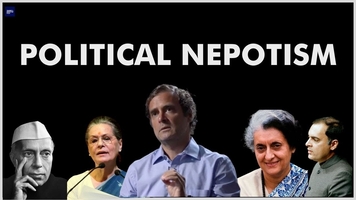
It has reduced political parties to family businesses, from the Nehru-Gandhi family in Delhi to regional satraps in states like Tamil Nadu, Maharashtra, and even Assam. Every generation of such leaders claims the crown, under the pretext of “continuing the legacy,” but the real motive is preservation of power, not service.
Nepotism: The Enemy Within Democracy
Democracy is based on competition, accountability, and people’s choice. Nepotism kills competition and ridicules merit. When the leadership role is decided not by talent or dedication but by surname, the genuine workers are left disappointed. This system breeds corruption, favoritism, and mediocrity-all dressed in the language of loyalty.
It is not coincidental that most dynastic parties are riddled with factionalism and hence prone to disintegration. When family replaces ideology as the prime driving force, dissent is crushed, and sycophancy becomes the road to success. The system rewards obedience, not performance.
Assam’s Silent Exodus: Merit Forced to Migrate
Assam is a perfect microcosm of this national malaise. The Congress once had some of the finest minds and grassroots leaders in Assam — honest, capable, and deeply connected with the people. They worked selflessly for decades, hoping their dedication would eventually be recognized.
But over time, Congress in Assam turned into a closed circle dominated one family, where decisions were no longer taken on public interest but on personal convenience. New ideas were unwelcome, and new leaders were seen as threats.
Capable leaders who could have brought rejuvenation to the party were sidestepped, humiliated, and pushed to the margin. Many such leaders had no other choice but to leave. Some of them joined the BJP, not out of opportunism, but out of a sense of purpose. They saw in the BJP a structure where merit was recognized, work is rewarded, and leadership is not confined to a single surname.
The migration of talent from Congress to BJP in Assam wasn’t some political accident; it was a moral rebellion against dynastic suffocation.
The Cost of Family Rule
Dynastic politics doesn’t only limit leadership opportunities but also affects governance. Accountability disappears when power circulates in a family. The leaders cease to answer the people and instead answer their “elders.” Decision-making becomes centralized and corruption flourishes in the shadow of family protection.
In such systems, emotional appeals are used to manipulate the voter in the name of a grandfather or a late leader, while ignoring real issues such as unemployment, inflation, and border security. The party becomes a drama of inheritance rather than a platform for progress.
The Congress today is the starkest example of this decline. The party has several talented leaders across different states, but it has remained trapped in the orbit of one family. An obsession with hereditary control has shrunk a once-great national party into a shrinking relic of nostalgia.
Democracy vs Dynasty: The Battle Ahead
The battle between democracy and dynasty is not merely a political battle; it is moral and cultural. A true democracy flourishes when power is something earned, not awarded. When citizens can dream of leading the nation whatever their background might be, and when young politicians rise through hard work, not family connections, the system becomes stronger.
The freedom fighters of India dreamed of a republic in which every citizen had an equal opportunity to rise to the leadership. Dynastic politics is a betrayal of that dream. This creates a new form of feudalism-not of land and titles, but of political offices and ministries. It is, in essence, the return of monarchy through the backdoor.
Breaking the Chain
India needs to break this chain if the country is to save democracy. Political parties should have internal democracy: transparent elections, limits on terms of office, and accountability mechanisms. Voters, too, must do their part: reject nominees relying solely on a family legacy rather than their own merit.
Youth, particularly, need to wake up to this fact. They need to ask themselves: why does leadership have to be inherited? Why should power be reserved for surnames and not for citizens?
The political transformation of Assam inspires hope. For the set of leaders who felt stifled under the stranglehold of dynastic control, a party that rewards performance over pedigree breathed new life into them. That’s when honest men and women come together for something bigger than personal ambition; democracy regenerates itself.
A Call to Reclaim Democracy
Indian democracy has survived wars, crises, and corruption. But its greatest threat is from within, in the form of gradual normalization of nepotism. A choice has to be made between serving a political family and serving the nation.
It is time to remember that “Dharma” — the moral law that sustains society — rests on justice, truth, and fairness. Nepotism violates all three. When one family’s ambition becomes a nation’s burden, the idea of democracy dies a little every day. The need of the hour is to demand transparency, merit, and accountability in every political institution to protect democracy. Let the message be crystal clear: India belongs to 1.4 billion citizens, not to a few dynasties. Democracy must live on, family rule must end, and the people’s voice should prevail. Break the dynasty and save the republic.
