
The Cost Of Truth KN Rajanna Resignation Exposes Congress Crisis
"KN Rajanna’s abrupt exit from Karnataka’s cabinet over a simple truth about voter rolls lays bare the Congress party’s deep intolerance for dissent, revealing a culture where loyalty to the Gandhis outweighs honesty, and internal democracy is sacrificed at the altar of political optics."

Paromita Das
New Delhi, 13th August: In a political season already thick with accusations and counter-accusations, the sudden resignation of Karnataka Cooperation Minister KN Rajanna on Monday has landed like a thunderclap. Far from being a routine cabinet reshuffle or a disciplinary matter, this is a moment that tears open the curtain on a deeper, more troubling reality — that the Congress party, which never tires of invoking “democracy” in its public rallies, has little tolerance for it within its own walls.
Rajanna’s “crime” was neither corruption nor betrayal. It was the simplest, and in politics, perhaps the most dangerous act: telling the truth.
The Minister Who Spoke the Truth

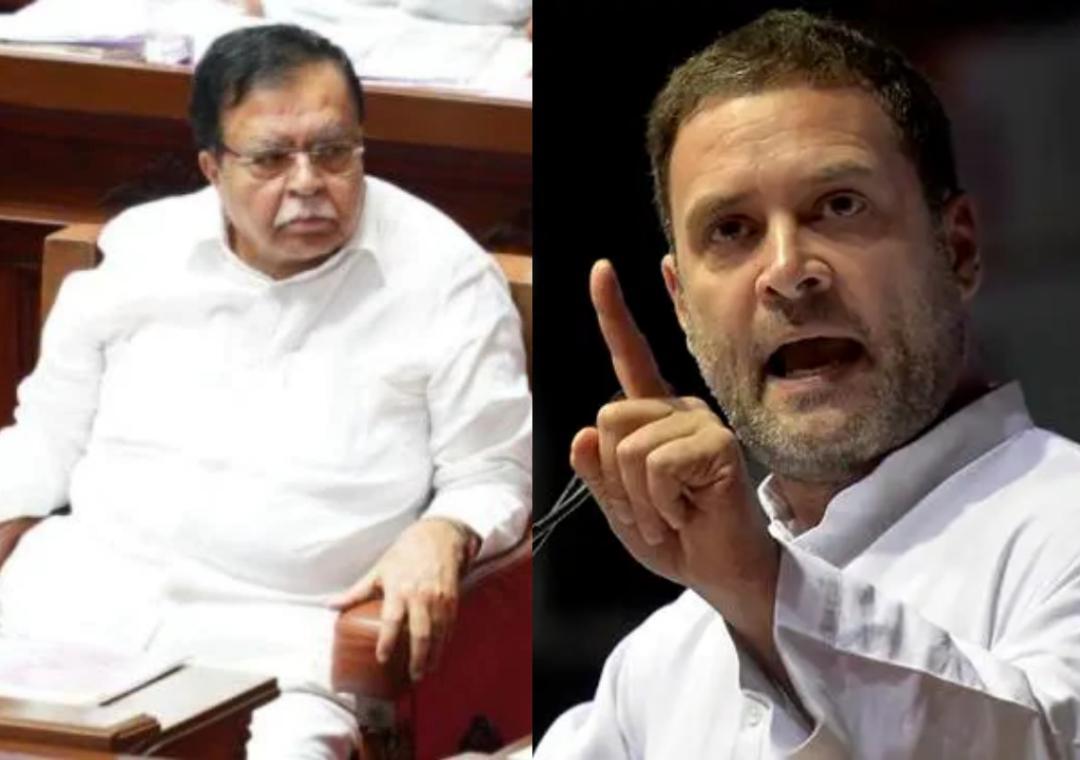
The controversy began with Rahul Gandhi’s high-decibel campaign alleging “vote theft” in Karnataka’s Mahadevapura constituency. It was here that Rajanna, considered close to Chief Minister Siddaramaiah, quietly dropped a fact that undercut the entire political drama. Speaking to the media, he asked the one question no one else dared to pose:
“When was the voter list prepared? It was during our government’s tenure. At that time, was everyone just sitting quietly with eyes closed?”
Rajanna’s statement wasn’t speculative. It was factual, verifiable, and publicly documented. The electoral roll in question was drawn up under Congress’s watch. He did not excuse the alleged irregularities; in fact, he condemned them outright.
“These irregularities did take place — that’s the truth. They happened right in front of our eyes and we should feel ashamed. We didn’t act then, and we must be more alert in the future,” he admitted.
In a healthier political culture, this would have been a moment for reflection, even course correction. Instead, it triggered a political execution. By the end of the day, Rajanna had been pressured to resign.
The Rahul Gandhi Standard: All Noise, No Accountability

The irony is almost Shakespearean. Rahul Gandhi has spent weeks brandishing a pocket Constitution, marching from Parliament to the Election Commission, and accusing the ruling BJP of subverting democracy. Yet, when the Election Commission asked him to back up his “vote theft” charges with a sworn affidavit, he refused.
Theatrics? Yes. Evidence? No.
Rajanna, by contrast, acknowledged the problem, accepted his party’s share of the blame, and urged stronger oversight of voter lists. His approach was rooted in accountability. Rahul Gandhi’s, critics argue, is built on spectacle.
And therein lies the unspoken rule of Congress politics: the leadership can say anything — however unsubstantiated — and expect the party to chorus it back. But if a member challenges the narrative, even with facts, their career becomes collateral damage.
No Space for Dissent in Congress

Rajanna’s removal is not an isolated episode. From veterans like Ghulam Nabi Azad and Kapil Sibal to regional stalwarts, Congress has a long record of sidelining leaders who step out of line with the Gandhis. The message is clear: the party is a family-run enterprise, not an internal democracy.
The most telling detail? Rajanna never praised the opposition, never undermined the party’s electoral prospects, never even disputed Rahul Gandhi’s larger concern about irregularities. His sole transgression was pointing out that Congress itself bore responsibility for the voter roll in question.
If this is enough to cost a minister his portfolio, then the Congress definition of “internal democracy” is effectively a loyalty test to the family — one you pass only if you never contradict them.
A Chilling Message for the Party and the Public

The implications extend beyond party politics. For a political outfit that claims to be the last line of defence against authoritarianism, Congress’s reaction sends a chilling message: honesty is punishable, blind obedience is rewarded.
The BJP’s IT Cell chief summed it up bluntly on social media:
“For daring to show the mirror and expose the flaws in Rahul Gandhi’s arguments, Rajanna has now been forced to resign.”
The real damage is not to Rajanna’s career — which may yet find new footing — but to the party’s moral authority. If Congress cannot tolerate internal truth-telling, what credibility does it have when it lectures the nation on freedom of speech, transparency, and democratic governance?
The Hypocrisy Runs Deep

This episode lays bare the gap between Congress’s rhetoric and reality. Publicly, Rahul Gandhi rails against the erosion of democratic institutions, accuses the ruling party of muzzling dissent, and claims to be fighting for constitutional values. Privately, his party is doing exactly what it condemns — silencing inconvenient truths and punishing those who voice them.
The fact that Rajanna’s remarks were not partisan attacks but constructive criticism makes his ouster all the more revealing. This is not about discipline or electoral strategy; it is about maintaining a personality cult where the leader is never wrong, and any challenge — factual or otherwise — is treated as disloyalty.
Democracy Dies Behind Closed Doors
By forcing KN Rajanna out for a simple factual statement, Congress has underscored that the democracy it champions is for public consumption, not internal practice. The resignation is more than an internal political squabble; it’s a symbolic marker of how far the party has drifted from the open, debate-driven politics it once claimed to embody.
Rahul Gandhi’s “vote theft” campaign, already shaky due to lack of evidence, now faces another credibility blow. For the public, the takeaway is stark: the party that speaks of saving Bharatiya democracy cannot even save it within its own four walls.
Karnataka Governor Thaawarchand Gehlot’s swift acceptance of Rajanna’s resignation closed the procedural chapter. But politically, the wound remains open — not for Rajanna, who may emerge stronger, but for the Congress, which has yet again proven that in its hierarchy, truth is expendable, but loyalty to the Gandhis is sacred.
