
The Calm Before Bengal’s Electoral Storm: Mamata’s Tactical Transfers
“How Mamata Banerjee is Maneuvering Safely Ahead of West Bengal’s Crucial Special Intensive Revision.”

Paromita Das
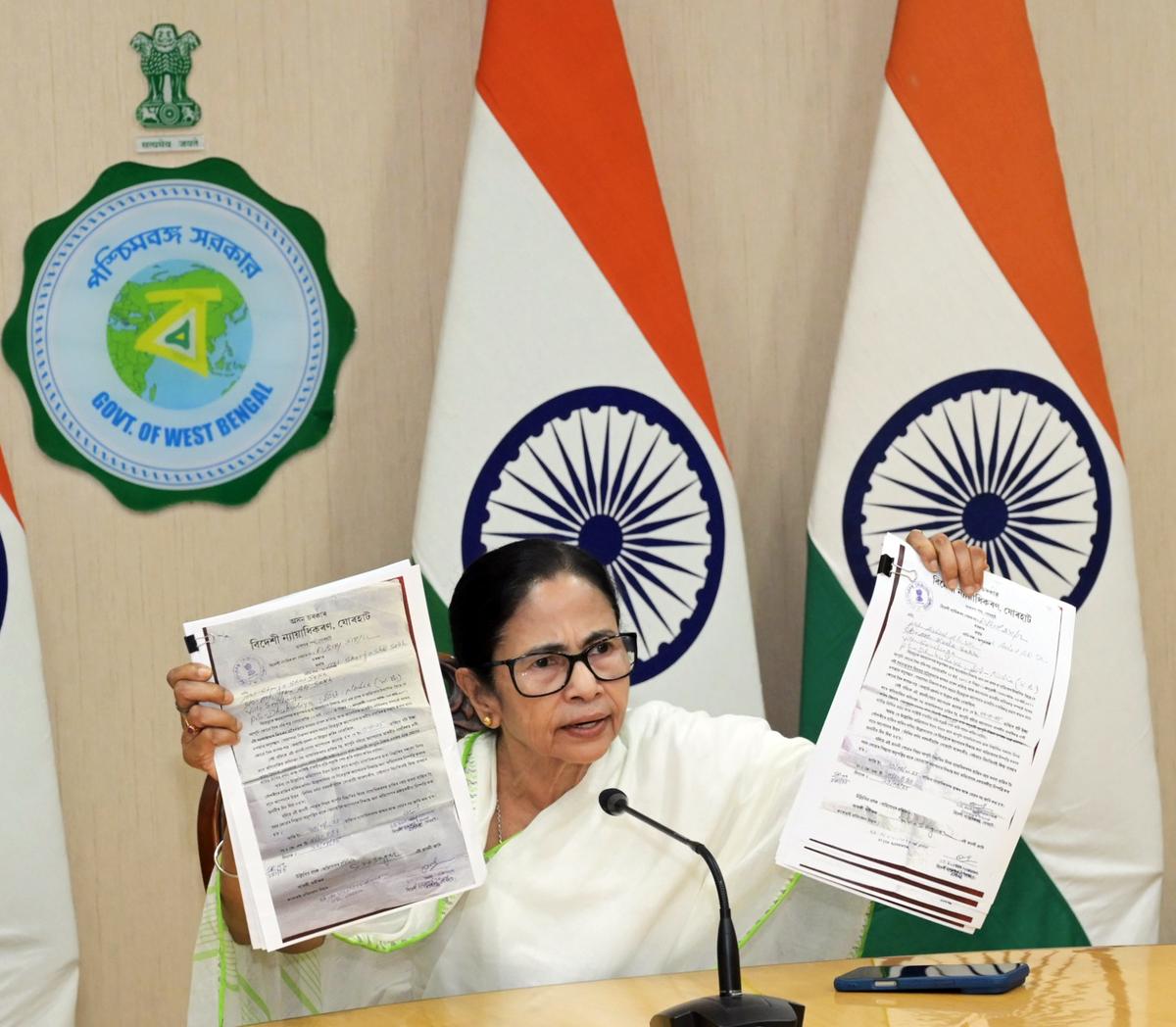
New Delhi, 30th October: Just days before the Election Commission of India (ECI) announced the second phase rollout of the Special Intensive Revision (SIR) of electoral rolls—including West Bengal—Chief Minister Mamata Banerjee’s government undertook a massive bureaucratic reshuffle. Over 64 senior government officers, including 17 district magistrates (DMs), were transferred amidst growing anxieties over the electoral revision process that could drastically alter the voter landscape ahead of the 2026 assembly elections. This strategic reshuffle reflects Mamata Didi’s calculated attempt to stay one step ahead of the SIR, while managing complex political undercurrents in the state.
The Strategic Transfers: Preempting the SIR Impact

On the eve of the ECI meeting, West Bengal witnessed a sweeping transfer of 64 IAS and WBCS officers, including DMs from key districts like Murshidabad, North 24 Parganas, and South 24 Parganas. These districts are politically sensitive and have historically seen intense electoral contests. The timing of this reshuffle—just before the public announcement of the SIR schedule—signaled the state government’s anticipation of the potential impact that electoral roll revision could have.
With an electoral roll of about 7.6 crore voters in West Bengal in 2025, the stakes are high. According to recent analyses, almost 45-50% of these voters were newly added since the last SIR in 2002 — a massive influx that could drastically shift electoral dynamics. The government’s move to reposition trusted bureaucrats ahead of this revision seeks to insulate Mamata’s political fortress against possible disruptions.
The Implications: Managing the Numbers and the Narrative

The SIR process will scrutinize voters registered since 2002. Those registered prior will be required to fill forms but are less likely to face disqualification, whereas those added after 2002 must submit valid documentation to remain on the electoral rolls. This detailed verification could see large-scale deletions or corrections, impacting voter demographics.
Mamata Banerjee has vocally opposed the timing of SIR, arguing that such intensive revision should require years to complete, not months before a pivotal election. Critics claim that her government’s last-minute transfers of bureaucrats, especially those directly involved in electoral administration, are intended to control the SIR process and possibly curb deletion of certain voter groups.
An added layer of complexity is the alleged partisan affiliation within the Booth Level Officers (BLOs) — some reportedly connected with the Trinamool Congress (TMC). Their role in voter verification has raised concerns about impartiality and the integrity of the revision exercise.
Bulletproofing Against Political Disruption

The government has stepped up surveillance and monitoring mechanisms this time. Unlike previous elections where FIRs, lack of camera coverage, and administrative lapses marred the process, the ECI has mandated extensive installation of cameras at verification sites to ensure transparency—a direct response to past electoral controversies in the state.
At the same time, the growing footprint of organizations like the RSS in West Bengal after 2021 adds a new dimension to the electoral calculus. West Bengal is witnessing rapid expansion of political and ideological work by the RSS, introducing heightened competition and social polarization. Keeping voter rolls accurate and reflective of the population becomes both a political and communal imperative.
A Cautious Dance Between Control and Democracy

Mamata Banerjee’s moves before the SIR reflect a political leader attempting to control as many variables as possible in an uncertain electoral environment. The reshuffle is a strategic play — allocating loyal administrators to critical districts to mitigate risks from electoral roll scrutiny.
However, such maneuvers also risk reinforcing perceptions of political interference in what should be an impartial bureaucratic process. Ensuring transparency, accountability, and fairness in the SIR exercise is essential not only to uphold electoral integrity but also to sustain democratic faith in West Bengal.
The real test will be whether the administration allows an unbiased and comprehensive revision, or whether political expediency trumps the foundational democratic right to a fair voter list.
Managing the Future of Bengal’s Democracy
As West Bengal prepares for a political showdown in 2026, the SIR process looms large as a potential game-changer. Mamata Banerjee’s government, through its sweeping bureaucratic reshuffle, is clearly playing safe—aiming to shield itself from electoral vulnerabilities exposed by rigorous voter verification.
Yet democracy in West Bengal depends on more than political chess; it requires fair, transparent processes that respect the electorate’s voice. The coming months will reveal whether the SIR becomes a tool for electoral clarity or a battleground for partisan advantage.
West Bengal, with its vibrant political culture and diverse electorate, deserves an SIR that strengthens democratic participation—not one hampered by fear, suspicion, or manipulation.
