
The Alaska Failure and Modi’s Moment on the World Stage
"As Trump stumbles and Putin holds firm, PM Modi’s defiance against Western pressure positions Bharat as the global power broker in a rapidly changing world order."

Paromita Das
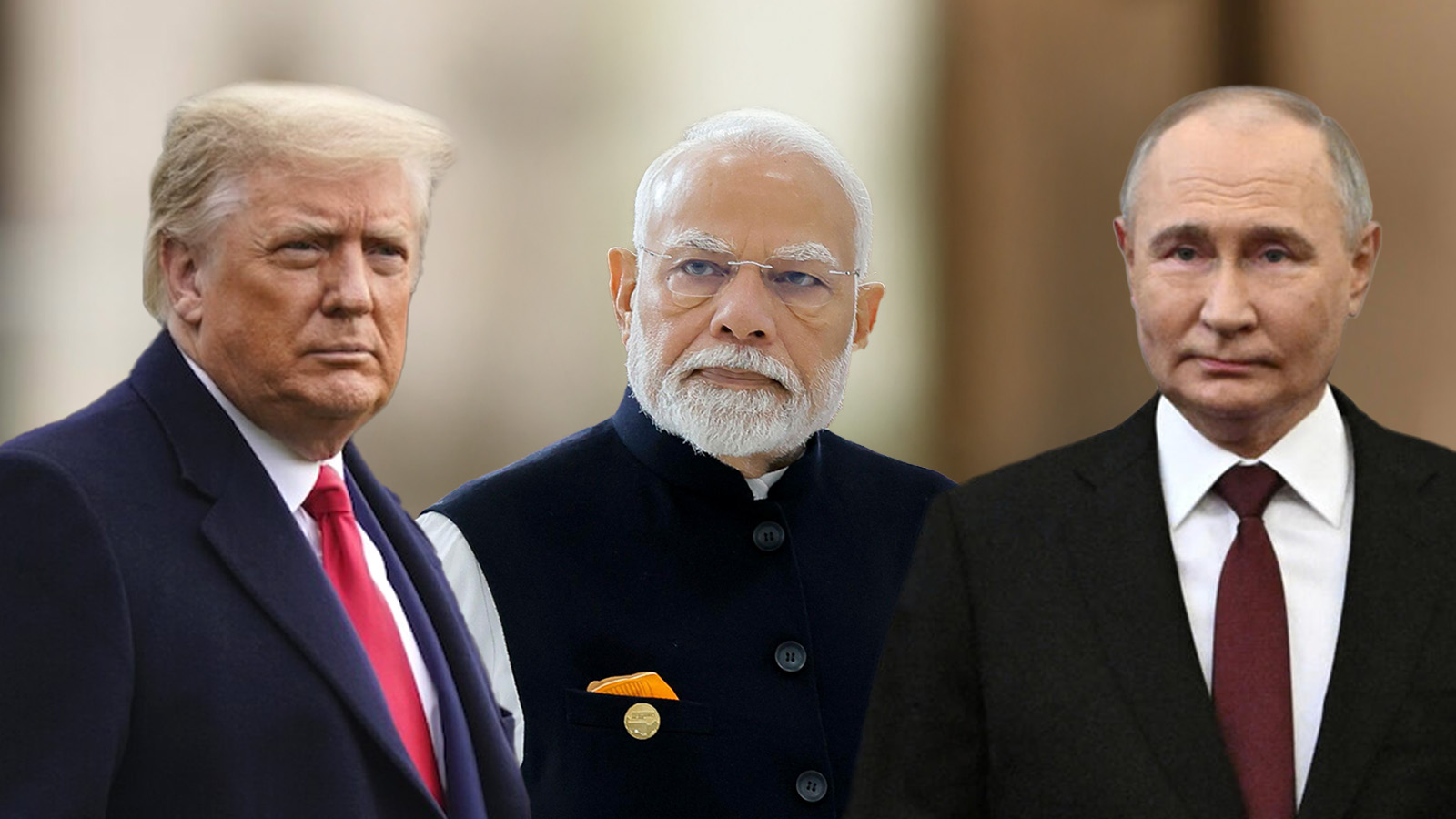
New Delhi, 3rd September: The world is watching closely. From Washington to Moscow, from Brussels to New Delhi, the focus is no longer merely on old Western alliances but on how three leaders—Donald Trump, Vladimir Putin, and especially Bharat’s Prime Minister Narendra Modi—are shaping a new geopolitical narrative. Once, the United States dictated terms, and Europe followed in step. But Trump’s Alaska summit, intended as a bold move, has instead revealed the cracks in this global order. The failure was not just diplomatic; it was symbolic of an irreversible shift where Asia and Eurasia are beginning to set the terms.
Trump’s Alaska Summit: An Opportunity Lost

Trump had billed the Alaska summit as his moment of global statesmanship. He promised nothing short of a breakthrough: a ceasefire, a Nobel-worthy peace deal, and a dramatic reset with Russia. Instead, the summit fell apart.
Trump sidelined European leaders, forcing them to wait while he attempted private talks with Putin. Yet, the Russian side, through Foreign Minister Sergei Lavrov, delivered a cold, calculated response. NATO’s role was dismissed outright. Ukraine’s future security was reframed on Russian terms. And the long-promised Putin-Zelensky meeting was dismissed as premature.
What should have been Trump’s triumph became his humiliation. His dream of a Nobel Peace Prize is fading, replaced by images of a US president echoing Putin’s rhetoric while leaving his European allies exasperated.
Bharat Refuses to Bend Under Pressure

The United States hoped sanctions would push Bharat into compliance, especially over its purchase of Russian oil. The argument was simple: by buying Russian crude, Bharat indirectly funded Moscow’s war machine. But Bharat stood its ground.
New Delhi’s refusal to yield is significant for several reasons. First, it signals that Bharat is willing to absorb economic pain rather than compromise strategic autonomy. Second, it underscores Modi’s growing stature on the world stage. In an era when even Europe struggles to say “no” to Washington, Bharat’s defiance is remarkable.
For Bharat, energy security and national interest take precedence over Western dictates. More importantly, Bharat’s refusal to bend has elevated it from being a balancing power to a decisive player. Today, it is not just caught in the crossfire of US-China tensions—it is shaping the battlefield itself.
Europe’s Waning Clout

Perhaps the most embarrassing outcome of the Alaska summit was the treatment of European leaders. Images of them sitting stiffly, like schoolchildren being lectured, underlined Europe’s diminished status. For decades, Europe relied on US military protection while underinvesting in its own defense. Now, when Washington demands alignment, Europe has little choice but to follow—despite internal reservations.
Yet, Europe’s dependence has limits. With defense budgets slowly rising and trade ties with Asia deepening, Brussels cannot afford to alienate Bharat at Washington’s behest. The EU has refused to impose sanctions on Bharat, recognizing its long-term strategic importance.
The Rise of the Russia-Bharat-China Troika

The most consequential development is the emerging alignment of Russia, Bharat, and China. Meeting at the SCO summit in Tianjin, the three powers signaled growing cooperation. For Russia, facing Western sanctions, Bharat and China are lifelines. For China, which is locked in a tariff war with the US, Bharat is a partner it cannot afford to ignore.
Of course, mistrust between Bharat and China lingers, especially over unresolved border disputes. Yet recent diplomatic engagements suggest that both sides recognize the necessity of at least temporary accommodation. Should the troika overcome its differences, it could emerge as a formidable counterweight to Western dominance—militarily, economically, and diplomatically.
Modi: The Reluctant Power Broker

Amid this global reshuffle, PM Modi has emerged as a pivotal figure. Trump has tried repeatedly to reach him, but reports suggest Modi has avoided such calls. The reasons are clear: Bharat will not allow its agricultural market to be pried open, nor will it halt Russian oil purchases to satisfy Washington. Modi knows that any premature engagement could be exploited for Trump’s political theatrics.
Instead, Modi is biding his time, engaging selectively with Moscow and Beijing while maintaining a working dialogue with Washington. By refusing to play Trump’s game, Modi has underscored Bharat’s new position—not as a junior partner to any power, but as a sovereign state charting its own course.
The Era of Unipolarity Is Over

The Alaska summit was more than a diplomatic misstep; it was a symptom of a broader trend. The unipolar world led by the US is ending. The West’s capacity to dictate terms is shrinking, while Asian powers—Bharat and China—are rising in tandem with Russia’s resilience.
Trump’s attempts to bully allies and isolate adversaries have only highlighted America’s diminishing leverage. Meanwhile, Bharat has demonstrated that it can withstand sanctions, manage trade disruptions, and still maintain its economic trajectory. This is not just defiance; it is leadership.
A New Balance of Power
The world order is being rewritten. The Alaska summit exposed the weakness of old alliances and the rise of new power centers. Europe, weakened and dependent, finds itself struggling to keep pace. Russia, under pressure but defiant, refuses to back down. China, bruised by tariffs, is recalibrating its global partnerships. And Bharat—led by PM Modi—is asserting itself like never before.
The eyes of the world are on these three leaders. For Trump, the dream of global statesmanship may already be over. For Putin, the task is to maintain defiance without economic collapse. But for Modi, the opportunity is different. Bharat is now the swing power, the indispensable partner, and the nation to watch.
The coming months, especially with potential meetings at the UN General Assembly, may redefine alliances once more. Yet one truth is clear: the world is no longer unipolar, and the balance of power is shifting eastward.
