
Tharoor Panel Flags Bangladesh as India’s Biggest Challenge Since 1971
Tharoor-led committee flags Islamist rise, China-Pakistan influence, urges recalibration of India’s Dhaka policy

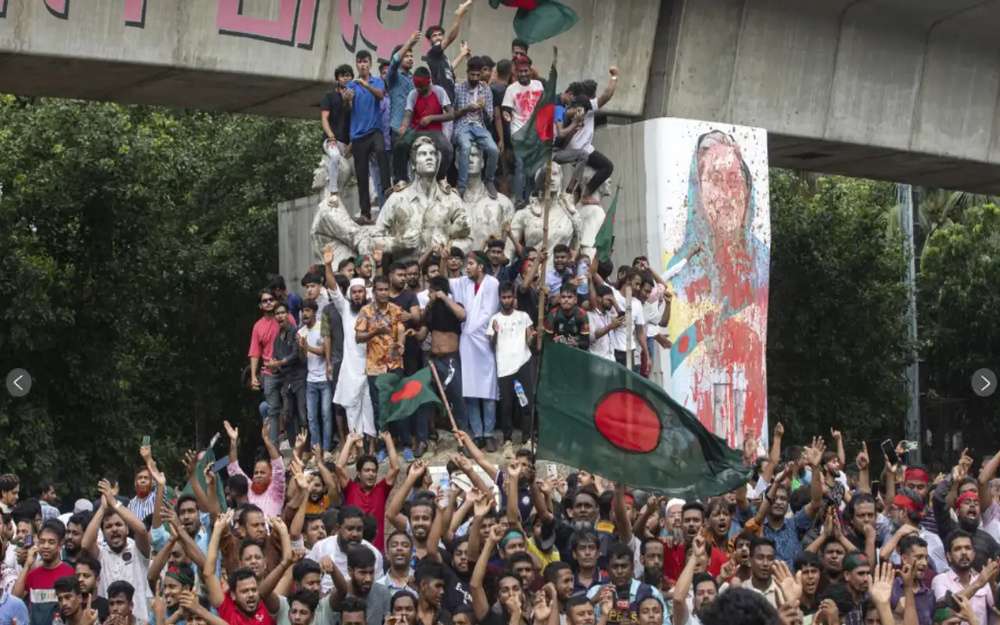
- Panel calls Bangladesh situation India’s toughest strategic challenge since 1971
- Warns of rising Islamist influence and shrinking political space for Awami League
- Flags expanding Chinese and Pakistani footprint in ports, defence and infrastructure
- Recommends preventing foreign military footholds and offering Dhaka development alternatives
GG News Bureau
New Delhi, 19th Dec: The current situation in Bangladesh poses India’s “greatest strategic challenge” since the 1971 Liberation War, a parliamentary committee headed by Congress MP Shashi Tharoor has warned, urging New Delhi to carefully recalibrate its approach to Dhaka amid fast-changing political and security dynamics.
In its report submitted to the government, the committee said that while the crisis in Bangladesh is unlikely to descend into chaos or anarchy, it represents a deeper, long-term strategic shift that could significantly alter India’s position in the region.
“While the challenge in 1971 was existential and humanitarian, involving the birth of a new nation, the present challenge is of a graver nature—a generational discontinuity, a shift of political order, and a potential strategic realignment away from India,” the panel said. It cautioned that failure to act decisively could result in India losing strategic space in Dhaka “not to war, but to irrelevance.”
The committee traced the unrest to a convergence of factors, including the rise of Islamic radical groups, intensifying Chinese and Pakistani influence, and the collapse of the long-standing dominance of Sheikh Hasina’s Awami League. It expressed concern over Bangladesh’s recalibrating ties with Pakistan and China, particularly Beijing’s expanding role in infrastructure, port development and defence cooperation.
Citing specific projects, the panel pointed to the expansion of Mongla Port, developments at Lalmonirhat Airbase, and the submarine base at Pekua, which is capable of hosting eight submarines despite Bangladesh currently operating only two. It also noted that China has been engaging across Bangladesh’s political spectrum, including outreach to Jamaat-e-Islami, whose representatives have reportedly visited China.
On the domestic political front, the committee flagged the reinstatement of Jamaat-e-Islami’s electoral registration, enabling it to contest upcoming polls, while the interim government in Dhaka has banned the Awami League from electoral participation. “The continuing ban on the Awami League will obviously call into question the inclusiveness of any future elections in Bangladesh,” the report said.
The panel recommended that India closely monitor developments to prevent any foreign power from establishing a military foothold in Bangladesh and urged New Delhi to offer Dhaka a comparative advantage through enhanced development cooperation, connectivity and port access.
It also noted growing attacks on minorities and rising anti-India rhetoric, particularly targeting India’s northeastern states, under the interim government led by Muhammad Yunus. The committee said New Delhi has so far taken a measured response to statements from Bangladesh that threaten India’s sovereignty and territorial integrity.
Tensions escalated further this week after three Indian visa application centres, including one in Dhaka, were shut following protests by radical Islamist groups under the banner of “July Oikya” near the Indian High Commission. The protesters demanded, among other things, the return of ousted Prime Minister Sheikh Hasina.
The report also highlighted a statement by a leader of Bangladesh’s National Citizen Party, who threatened that Dhaka could shelter forces hostile to India and assist efforts to sever the country’s “seven sisters” of the Northeast from the mainland.
