
Tharoor Invited, Kharge and Rahul Omitted from Putin State Banquet
Congress questions government protocol after top leadership left out while Tharoor represents Congress at Rashtrapati Bhavan

GG News Bureau
New Delhi, 5th Dec: The Congress party has expressed concern after its national president Mallikarjun Kharge and Leader of the Opposition in the Lok Sabha, Rahul Gandhi, were not invited to the state banquet hosted at Rashtrapati Bhavan in honour of Russian President Vladimir Putin, who is on a two-day visit to India.
Congress sources confirmed that neither Kharge nor Rahul Gandhi received an invitation to the dinner hosted by President Droupadi Murmu. The omission has triggered criticism within the party, which described the move as exclusionary during an important diplomatic engagement.
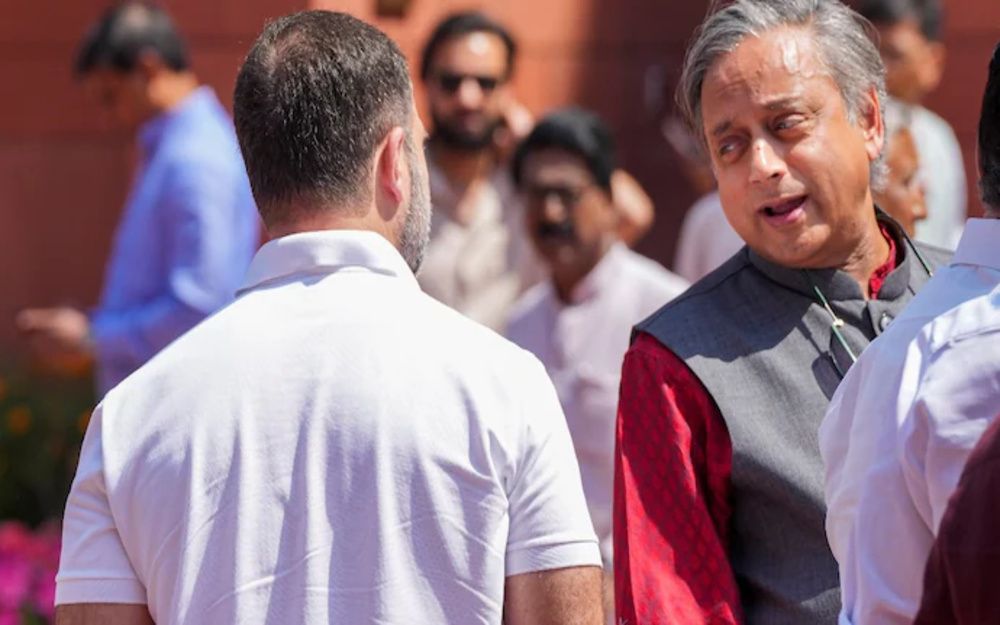
In contrast, senior Congress leader Shashi Tharoor, Member of Parliament from Thiruvananthapuram and chair of the Parliamentary Standing Committee on External Affairs, received an invitation and confirmed his attendance. Tharoor said he was honoured to be invited but unaware of the criteria used to select attendees.
Tharoor’s inclusion is being linked to his diplomatic background—he is a former United Nations Under-Secretary-General—and his active involvement in foreign policy deliberations, particularly on India–Russia relations. He has recently led multi-party delegations abroad to articulate India’s position against Pakistan-sponsored terrorism, especially after ‘Operation Sindoor’. He also emerged as a prominent voice during diplomatic outreach efforts following the Pahalgam attack.
Despite being a senior Opposition MP, Tharoor has publicly supported Prime Minister Narendra Modi on several occasions, including praising his global engagement and acknowledging the government’s diplomatic strategy post-‘Operation Sindoor’. The Prime Minister’s Office recently amplified his views by sharing his article on India’s external outreach.
The absence of invitations to Kharge and Rahul Gandhi has added a political undercurrent to the high-profile diplomatic visit, raising questions about protocol practices and the government’s approach to Opposition representation in key state functions.
The episode highlights the complex overlap of domestic politics, foreign policy optics, and institutional protocol during a major international engagement.
