
Tariffs, Oil, and Trump’s Bold Bid to End the Ukraine War
“At the NATO summit, Trump unveiled a plan of oil bans and tariffs, promising to end the Ukraine war through economic warfare—but allies remain divided.”

Paromita Das
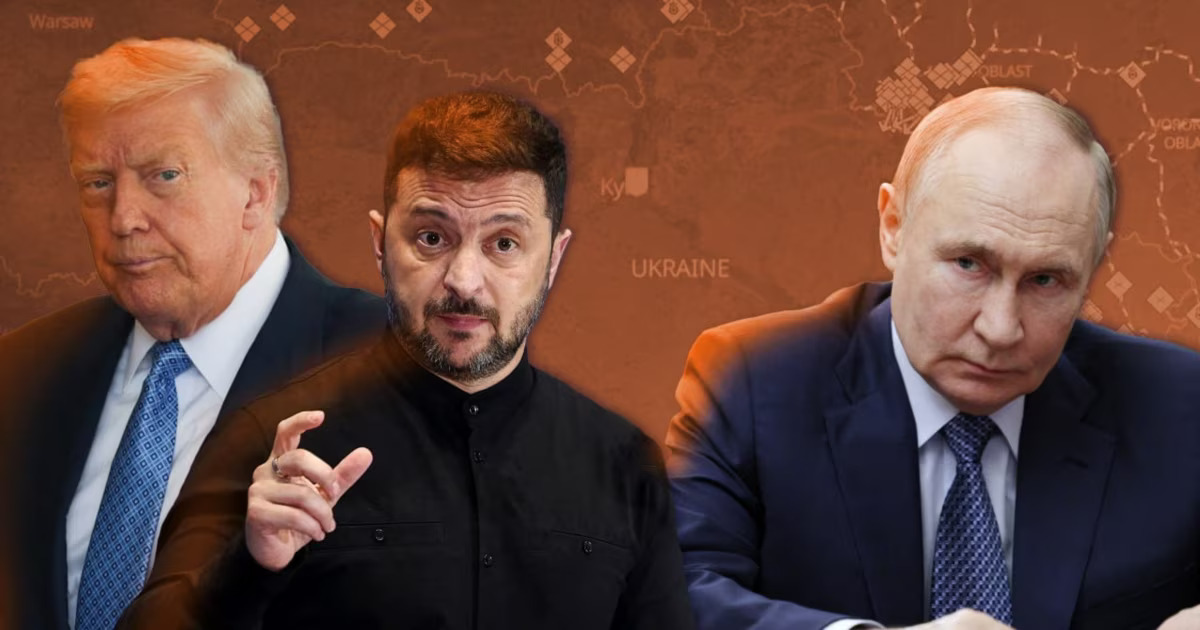
New Delhi, 17th September: The war in Ukraine has dragged on far longer than many predicted, reshaping global politics and testing the strength of alliances. Yet U.S. President Donald Trump insists that tanks, missiles, and battlefield maneuvers are not the real keys to ending the conflict. Instead, he has placed his bets on economics. At the recent NATO summit in Brussels, Trump unveiled a bold vision: oil bans and trade tariffs as the ultimate tools of war. His calculation is straightforward—cut off Moscow’s money, and Vladimir Putin will be forced to negotiate.
But the plan, like much of Trump’s political career, has proved polarizing. For some, it shows creative strength. For others, it risks splintering the West at a fragile moment in history.
Trump’s Bold Play

With his trademark bluntness, Trump dismissed the conflict as “Biden’s and Zelenskyy’s war,” declaring it would never have ignited under his watch. He proposed two sweeping measures to bring Russia to its knees: a NATO- and EU-wide embargo on Russian oil, and tariffs of up to 100 percent on goods from China and India, the two largest consumers of Russian crude.
The idea was packaged in Trump’s signature style—confrontational, unapologetic, and transactional. He even warned European leaders not to “waste his time” if they were unwilling to fall in line. It was a moment that captured both his political instincts and his willingness to gamble big on economic pressure.
Allies Push Back

Yet what sounded dramatic on stage landed far less convincingly among NATO partners. European leaders quickly pointed out that they had already slashed Russian oil imports by nearly 90 percent since 2021. Demanding further cuts, especially through punitive measures against China and India, looked less like strategy and more like wishful thinking.
French President Emmanuel Macron dismissed the proposal as “unilateral fantasies,” while German officials warned that such aggressive sanctions could spark another round of inflation across Europe. Summit documents revealed only lukewarm promises to “review sanctions,” with little appetite for Trump’s heavy-handed approach.
The unease was heightened by growing tensions on NATO’s eastern border. Poland intercepted nearly twenty Russian drones crossing its skies, and Romania reported similar incursions. For some leaders, Trump’s plan risked escalating conflict rather than ending it.
The Asian Resistance

Even if Europe could be convinced, Trump’s challenge extends far beyond Brussels. Both China and India have long shown that they will not bow to Western economic threats. India, which depends heavily on Russian oil, has called energy security “non-negotiable.” When Washington tried tariffs before, New Delhi simply shifted its trade to partners like Brazil and the UAE.
China went further, retaliating against U.S. agriculture and automobiles with tariffs as high as 60 percent, while threatening to restrict exports of rare earth minerals vital for American defense and technology. The result has been tangible pain for the U.S. economy: disrupted supply chains, farmers squeezed by lost markets, and a measurable drag on growth.
In a twist of irony, U.S.–Russia trade has actually grown despite sanctions, undercutting the very strategy designed to isolate Moscow.
Europe’s Fragile Recovery

Europe, still recovering from the energy shock of 2022, is in no mood for economic brinkmanship. That crisis wiped out significant chunks of GDP and drove inflation into double digits. Although inflation has now cooled, energy prices remain stubbornly high, and countries like Poland are struggling to maintain growth while increasing defense spending.
For governments in Berlin, Paris, and beyond, the idea of simultaneously sanctioning Russia, China, and India is politically—and economically—untenable. Instead, Brussels has opted for softer steps: voluntary oil caps, selective trade limits, and ongoing negotiations for new trade deals.
Politics or Policy?

To some analysts, Trump’s plan looks less like a roadmap for peace and more like a clever political maneuver. By branding the conflict “Biden’s war,” he shifts responsibility away from Washington and onto Europe. If the plan fails, Trump can blame European weakness. If it succeeds, he can claim the victory.
It is, in many ways, classic Trump: bold in rhetoric, high on political theater, and calculated to appeal to his base at home. Yet critics argue that it gambles with global stability at a moment when unity is most needed.
The Road Ahead

The debate now turns to the G20 summit, where Trump is expected to double down on his vision. Observers suggest he may dangle U.S. liquefied natural gas exports as an incentive for European buy-in. Meanwhile, rumors swirl of quiet backchannel efforts—possibly through Saudi Arabia—aimed at securing a “frozen conflict” settlement that would trade sanctions relief for territorial concessions.
Whether such talks can materialize remains uncertain. What is clear is that Beijing and New Delhi will be central to any outcome. They view the war through the lens of a shifting multipolar order rather than Western unity, making them unpredictable partners in Trump’s gamble.
The Perils of Economic Shock Therapy

Trump’s strategy reflects his instincts—bold, disruptive, and unafraid of confrontation. But history teaches us that broad sanctions rarely deliver decisive results. Instead, they often strengthen regimes internally, while creating ripple effects that harm global economies.
The ambition of starving Russia’s war chest is understandable. Yet the risks of alienating allies, disrupting supply chains, and fueling inflation may outweigh the potential benefits. Trump’s economic warfare could just as easily fracture NATO as it could bring Putin to the negotiating table.
A Gamble with Global Stakes
Donald Trump’s economic plan for ending the Ukraine war is audacious, provocative, and in line with his political brand. Yet its success is far from guaranteed. Europe remains cautious, China and India are resistant, and even the U.S. economy has felt the sting of retaliatory measures.
In the end, Trump’s proposal raises a profound question: can global stability be engineered through economic shock therapy, or will such gambles only deepen divisions and prolong conflict?
For now, Trump’s strategy hangs in the balance—an economic gamble with consequences that stretch far beyond Ukraine’s borders.
