

By Anjali Sharma
WASHINGTON – Mainland Affairs Council Deputy Minister Shen Yu-chung on Saturday told visiting journalists from Indo-Pacific nations that ”China is organizing a large-scale military parade in September. These kinds of parades heighten tension in the region. We are appealing to all countries that have been invited to reconsider any decision to attend it,”
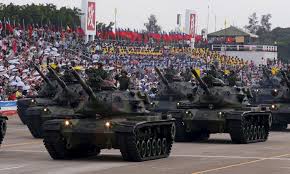
Taiwan has expressed its serious concern over China’s plan to hold a “Victory Day” parade in Beijing next week and has appealed to all nations to refrain from attending such events in the greater interest of peace in the Taiwan Strait.
He said China invariably makes it a point to use such events to demonstrate its military power to its immediate neighbours. ”They (China) have the ability to annex Taiwan. But we are also strengthening our defence forces and have been steadily increasing our defence budget,” he added.
He issued a statement in the wake of reports that Russian President Vladimir Putin, Iranian President Masoud Pezeshkian, Pakistan Prime Minister Shehbaz Sharif and several other leaders would attend the September 3 parade, marked the end of World War Two after Japan’s formal surrender.
Mr. Shen said major world powers and democratic countries should issue a stern warning to China that there would be economic sanctions against it if it were to use force against Taiwan. China must be made to pay a heavy price if it were to threaten or use force against Taiwan or its other neighours, he added.
He also accused China of launching a disinformation campaign against Taiwan by using social media and other platforms. Taipei is trying to counter this disinformation campaign. The international community should not have any faith in Beijing’s ‘One China Policy’ since China has even distorted the United Nations resolutions to suit its own interests, he added.
He wondered why China is continuing with its policy of expansionism despite facing so many economic and other challenges.
Taiwanese officials said Taipei could help India reduce its import of electronic components from China and the best way to bolster the economic engagement, including in the critical semiconductor sector, would be to seal a Free Trade Agreement (FTA).
They said a trade deal will pave the way for greater investment in India by Taiwanese companies in the high-technology sectors and help bring down the high tariffs. The two countries could also cooperate in fighting the challenge posed by the high tariff imposed by the United States.
The officials said India can bring down its “huge” trade deficit with China by going for joint production of various electronic components instead of continuing to import them from China.
