
Tagore’s Language Sparks New Political Storm in Bharat
From Tagore to Turmoil: How One Bureaucratic Phrase Sparked a Firestorm Over Bengali Identity, Exposing the Cracks in Bharat’s Linguistic Unity and Pitting West Bengal Against the Power Corridors of Delhi

Paromita Das
New Delhi, 6th August: The vibrant state of West Bengal, known for its rich cultural legacy, literary eminence, and political fervor, now finds itself at the heart of a linguistic and political controversy. As the 2026 Assembly elections approach, the recent storm stirred by a document from the Delhi Police has ignited not just political anger but also a cultural clash that reverberates far beyond Kolkata’s corridors. The document referred to Bengali as the “Bangladeshi national language” while requesting a translator for individuals allegedly living in Bharat illegally—an act that has been perceived as deeply offensive in Bengal and even in other Bharatiya linguistic communities.
This incident underscores a growing divide—not just between West Bengal and the Centre—but also reveals the different ways in which identity, language, and political narratives are evolving in Bharatiya states like Tamil Nadu, Assam, and Delhi itself.
The Catalyst: One Line That Shook a State
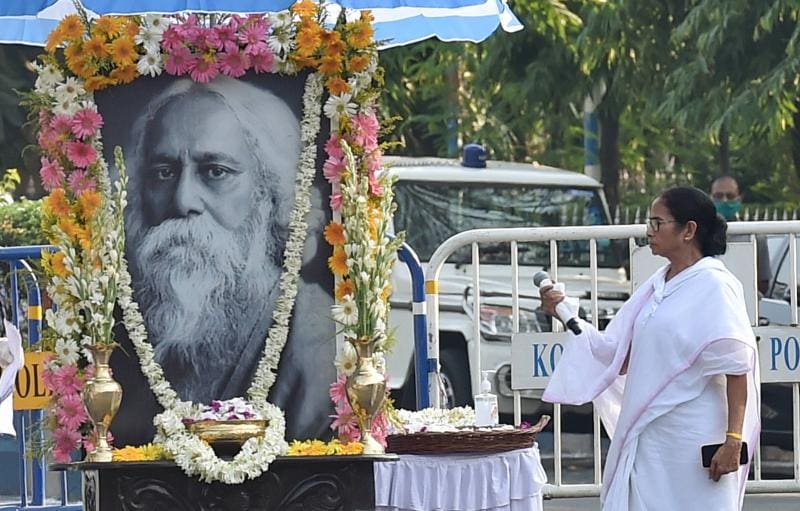
When the Delhi Police described the language of eight detained individuals as “Bangladeshi,” it might have seemed like bureaucratic shorthand. However, to many in West Bengal, it felt like a cultural affront. Chief Minister Mamata Banerjee didn’t mince words, calling the label “scandalous” and “unconstitutional.” She framed it as an attack on Bengali heritage—a heritage steeped in the contributions of Rabindranath Tagore, Bankim Chandra Chattopadhyay, and Swami Vivekananda.

But this isn’t just about a single phrase in an official letter. It’s about perception, power, and the place of Bengali identity in the broader Bharatiya fabric. It’s also a stark reminder of the deep-rooted tensions between regional pride and national policy.
How West Bengal Differs from Other Political Cities
West Bengal, unlike cities such as Delhi or Mumbai, is not just politically active but emotionally invested in cultural and linguistic identity. In contrast:
- Delhi, as the administrative heart of Bharat, has always balanced a pan-Bharatiya identity. Language issues rarely spark citywide protest unless linked to religion or caste.
- Chennai, under Tamil Nadu’s governance, has long resisted Hindi imposition. Yet even there, the state rarely sees its language mistaken for that of another nation. When such slights occur, the pushback is fierce and methodical—as seen in MK Stalin’s swift condemnation of the Bengali slight.
- Mumbai often places economic and regional pride before linguistic concerns. Marathi pride exists but is more territorial than linguistic, compared to West Bengal’s more romanticized literary nationalism.
- Assam, and regions like Barak Valley, share linguistic overlaps with Bengali, yet face identity struggles tied to immigration and historical mistrust. Congress MP Gaurav Gogoi was quick to draw parallels, warning against the “dehumanisation” of Bengali-speaking people across the Northeast.

West Bengal’s uniqueness lies in its constant intertwining of politics, language, and cultural pride. Here, an attack on the language isn’t a bureaucratic faux pas—it’s perceived as a challenge to the soul of the state.
The BJP-TMC Clash: More Than Just Election Rhetoric
The BJP’s defense, primarily articulated by Samik Bhattacharya and Amit Malviya, rests on technicality. They argue the term “Bangladeshi language” refers specifically to dialects spoken by foreign nationals. Malviya even went so far as to accuse Banerjee of stoking linguistic conflict for political mileage, hinting at legal action under the National Security Act.

Yet, one can’t ignore the timing. With elections on the horizon, the controversy fits neatly into a larger pattern of polarizing politics. Mamata Banerjee, already gearing up for a fierce electoral battle, seems keen on transforming the issue into a rallying cry for Bengali identity. Her posture evokes the classic “us versus them” stance—often effective in mobilizing regional sentiment.

This mirrors patterns seen in other states: the DMK in Tamil Nadu, AAP in Delhi, and even regional outfits in Maharashtra have used language as a tool of empowerment. But in West Bengal, the stakes seem higher—because here, identity is tied not just to pride but to a historic sense of distinctiveness
Language, Identity, and Misunderstood Nationalism
At the heart of the matter lies a deep question: what defines an Bharatiya language? Is it geography, usage, historical influence, or constitutional recognition?
Bengali, spoken by over 90 million Bharatiya, is a constitutionally recognized language and holds literary significance across the globe. Dismissing it—even contextually—as a foreign language undermines the unity in Bharat’s diversity. It creates a false binary between Bharatiya Bengali and Bangladeshi Bengali, ignoring shared roots while exaggerating political boundaries.

Yes, dialects differ. Sylheti may sound foreign to someone in Kolkata, just as the Hindi spoken in Bihar might sound unfamiliar to a Delhiite. But to use that difference to frame a language as foreign is reductive—and politically dangerous.
A Misstep, Not Malice, But Still Reckless
While it’s plausible that the Delhi Police used the term “Bangladeshi language” as a shorthand to indicate the origin of the suspects, such language should have been vetted more carefully. In the age of hyper-sensitive political optics, especially in a state as charged as West Bengal, every word matters.

It’s also equally concerning that such bureaucratic phrasing can so easily be spun into a narrative of cultural aggression. This reflects a failure of communication from the Centre and a readiness by opposition parties to capitalize on identity politics.
But the bigger issue is this: Bharat cannot afford to let language become a battleground. With 22 scheduled languages and hundreds of dialects, linguistic nationalism, if misused, could fragment the nation more than unite it.
Bharat’s Unity Lies in Its Multilingual Soul
The Bengali language is not Bangladeshi. It is Bharatiya. It is global. It is the medium of Nobel-winning poetry, national songs, and revolutionary slogans. The controversy, however, reveals deeper fractures—not just linguistic but political, regional, and emotional.
As West Bengal prepares for elections, the incident may well become a decisive campaign theme. But beyond the ballot, it serves as a wake-up call to preserve and protect linguistic harmony in Bharat.
For a country that celebrates unity in diversity, safeguarding each language—including Bengali—is not just a duty; it’s a testament to our democratic character.
